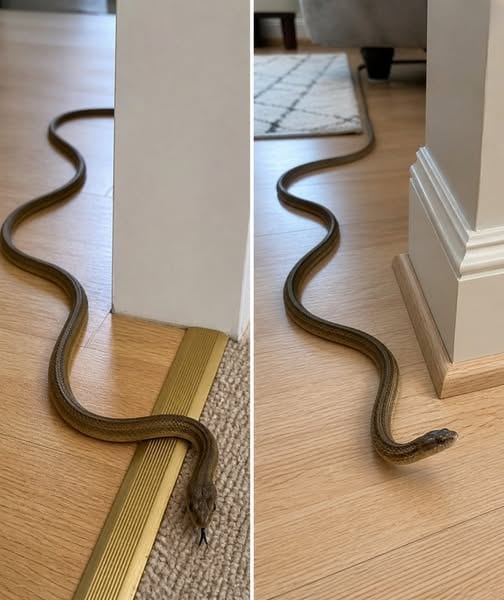
Why Snakes Sometimes Appear Inside Homes and the Safest Way to Respond
An Unexpected Encounter Indoors
Few household discoveries create immediate alarm quite like finding a snake inside the home. What initially appears to be a shadow, a loose cord, or a forgotten object on the floor can suddenly become something entirely different when it begins to move.
In that moment, a familiar environment may feel unfamiliar. A hallway, basement, utility room, garage, or storage area that seemed completely safe moments earlier can quickly become a source of concern.
The reaction is often instinctive. Many people experience fear, confusion, and uncertainty about what to do next. The unexpected presence of wildlife indoors can disrupt the sense of comfort and control normally associated with a home.
Although the experience can be unsettling, the snake is not entering with the intention of frightening anyone. Its presence is usually connected to basic survival needs rather than aggression.
Understanding why snakes enter buildings can help homeowners respond more effectively and reduce the likelihood of future encounters.
What Draws Snakes Toward Human Structures
Like all animals, snakes are motivated by essential needs. Food, water, shelter, protection from predators, and favorable temperatures all influence where they travel.
Homes and nearby structures can unintentionally provide these resources. Areas that appear ordinary to people may offer attractive conditions for wildlife seeking safety or comfort.
During periods of extreme weather, snakes may search for environments that provide relief. Excessive heat, cold temperatures, dryness, or exposure can encourage movement toward buildings that offer more stable conditions.
A house may provide shade during hot weather, protection during storms, or sheltered spaces where the animal can remain hidden.
In many situations, a snake is simply following opportunities that support its survival rather than intentionally seeking contact with people.
The Role of Food Sources
One of the strongest reasons snakes enter or remain near homes is the availability of prey.
Rodents, insects, and other small animals can attract snakes to a property. If these food sources are present inside walls, basements, crawl spaces, garages, or storage rooms, a snake may follow them.
For homeowners, this means the visible snake may actually be a symptom of another issue. The animal may be responding to conditions that were already present before it arrived.
A hidden rodent problem or persistent insect activity can make a structure more appealing as a hunting area.
Addressing only the snake without considering possible food sources may leave the underlying attraction unchanged.
Reducing prey populations is often an important part of preventing future encounters.
How Snakes Gain Access to Buildings
Many people assume a snake would require a large opening to enter a house. In reality, surprisingly small gaps can provide enough space.
Openings around doors, utility lines, foundations, vents, pipes, and structural cracks can serve as entry points.
Because snakes move close to the ground and can navigate narrow spaces, these access routes may go unnoticed for long periods.
A gap that seems insignificant to a homeowner may be large enough for a snake to pass through.
Once inside, the animal may travel into areas that receive little daily activity. This allows it to remain hidden and avoid detection.
As a result, a snake may be present inside a structure for some time before anyone realizes it is there.
Why Certain Areas of the Home Are Common Hiding Spots
Snakes generally prefer locations that offer cover, limited disturbance, and protection.
Basements frequently meet these conditions. They are often darker, cooler, and quieter than other parts of the home.
Laundry rooms can also be attractive because of their warmth, plumbing connections, and hidden spaces behind appliances.
Garages and storage rooms present additional opportunities. Boxes, tools, furniture, and stacked belongings can create numerous places where a snake can remain concealed.
The more clutter a space contains, the easier it becomes for wildlife to hide without being detected.
Because these areas are not always checked regularly, a snake may remain unnoticed until an unexpected encounter occurs.
Why Sightings Often Feel Sudden
Many homeowners describe snake encounters as appearing completely out of nowhere.
In reality, the animal may have been present for some time. Hidden corners, storage items, and unused areas can conceal movement effectively.
A snake may spend hours or even longer resting in a protected location before becoming visible.
When it finally emerges, the discovery can feel shocking because there were no obvious warning signs beforehand.
This sudden appearance often contributes to panic, even though the animal may simply be moving between hiding places or searching for resources.
The Importance of Remaining Calm
The first and most important response after spotting a snake is to remain as calm as possible.
Fear can lead to impulsive decisions that increase risk for both people and animals.
Running toward the snake, attempting to capture it, or trying to force it out of the area may cause the situation to become more unpredictable.
Maintaining distance is usually the safest immediate action.
Giving the animal space reduces the likelihood of defensive behavior and allows time to consider appropriate next steps.
Although remaining calm may be difficult, it is one of the most effective ways to improve safety during the encounter.
Protecting Children and Pets
Children and pets should be moved away from the area as quickly as possible.
Curiosity can lead them to approach the snake, while fear may cause sudden movements that increase risk.
Keeping them at a safe distance helps prevent accidental contact.
Pets may attempt to investigate or chase the animal, creating a dangerous situation for everyone involved.
Separating household members from the area where the snake was seen is an important precaution.
The goal is to reduce activity around the animal while maintaining a safe environment.
Containing the Situation Safely
If it can be done without approaching too closely, limiting the snake’s access to other areas of the home may be helpful.
Closing doors or restricting movement from a safe distance can reduce the likelihood that the animal will travel into additional rooms.
However, containment should never require placing oneself in danger.
If attempting to block access would require close contact with the snake, it is safer to step away and wait for assistance.
Personal safety should always remain the highest priority.
Creating distance and minimizing disturbance are often the most effective immediate measures.
Why Professional Assistance Matters
Many people are unable to accurately identify snake species during a stressful encounter.
Fear and uncertainty can make visual identification difficult, especially when the animal is partially hidden.
Approaching closely to determine what kind of snake is present may create unnecessary risk.
Wildlife professionals and animal control personnel are trained to handle these situations safely.
They possess the equipment and experience necessary to remove the animal while minimizing danger.
Professional assistance also helps avoid accidental injury to the snake or the people involved.
The Challenges of Do-It-Yourself Removal
Attempting to remove a snake without proper experience can create complications.
A frightened snake may move into tighter spaces, making it more difficult to locate and remove.
Furniture, storage items, appliances, and structural features can provide numerous escape routes.
Chasing or cornering the animal often increases unpredictability.
What begins as a simple sighting can quickly become a prolonged search throughout multiple areas of the home.
Professional removal reduces these difficulties and allows the situation to be resolved more efficiently.
Preventing Future Encounters
After a snake has been removed, attention should shift toward prevention.
The most effective long-term strategy involves identifying and eliminating the factors that attracted the animal in the first place.
Entry points should be inspected carefully. Cracks, gaps, and openings around foundations, doors, windows, vents, and utility lines can provide access.
Sealing these areas helps reduce opportunities for wildlife to enter.
Regular inspections can also identify new vulnerabilities before they become larger problems.
Small repairs often play a significant role in prevention.
Reducing Indoor Hiding Places
Clutter management is another important step.
Storage areas filled with boxes, unused items, and stacked belongings create ideal hiding locations.
Organizing these spaces makes them less attractive and easier to inspect.
Keeping items elevated when possible can also reduce concealed areas.
A cleaner and more organized environment offers fewer opportunities for wildlife to remain hidden.
This approach benefits both prevention and early detection.
Maintaining Outdoor Areas
The area surrounding a home can influence whether snakes approach the structure.
Tall grass, dense vegetation, debris piles, and unmanaged landscaping can provide cover and travel routes.
Regular maintenance helps reduce these conditions.
Keeping vegetation trimmed and minimizing clutter near buildings decreases the amount of shelter available.
Clear areas around foundations and entry points can make properties less attractive to wildlife seeking protection.
While outdoor maintenance cannot eliminate every possibility, it can significantly reduce risk.
Addressing Rodent and Insect Activity
Because food sources play such an important role in attracting snakes, pest management should not be overlooked.
Rodents and insects can provide ongoing incentives for snakes to remain nearby.
Signs of pest activity should be addressed promptly.
Eliminating access to food, water, and nesting areas can reduce the likelihood of recurring problems.
When prey populations decrease, the environment becomes less appealing to predators seeking meals.
This connection makes pest control an important component of overall prevention.
Replacing Fear With Preparedness
Discovering a snake inside a home can be a frightening experience. The surprise alone is often enough to create intense anxiety.
However, understanding why snakes enter buildings helps transform confusion into informed action.
Most indoor encounters occur because the animal is searching for food, water, shelter, warmth, or protection.
Responding calmly, maintaining distance, protecting children and pets, and seeking professional assistance are the safest immediate steps.
Afterward, preventive measures can greatly reduce the chances of another encounter.
By limiting access points, reducing clutter, maintaining the property, and addressing pest activity, homeowners can create an environment that is far less attractive to snakes.
Wildlife will always exist beyond the walls of a home. The most effective approach is not panic or confrontation, but understanding the conditions that attract animals and taking practical steps to remove those incentives.
When preparation replaces fear, an unexpected encounter becomes a manageable situation rather than an overwhelming one.
