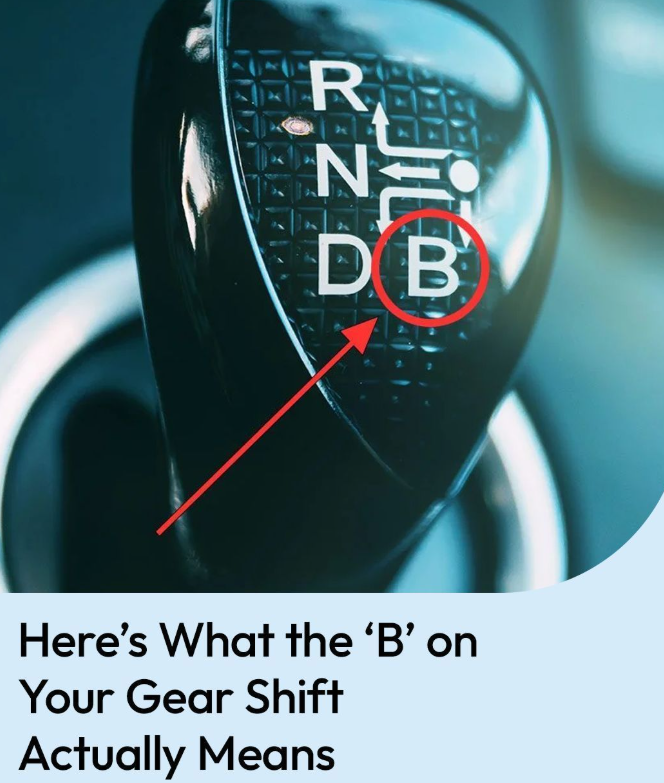
Understanding B Mode on an Automatic Gear Shift and When to Use It
How Automatic Transmissions Differ From Manual Vehicles
Drivers who operate a manual transmission are responsible for selecting the appropriate gear throughout a trip. Every change in speed or driving condition may require a shift to a higher or lower gear using the clutch and gear lever.
In contrast, an automatic transmission handles most of these gear changes without requiring driver input. The vehicle continuously selects gears based on speed, engine demand, and driving conditions.
Although automatic vehicles perform gear changes on their own, many models still provide additional gear selections that allow drivers to influence how the vehicle behaves. These options may include lower drive settings or special modes designed for specific situations.
One setting that often raises questions among drivers is the letter “B” found on the gear selector of certain hybrid vehicles.
What the B Setting Represents
The “B” position is commonly found on some hybrid models and serves a different purpose than the standard drive settings used during normal travel.
According to Toyota, the letter stands for “Brake” or “Engine Braking mode.” This mode is designed to increase the braking effect created by the vehicle’s powertrain when the driver eases off the accelerator.
Unlike a traditional low-gear setting in many conventional vehicles, the B mode in a hybrid system works alongside regenerative braking technology.
Regenerative braking captures energy that would normally be lost during deceleration. Instead of allowing that energy to dissipate, the system redirects it to help recharge the hybrid battery.
As a result, the vehicle slows more aggressively while simultaneously recovering energy.
How Regenerative Braking Works
Hybrid vehicles use a combination of an internal combustion engine and an electric motor. When the vehicle slows down, regenerative braking allows the electric motor to act as a generator.
This process converts some of the vehicle’s motion into electrical energy.
That electricity is then stored in the hybrid battery, where it can later be used to assist propulsion and improve overall efficiency.
The B mode increases the effect of this deceleration process, helping the vehicle reduce speed without relying exclusively on the conventional brake system.
Because more slowing force is generated through the powertrain, drivers may find that they need to press the brake pedal less frequently under certain driving conditions.
Reducing Wear on Brake Components
One of the primary advantages of using B mode in appropriate situations is the reduction of brake wear.
Every time a driver applies the brakes, the brake pads and related components experience friction. Over time, this leads to gradual wear and eventual replacement.
By increasing the vehicle’s natural deceleration, B mode can help reduce the amount of work performed by the traditional braking system.
This may contribute to longer brake pad life, particularly in driving environments that require repeated slowing or extended downhill travel.
While normal braking remains necessary in many situations, the additional slowing effect provided by B mode can lessen dependence on the brake pedal.
Capturing Energy During Deceleration
Another important benefit of B mode is its ability to help recover energy that might otherwise be wasted.
Whenever a vehicle slows down, kinetic energy is produced. In a standard vehicle, much of that energy is lost as heat through the braking system.
Hybrid technology seeks to make better use of that energy.
Through regenerative braking, some of the energy generated during deceleration can be converted into electricity and stored for future use.
B mode supports this process by increasing the vehicle’s deceleration characteristics, allowing the hybrid system to make greater use of energy recovery during appropriate driving conditions.
When B Mode Can Be Useful
The B setting is not intended to replace normal driving modes. Instead, it is designed for specific circumstances where additional deceleration can be beneficial.
Honda notes that this mode can be particularly useful in stop-and-go traffic. Frequent slowing and accelerating can create situations where stronger deceleration helps manage vehicle speed more comfortably.
In congested traffic conditions, drivers often need to repeatedly reduce speed as traffic flow changes. B mode can help make those adjustments smoother by increasing the slowing effect that occurs when the accelerator pedal is released.
This can reduce the need for constant brake pedal application during low-speed traffic movement.
Many drivers appreciate the added control this provides when navigating crowded roads or urban environments.
Benefits During Downhill Driving
One of the most frequently recommended uses for B mode is descending hills or long grades.
When traveling downhill, gravity naturally causes a vehicle to gain speed. Drivers often compensate by applying the brakes repeatedly.
Over extended descents, continuous brake use can generate significant heat within the braking system.
B mode helps address this challenge by increasing the vehicle’s ability to slow itself through engine braking and regenerative braking effects.
As the vehicle descends, the additional resistance helps control speed while reducing the need for frequent brake applications.
This can make downhill driving more manageable and can provide a greater sense of control.
For hybrid owners who regularly travel through mountainous areas or regions with steep roads, understanding when to use B mode can be especially valuable.
Using B Mode While Towing
Toyota also indicates that B mode can be beneficial when towing, provided the vehicle is designed and rated for towing duties.
Towing places additional demands on a vehicle because the extra weight increases momentum and affects braking performance.
When descending a hill while pulling a trailer or other load, controlling speed becomes even more important.
B mode can provide additional braking assistance by increasing the deceleration effect produced by the vehicle’s powertrain.
This added control may help drivers maintain a safer and more consistent speed when traveling downhill with a load attached.
Although conventional braking remains essential, the supplemental slowing effect can contribute to a more controlled driving experience.
Why B Mode Is Not Intended for Everyday Driving
Despite its advantages in certain situations, B mode is not designed to be used continuously during normal driving.
Toyota advises against treating it as a default driving setting because it changes how the vehicle manages deceleration.
In everyday driving, hybrid vehicles are engineered to maximize efficiency through a balance of coasting, regenerative braking, and engine operation.
When B mode is engaged all the time, the vehicle prioritizes stronger engine braking instead of allowing the car to coast freely in situations where coasting may be more efficient.
This can reduce overall fuel economy compared with standard driving mode.
As a result, drivers may not achieve the best efficiency if they leave the vehicle in B mode throughout an entire trip.
Understanding the Difference Between Coasting and Engine Braking
Coasting occurs when a vehicle continues moving with minimal resistance after the driver lifts off the accelerator.
Many modern vehicles are designed to use coasting strategically because it can help preserve momentum and improve efficiency.
Engine braking, on the other hand, deliberately increases resistance to slow the vehicle.
B mode emphasizes this slowing effect.
While that characteristic can be extremely useful on hills, in traffic, or when towing, it is not always desirable on flat roads where maintaining momentum can help conserve energy.
Understanding this distinction helps explain why manufacturers recommend using B mode selectively rather than continuously.
How Drivers Can Decide When to Activate B Mode
Drivers should view B mode as a specialized tool rather than a replacement for standard drive settings.
If traffic conditions require frequent slowing, if the road includes a lengthy downhill section, or if a vehicle is descending with a trailer attached, B mode may offer useful assistance.
In routine commuting, highway cruising, or general city driving, standard drive mode is often the more efficient choice.
The decision ultimately depends on road conditions and the level of deceleration desired.
Learning how the vehicle responds in both modes can help drivers become more comfortable using the feature appropriately.
Final Thoughts
The B setting found on certain hybrid vehicles serves a specific purpose that differs from traditional low-gear selections in conventional automobiles.
By increasing regenerative braking and engine braking effects, it helps slow the vehicle while recovering energy and reducing wear on brake components.
This mode can be particularly useful in stop-and-go traffic, during extended downhill driving, and when descending with a tow load.
At the same time, manufacturers caution that it is not intended for continuous everyday use because it can reduce overall efficiency by favoring braking over coasting.
Understanding how and when to use B mode allows drivers to take full advantage of the feature while maintaining the efficiency and performance that hybrid vehicles are designed to deliver.
