
Unexpected Discovery in a Salad Highlights the Importance of Food Safety
An ordinary meal can sometimes take an unexpected turn, especially when dealing with fresh, minimally processed ingredients. In this case, what began as a routine lunch quickly shifted into a moment of concern, offering a reminder of how important careful food handling can be.
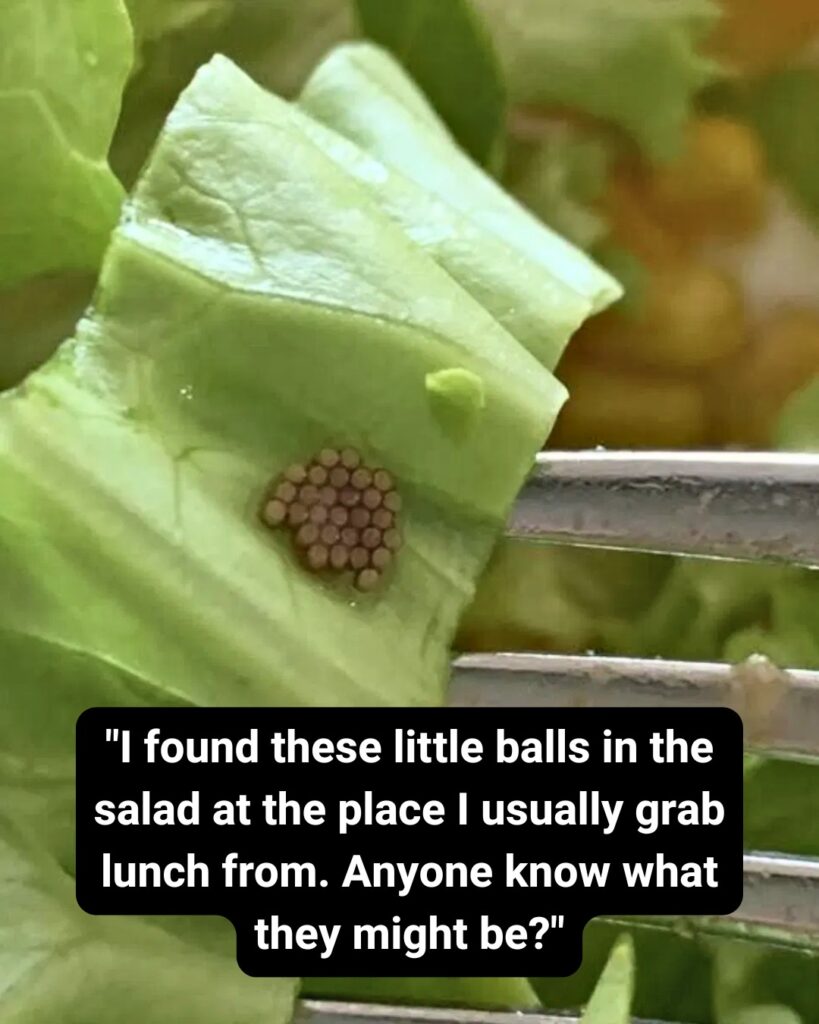
At first, the salad appeared completely normal. A mix of leafy greens was prepared, and small grains—believed to be quinoa—were sprinkled on top. Their size, color, and placement seemed consistent with what one would expect from a common salad ingredient. Nothing appeared unusual at a glance.
However, a closer look revealed something that did not quite match expectations. The small round shapes were arranged in patterns that seemed too structured and deliberate to be grains. This detail prompted further inspection.
Upon examining the leaves more carefully, it became clear that the clusters were not food at all. Instead, they were insect eggs attached to the underside of a lettuce leaf. The discovery immediately changed the situation, turning a normal meal into an unsettling experience.
While such a finding can be alarming, it is not entirely uncommon in the context of fresh produce. Leafy vegetables are grown outdoors, where they are naturally exposed to insects. Some species lay eggs directly on plant surfaces, particularly in protected areas such as folds or the underside of leaves. Because these eggs are often very small and designed to blend into their surroundings, they can sometimes pass through harvesting and packaging processes unnoticed.
From a health perspective, accidentally consuming small amounts of such material is generally not considered dangerous. The human digestive system can typically handle incidental exposure without significant risk. However, the presence of insect eggs does indicate that the produce may not have been thoroughly washed or inspected before being served. This is where the primary concern lies.
Food safety is not only about avoiding harmful substances but also about maintaining proper hygiene and preparation standards. When contaminants—whether dirt, insects, or residues—are present, it suggests that additional care may be needed in handling the food.
If someone encounters a situation like this while dining out, the recommended response is to stop eating and assess the situation calmly. Taking a photo can help document the issue, especially if the matter needs to be reported. Informing staff in a polite and clear manner usually leads to a prompt resolution, such as a replacement dish or a refund.
Most food establishments take such concerns seriously, as maintaining trust and safety standards is essential. If the response is not adequate, it may be appropriate to report the issue to local health authorities so that proper inspection and follow-up can occur.
At home, similar precautions apply. Even when purchasing pre-washed or packaged greens, it is still a good practice to rinse them under running water. This step helps remove not only visible dirt but also smaller particles that may not be immediately noticeable.
Paying attention to the structure of leafy vegetables is especially important. Leaves often have natural folds and creases where debris or small organisms can collect. Gently separating and rinsing each leaf can significantly reduce the likelihood of unwanted contaminants.
Inspection is another simple but effective habit. Taking a moment to look at both sides of the leaves before preparing or serving them can help identify anything unusual. This is particularly relevant for produce such as spinach, romaine, or butter lettuce, which have layered structures.
It is also worth noting that organically grown produce, while often preferred for other reasons, may have a slightly higher chance of containing insects or their traces due to reduced pesticide use. This does not make it unsafe, but it does reinforce the importance of proper washing and handling.
Ultimately, situations like this serve as reminders rather than causes for alarm. They highlight the natural origins of fresh food and the importance of maintaining good preparation habits. With a few simple steps—washing, inspecting, and handling produce carefully—most issues can be easily avoided.
In the broader context, food safety relies on awareness at every stage, from farming and distribution to preparation and consumption. While unexpected discoveries can be unpleasant, they also provide an opportunity to reinforce habits that keep meals safe and enjoyable.
By staying attentive and consistent in these practices, it becomes easier to maintain confidence in everyday food choices and reduce the chances of similar experiences in the future.

