
Controversial Photoshoot Involving Painted Elephant Sparks Debate After Animal’s Death
A photoshoot conducted in Jaipur has drawn widespread attention and debate after images featuring a fully pink-painted elephant resurfaced online months later. The situation intensified following the death of the animal involved, leading to strong reactions from the public and renewed discussion about the boundaries between artistic expression and animal welfare.
The project was created by Julia Buruleva, who traveled to India in late 2025. Her work, described as part of an “Art Expedition,” aimed to capture elements of the region’s visual identity. However, the inclusion of a live animal painted in a bold color has become the focal point of criticism and conversation.
The Photoshoot Concept and Execution
In November 2025, Buruleva organized a photoshoot at an abandoned temple associated with Ganesha. The setting was chosen to reflect cultural and architectural elements connected to the area.
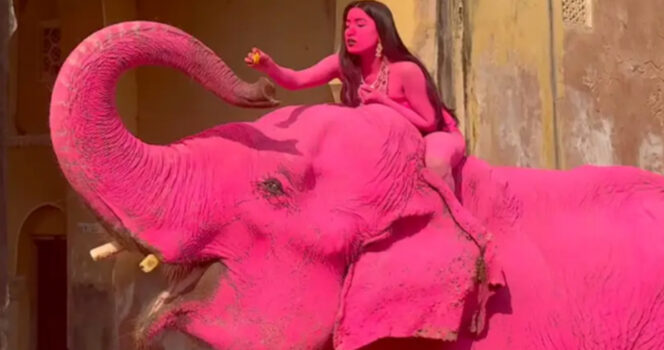
The project featured a model and an elephant, both covered in a vivid pink pigment. According to the photographer, the concept was inspired by Jaipur’s well-known association with the color pink, which has earned the city the nickname “Pink City.”
In her explanation shared online, Buruleva noted that elephants are a visible part of the region’s cultural and visual landscape. She described their presence in streets, decorative art, and architecture as a reason for including one in the photoshoot.
The elephant used in the session was a 65-year-old female named Chanchal. She lived in Hathi Gaon, an area commonly referred to as Elephant Village. According to available information, Chanchal had previously been used for rides but was retired at the time of the shoot.
Materials Used and Initial Reception
Buruleva stated that the paint applied to the elephant was organic and locally sourced. She explained that the substance was similar to powders traditionally used during the Holi festival, a widely recognized cultural celebration in India.
Local representatives, including individuals associated with the Hathi Gaon community, confirmed that a powder known as gulal was used. This material is commonly applied during festive events and is generally considered safe when used appropriately. It was also reported that the paint was washed off shortly after the photoshoot concluded.
At the time the images were first shared in December 2025, the response was relatively limited. However, when the photos resurfaced months later, they quickly spread across social media platforms, attracting significantly more attention and prompting widespread discussion.
The Death of the Elephant
In February 2026, several months after the photoshoot, Chanchal died. Officials indicated that the elephant’s death was due to natural causes, noting that she was considered advanced in age.
Despite this explanation, the timing of her death led to increased scrutiny of the photoshoot. Many individuals connected the two events, raising concerns about whether the animal had been subjected to unnecessary stress or harm.
While no direct evidence was presented linking the photoshoot to the elephant’s death, the situation amplified existing concerns about the use of animals in artistic or commercial projects.
Public Reaction and Criticism
Following the renewed circulation of the images, public reaction was strong and varied. Many critics expressed concern that the photoshoot placed artistic goals above the wellbeing of the animal.
Some individuals described the images as inappropriate, arguing that animals should not be used as visual elements in ways that may compromise their dignity or comfort. Others emphasized that even if the materials used were considered safe, the act of painting a living animal for aesthetic purposes raised ethical questions.
Comments shared online reflected a broader discomfort with the concept. Critics highlighted the importance of recognizing animals as sentient beings rather than objects for creative expression.
Local voices also contributed to the discussion, with some acknowledging the photographer’s appreciation for the city while suggesting that animals should not be included in such projects.
The debate extended beyond the specific case, touching on larger issues related to tourism, cultural representation, and the responsibilities of artists working in unfamiliar environments.
The Photographer’s Response
In response to the criticism, Julia Buruleva defended her work, stating that many of the reactions were based on misunderstandings.
She explained that the photoshoot was conducted with attention to minimizing stress for the animal. According to her account, Chanchal remained calm throughout the process and did not display signs of distress.
Buruleva also emphasized her personal stance, stating that she values animals and would not intentionally engage in actions that could cause harm.
She further noted that decorating elephants is not uncommon in certain local contexts, suggesting that her approach aligned with practices already present in the region.
However, these explanations did not fully address the concerns raised by critics, particularly those who believe that any use of animals for aesthetic purposes should be reconsidered regardless of cultural context.
Continued Discussion and Online Activity
The situation intensified when Buruleva addressed the controversy in subsequent online posts. In one instance, she referred to the backlash in a way that drew additional attention, discussing how the images had gone viral and how she had been criticized following the elephant’s death.
She reiterated that the photoshoot had taken place months before Chanchal’s passing and maintained that there was no connection between the two events.
Despite ongoing criticism, she indicated that she does not plan to exclude animals from future projects, explaining that they can represent important aspects of specific locations and cultures.
Her statements contributed to further discussion, with some supporting her perspective and others continuing to question the ethical implications of such work.
Official Review and Broader Implications
Authorities in India have indicated that the incident may be reviewed to determine whether any regulations or animal welfare standards were violated. This includes examining whether appropriate permissions were obtained and whether the treatment of the animal met legal requirements.
Such reviews are part of broader efforts to ensure that animals are protected in situations involving public display, tourism, or artistic activity.
The case also reflects a growing global awareness of animal welfare issues. As social media allows content to spread rapidly across borders, actions taken in one location can be evaluated by a worldwide audience with diverse perspectives.
This increased visibility has led to more frequent discussions about ethical standards and the responsibilities of individuals working with animals.
Balancing Art and Responsibility
The situation involving Chanchal highlights the complex relationship between creative expression and ethical responsibility.
Art often draws inspiration from culture, environment, and living subjects. However, when animals are involved, additional considerations come into play, including their wellbeing and the potential impact of human actions.
While some practices may be accepted within certain cultural contexts, global audiences may interpret them differently, leading to debate and reassessment.
The discussion surrounding this photoshoot illustrates how perspectives can vary and how important it is to consider multiple viewpoints when evaluating such situations.
Conclusion
The photoshoot in Jaipur has become a focal point for ongoing conversation about art, culture, and animal welfare. What began as a creative project inspired by local identity evolved into a widely discussed issue following the death of the elephant involved.
Although officials have stated that the animal’s death was due to natural causes, the timing contributed to public concern and intensified scrutiny of the project.
The responses from both critics and the photographer demonstrate the complexity of the issue, with differing views on what constitutes acceptable practice.
Ultimately, the situation serves as a reminder of the importance of careful consideration when working with animals, as well as the impact that public perception can have in shaping discussions around ethics and responsibility.

