
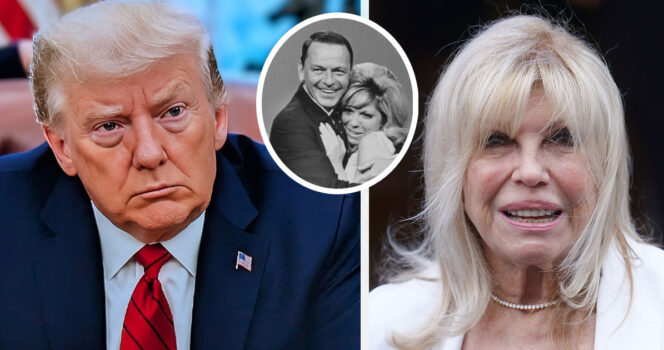
Donald Trump recently drew widespread attention after sharing a video featuring Frank Sinatra performing his iconic song My Way on social media. The post, which did not include any explanation or caption, quickly sparked speculation and debate online, with many questioning the intent behind the choice of song and its timing.
The video, nearly four minutes long, included some of the most recognizable lyrics from My Way, such as “And now, the end is near, and so I face the final curtain,” and “I did what I had to do and saw it through without exemption.” Because of the reflective and final tone of the song, many social media users began interpreting the post in different ways. Some wondered whether it carried a deeper message about current events, while others focused on the song’s theme of independence and personal conviction.
Reactions online were mixed. Some individuals suggested the post could symbolize a strong-willed approach to leadership or decision-making, while others interpreted it more cautiously, questioning whether it hinted at something more serious. Comments ranged from curiosity to concern, with users debating whether the lyrics should be taken literally or simply appreciated as a classic performance being shared.
However, one of the strongest reactions came from Nancy Sinatra, the daughter of the late singer. She publicly expressed her disapproval of the video being shared, responding with a brief but pointed statement: “This is sacrilege.” Her reaction came after another user tagged her in a post discussing the situation and suggesting that her father would not have supported the use of his music in that context.
Nancy Sinatra further elaborated on her stance in follow-up responses. She stated that while Trump may admire her father’s music, the feeling was not mutual, indicating that Frank Sinatra himself did not share the same admiration. Her comments added a personal and historical dimension to the discussion, shifting some of the focus from speculation about the post’s meaning to questions about artistic legacy and consent.
When asked whether she had the authority to prevent the use of her father’s music, Nancy Sinatra clarified that such decisions are not within her control. She explained that music rights are managed by publishing companies, meaning that only those entities have the legal ability to restrict or approve usage. This highlights a broader issue often seen in public discourse, where artists’ families may disagree with how their work is used, but lack the legal power to intervene.
The song My Way itself has a long and complex history. Originally adapted into English by songwriter Paul Anka from the French song “Comme d’habitude,” it became one of Frank Sinatra’s signature performances. Despite initially planning to retire, Sinatra continued performing after the song’s success, cementing its place as one of the most recognizable tracks in popular music history. Over the years, it has been covered by numerous artists across different genres, further expanding its cultural impact.
The renewed attention surrounding the song demonstrates how music can take on new interpretations depending on context. A track originally associated with personal reflection and independence can quickly become a focal point for public debate when introduced into a political or social setting.
At the same time, the situation reflects how public figures’ actions on social media are often closely analyzed. Even a simple post without explanation can lead to widespread discussion, as audiences attempt to interpret meaning based on timing, content, and broader circumstances.
Nancy Sinatra’s response also underscores the emotional connection that families maintain with the legacy of well-known artists. For her, the issue was not just about a song being shared, but about how her father’s work and values are represented in the public sphere.
Ultimately, the reaction to the video highlights the intersection of politics, culture, and personal legacy. While some viewers saw the post as harmless or symbolic, others viewed it as controversial or inappropriate, particularly in light of the song’s meaning and the artist’s history.
As with many moments in the digital age, a single post was enough to spark a wide range of interpretations, conversations, and disagreements—demonstrating how powerful and complex the relationship between media, public figures, and cultural icons can be.

