
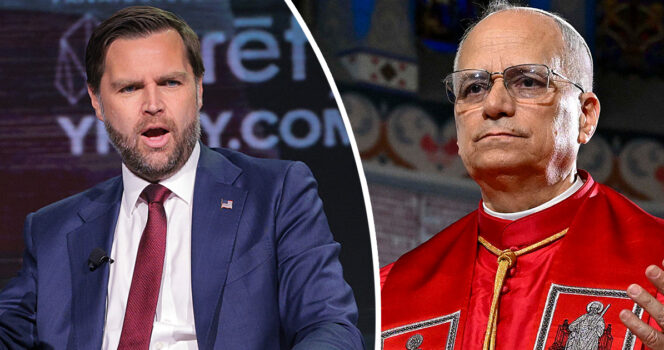
U.S. Vice President JD Vance publicly criticized Pope Leo XIV this week, accusing the pontiff of overstepping into matters related to American public policy. His remarks came shortly after similar criticism from Donald Trump, whose comments about the pope have generated mixed reactions both domestically and internationally.
The exchange follows statements made by Pope Leo XIV during a prayer service at St. Peter’s Basilica, where he addressed ongoing global conflicts and emphasized the importance of peace. In his remarks, the pope criticized what he described as a growing “delusion of omnipotence” and called for an end to war and violence. He urged world leaders to reconsider military actions and highlighted the humanitarian impact of conflict, particularly on vulnerable populations such as children, the elderly, and the sick.
The pope also referenced international law, noting that attacks on civilian infrastructure violate established global standards. His comments were framed within a broader message encouraging dialogue, restraint, and a renewed focus on peaceful solutions.
In response, Vice President Vance stated in a televised interview that religious institutions should prioritize spiritual and moral guidance rather than political engagement. He suggested that policy decisions should remain within the authority of elected officials, while acknowledging that disagreements between political leaders and religious figures are sometimes unavoidable.
Vance continued his remarks during an appearance at a Turning Point USA event in Atlanta, where he elaborated on his position. He referenced historical conflicts, including World War II, to argue that moral and theological interpretations of war can be complex and subject to debate. He suggested that certain historical actions, such as efforts to liberate occupied territories and concentration camps, are often viewed by many as morally justified.
While acknowledging that religious leaders may speak on issues such as war, immigration, and social policy, Vance emphasized the need for caution when discussing theological interpretations. He stated that such discussions should be carefully grounded and clearly articulated, particularly given their influence on public discourse.
The broader situation has drawn international attention. Giorgia Meloni responded to earlier criticism directed at the pope by describing it as inappropriate. In a public statement, she defended the role of the head of the Catholic Church in advocating for peace and condemning conflict, noting that such positions are consistent with the church’s longstanding teachings.
The exchange reflects an ongoing tension between political leadership and religious authority when addressing global issues. While political leaders focus on governance and policy decisions, religious figures often frame discussions around ethical, moral, and humanitarian considerations.
As the situation continues to develop, both sides have maintained their positions. Pope Leo XIV has indicated that his focus remains on promoting peace, dialogue, and support for those affected by conflict, while U.S. officials, including Vice President Vance, continue to emphasize the separation between religious commentary and governmental decision-making.

