

When Caleb Morrison purchased a pale blue Victorian house at the end of Maple Street, most people assumed his intentions were purely practical. The property, with its aging exterior, slightly uneven shutters, and overgrown garden, appeared to be the kind of home often bought, renovated, and resold for profit. To neighbors and observers, it looked like a straightforward real estate opportunity—one that simply needed time, investment, and modern updates to restore its market value.
However, Caleb’s motivation was entirely different. At forty-two years old, he was not seeking financial gain or a quick return on investment. Instead, he was searching for something far less tangible: stability, quiet, and a sense of direction after a sudden and unsettling life change.

Not long before purchasing the house, Caleb had lost his position at a corporate architecture firm in Chicago. The dismissal came unexpectedly during a restructuring meeting, delivered in a brief and impersonal manner. After years of dedication to his work, he left the office carrying a small box of personal belongings and a growing sense of uncertainty about what would come next. There was no closure, no gradual transition—only a sudden pause in the life he had built.
In the weeks that followed, he found himself reassessing everything. The fast pace of the city, once energizing, now felt overwhelming. Seeking familiarity and a place to regroup, he returned to his hometown in Ohio. It was there, during a quiet walk through a familiar neighborhood, that he first noticed the Victorian house at the end of Maple Street.
The home stood with a quiet dignity despite its visible wear. Its structure remained strong, and details like stained glass windows still caught the afternoon light, hinting at the care it had once received. The property belonged to Eleanor Whitaker, an elderly woman who had lived there for decades.
Their first meeting took place on a calm weekday afternoon. Eleanor answered the door slowly, leaning on a wooden cane, and studied Caleb carefully before asking about his intentions. When he explained that he wanted to live in the home rather than dramatically alter or demolish it, his sincerity seemed to resonate with her. For Eleanor, the future of the house mattered, but so did the person who would inhabit it.
The sale was completed without difficulty. Before handing over the keys, Eleanor paused in the foyer, resting her hand on the banister. She shared a quiet memory about her late husband, who had painted the railing when they first moved in. She also mentioned that he had disliked wallpaper, believing that walls should “breathe.” At the time, Caleb noted the comment but did not fully grasp its significance.
After moving in, Caleb approached the restoration with patience. Rather than rushing into cosmetic changes, he focused first on essential structural updates. Electrical systems were repaired, plumbing was modernized, and the original hardwood floors were carefully restored. Each improvement was made with respect for the home’s history rather than an attempt to completely transform it.
One area remained untouched for some time: the upstairs hallway. It was narrow, dimly lit, and covered in faded floral wallpaper that had begun to peel slightly at the edges. Eventually, on a quiet weekend, Caleb decided to begin removing it.
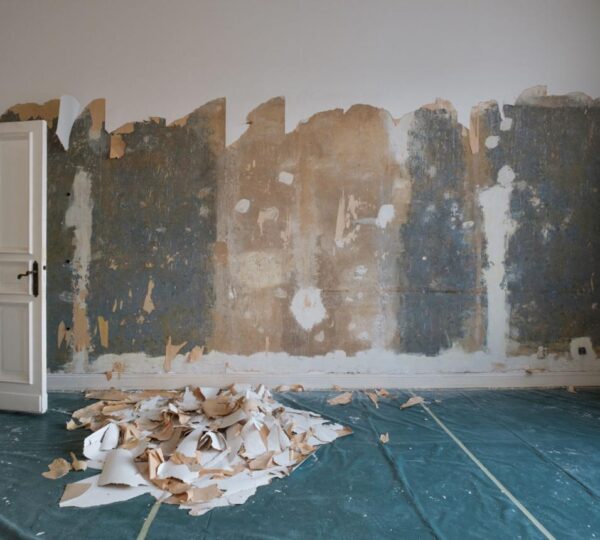
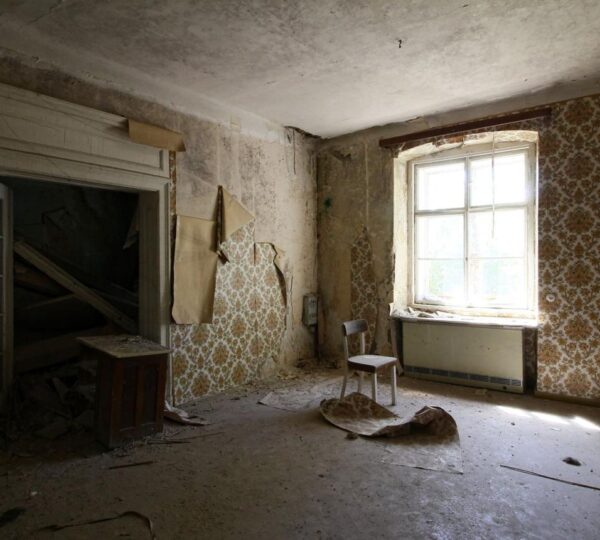
Using a steamer and scraper, he worked slowly. The first layer came off easily, revealing older patterns beneath. As he continued, it became clear that multiple layers of wallpaper had been applied over the years without fully removing the previous ones. Each layer represented a different period, a different attempt to refresh the space without erasing what came before.
During the process, his tool struck a surface that felt different. It was smoother than expected, yet not entirely like bare plaster. Curious, he wiped the area gently with a damp cloth. Faint markings began to appear—initially unclear, but gradually forming shapes that resembled handwriting.
As more wallpaper was removed, entire lines of text became visible. What he was uncovering was not decorative or accidental. It was deliberate writing, structured in a way that suggested personal reflection over time.

The earliest visible date marked April 14, 1964. The writing appeared to begin shortly after Eleanor and her husband had first moved into the home. As Caleb carefully exposed more of the wall, he realized that the writing extended across years, forming a kind of private record preserved beneath layers of wallpaper.
Some entries described ordinary moments—gardening, settling into routines, and building a shared life. They reflected optimism and a sense of beginning. However, as the entries progressed, the tone gradually shifted. Later passages hinted at emotional distance, growing tension, and a sense of isolation.
The writing suggested that the walls had become a private space for thoughts that could not be expressed openly. One entry noted that writing in this hidden way allowed those thoughts to exist safely, without being seen or questioned.
The final dated entry appeared in 1978. More than a decade of personal reflection had been recorded and then covered, layer by layer, until it became invisible to anyone who lived there afterward.
The discovery raised questions Caleb felt he could not answer alone. The next day, he visited Eleanor at her assisted living residence. When he mentioned the wallpaper and what he had found beneath it, her expression changed, though she remained calm.
She confirmed that she had written on the walls intentionally. When asked why, she explained that it had been a way to preserve her thoughts in a place where they would remain, even if hidden. The act of writing had helped her maintain a sense of identity during a time when she felt increasingly isolated.
Eleanor described her past in careful, measured terms. She did not portray her husband as physically harmful, but she spoke of emotional control and a gradual narrowing of her independence. These experiences, she explained, were difficult to describe openly at the time, which is why she turned to writing in secret.
When Caleb asked whether he should remove or cover the writing during renovation, Eleanor made a simple request. She asked him to preserve at least a portion of it. Leaving part of the writing visible, she said, would allow the home to retain its memory.
She suggested that houses are not only structures but also places where experiences are held over time. In her view, preserving a part of that history was a way of acknowledging it.
Caleb respected her request. During the restoration, most of the hallway was repainted in soft, neutral tones. However, one section of the wall was carefully preserved. The writing was protected behind glass, ensuring it would remain visible without being damaged.
Beneath it, he placed a small brass plaque with the phrase “Walls Should Breathe,” echoing the comment Eleanor had shared about her husband years earlier. The phrase, once casual, now carried deeper meaning.
When Eleanor later visited the house, she stood quietly in the hallway, observing the preserved section. She did not say much, but her presence conveyed reflection and a sense of closure. She mentioned softly that she had once felt as though she might disappear within those walls, but seeing the writing preserved made her feel acknowledged.
For Caleb, the experience reshaped his understanding of his work. As an architect, he had always focused on structure, design, and function. Now, he began to see homes as something more—spaces that hold memory, emotion, and the traces of lives lived within them.
In the months that followed, he continued working on other properties, but his approach had changed. Rather than focusing solely on modern updates or resale value, he placed greater emphasis on preserving character and history.
Eleanor passed away peacefully the following spring. Her story remained largely private, known fully only to Caleb and reflected quietly in the preserved section of the hallway.
Standing there one day, Caleb considered what he had uncovered. Beneath layers of wallpaper, hidden for decades, had been a record of personal experience that might otherwise have been lost. It reminded him that not all stories are meant to be widely shared, but they still deserve recognition.
Outside, the house remained calm, its garden gradually returning to life. The space, once marked by silence and hidden reflection, now carried a sense of renewal—where past and present existed together, quietly acknowledged within its walls.

