
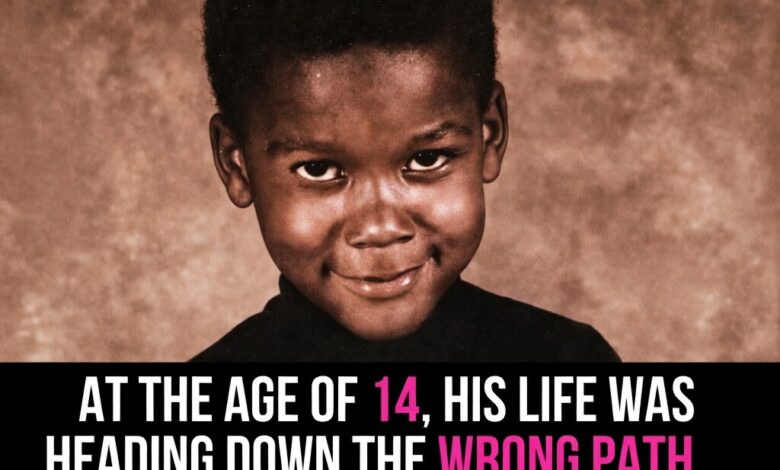
Born on December 28, 1954, in Mount Vernon, Denzel Washington entered the world as the middle child in a household shaped by discipline, faith, and hard work. His father was a Pentecostal minister, a man devoted to spiritual guidance and structure, while his mother was a determined businesswoman who owned and operated several beauty salons. On the surface, his early years reflected stability and routine, grounded in values that emphasized responsibility and purpose.
However, that sense of stability was disrupted when he reached the age of 14. His parents divorced, and the separation had a profound impact on him. The shift in family dynamics created an emotional gap that he struggled to process. Without the same structure at home, he began to drift.
During this period, he started associating with peers who influenced him in negative ways. His behavior changed noticeably—he became involved in fights, skipped school, and began making choices that put his future at risk. What had once been a promising path began to look uncertain, and the possibility of serious consequences, including involvement with the criminal justice system, became increasingly real.
His mother recognized the danger early. She saw the direction her son was heading and understood that without intervention, the outcome could be life-altering. Determined to prevent that, she made a decision that would ultimately change everything.
Before that turning point fully took shape, however, an unexpected moment occurred—one that would stay with him for the rest of his life.
While visiting one of his mother’s beauty salons, he encountered a woman he had never met before. She was a customer, a stranger with no prior connection to him. Yet, during that brief interaction, she looked at him and made a statement that seemed both unusual and deeply specific.
She told him that he would one day speak to millions of people, travel the world, and make a meaningful impact on others’ lives.
At the time, those words stood in sharp contrast to the reality he was living. There was little in his behavior or circumstances that suggested such a future. Still, the statement made an impression. It introduced a different possibility—one that he had not previously considered.
His mother took those words seriously. Whether she saw them as intuition, encouragement, or something more, she acted on them with conviction. She removed him from his current environment and enrolled him in a private boarding school, creating distance from the influences that had contributed to his downward path.
The transition was not immediate or effortless, but it marked the beginning of change. In a more structured setting, he gradually began to refocus. The discipline of the school, combined with his mother’s continued support, helped him regain direction.
After completing his early education, he enrolled at Fordham University. It was there that he discovered acting—an interest that initially emerged without a clear long-term plan. What began as a casual exploration soon developed into a serious pursuit.
Following graduation, he continued his training at the American Conservatory Theater, where he refined his skills and prepared for a professional career. He then returned to New York with the goal of establishing himself in the acting world.
The early years were challenging. Like many aspiring actors, he faced rejection, financial uncertainty, and limited opportunities. He took on small roles and worked persistently, building experience while waiting for a breakthrough.
That breakthrough came in 1982 when he was cast in the television series St. Elsewhere. The role brought him wider recognition and opened doors within the industry. It marked the transition from struggling actor to emerging professional.
His career continued to develop, but it was his performance in Glory that significantly elevated his status. His portrayal earned him his first Academy Award and established him as a serious and respected actor.
From that point forward, he took on a range of roles that demonstrated both versatility and depth. In Malcolm X, he delivered a performance that was widely recognized for its intensity and historical significance. In Philadelphia, he contributed to a story that addressed complex social issues with sensitivity and realism.
He continued to build a body of work that included films such as Crimson Tide, Training Day—for which he won his second Academy Award—American Gangster, Fences, and The Equalizer. Each role added to a career defined by consistency, discipline, and a commitment to meaningful storytelling.
Beyond his professional achievements, he became known for his personal values. His approach to life has often reflected a strong moral framework, influenced by his upbringing and faith. He has spoken openly about the importance of discipline, responsibility, and staying focused on long-term goals.
In 1983, he married Pauletta Washington, and together they built a stable family life, raising four children. Their long-standing marriage is often noted as an example of commitment and balance within an industry that can be demanding and unpredictable.
Over the decades, he has expanded his work to include directing and producing, contributing to projects both in front of and behind the camera. His influence extends beyond acting, shaping conversations about storytelling, representation, and professionalism in the entertainment industry.
As of 2026, at the age of 71, he is widely regarded as one of the most accomplished and respected figures in modern cinema. His career includes multiple awards, including two Academy Awards, and recognition from major institutions across the industry.
Looking back, the contrast between his early struggles and later achievements is significant. At 14, he was on a path that could have led to serious consequences. Yet a combination of timely intervention, personal effort, and a shift in environment allowed him to change direction.
The brief encounter with a stranger in his mother’s salon did not determine his future on its own, but it introduced a different perspective—one that was reinforced by his mother’s actions and his own decisions over time.
His story reflects the impact of guidance, discipline, and the willingness to change course when necessary. It also illustrates how moments that seem small at the time can contribute to larger transformations when combined with consistent effort and support.
From uncertainty to achievement, his journey demonstrates how direction can be reshaped, and how long-term outcomes are often influenced by both individual choices and the people who step in at critical moments.

