
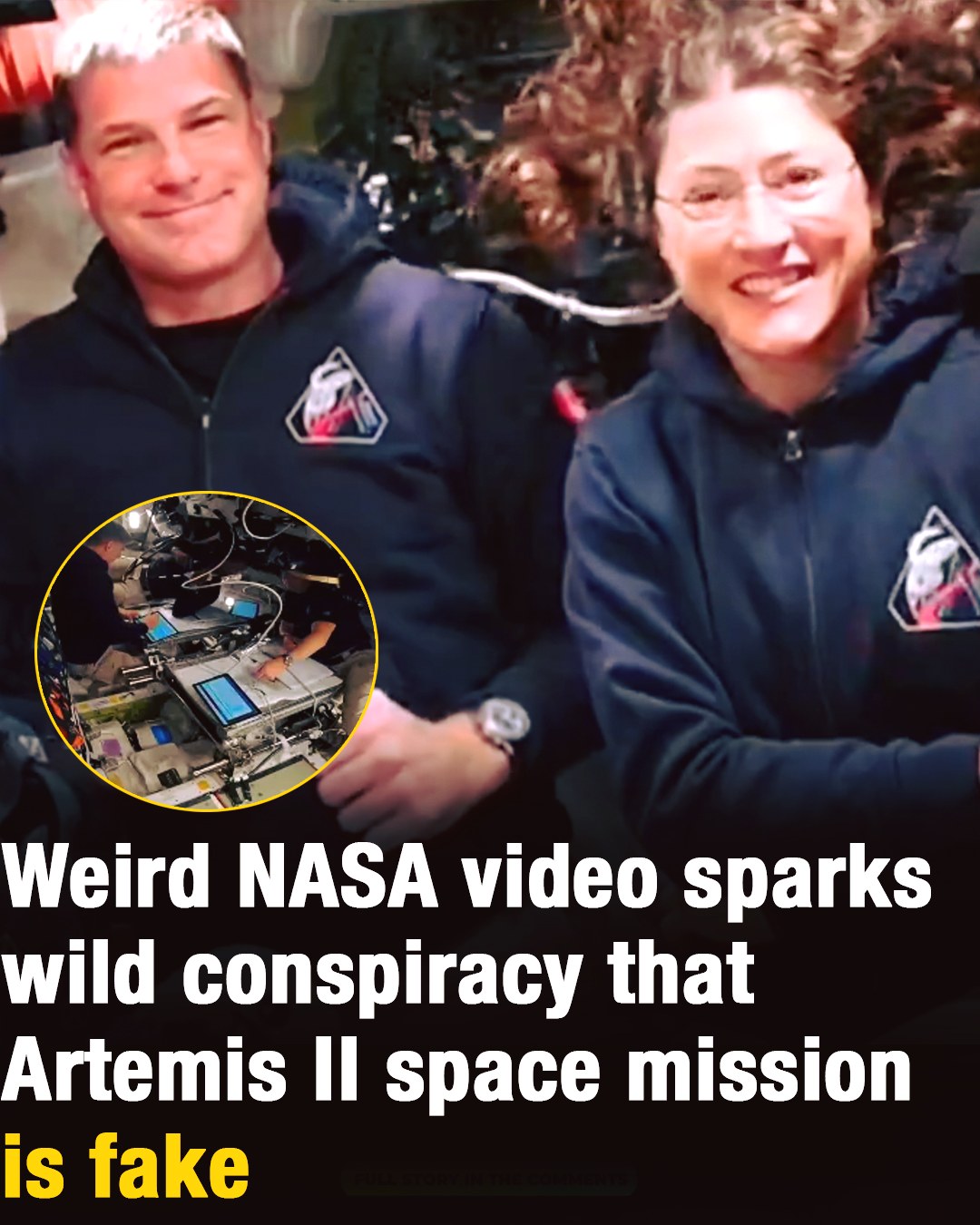
Artemis II Mission and Online Speculation Highlight Challenges of Science Communication in the Digital Age
In today’s digital environment, public discussion around major scientific and governmental achievements often spreads rapidly across social media platforms. Alongside verified information, unverified interpretations and alternative theories can circulate widely, reflecting both growing global interest in science and the challenges of information accuracy online.
Experts in media and communication studies note that the internet has significantly accelerated the speed at which both credible reporting and speculative claims are shared. While skepticism toward major events has existed historically, modern digital platforms have expanded its reach and visibility on an unprecedented scale.
Rising Attention Around Space Missions
Recently, renewed public attention has focused on NASA’s Artemis program, particularly the Artemis II mission. The mission is a key component of NASA’s long-term plan to return humans to deep space and eventually establish sustained exploration beyond Earth orbit.
Artemis II is designed as a crewed test flight that builds on earlier uncrewed missions in the Artemis series. Its primary objective is to evaluate spacecraft systems in deep space conditions before future lunar landing missions are attempted.
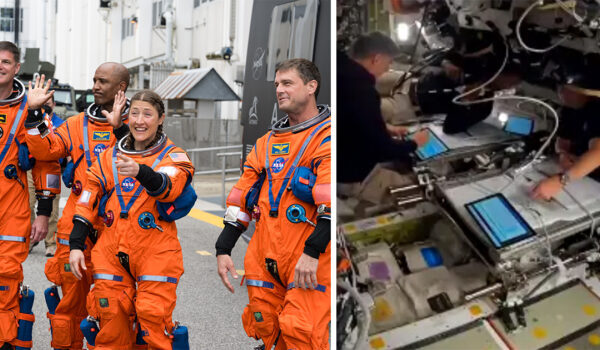
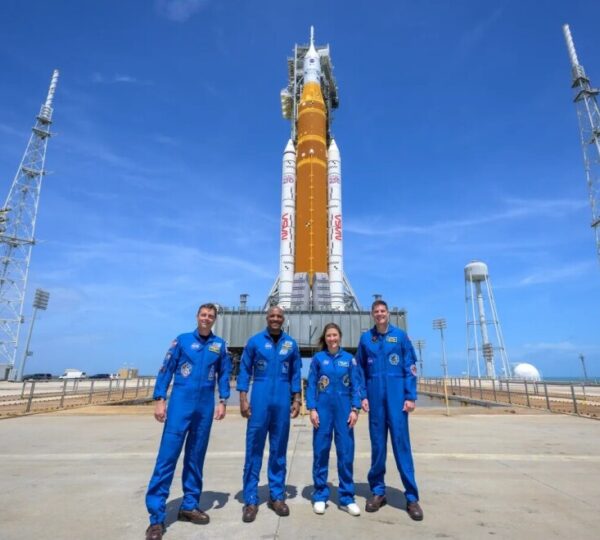
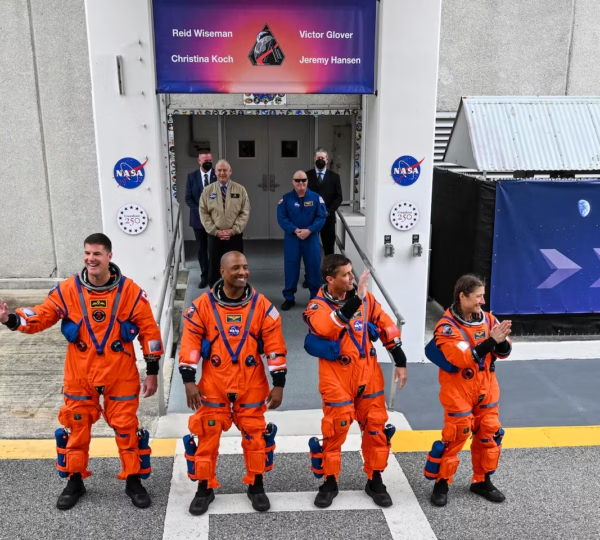
The mission crew includes NASA astronauts Christina Koch, Reid Wiseman, and Victor Glover, along with Canadian Space Agency astronaut Jeremy Hansen. Together, they represent an international team participating in one of the most closely watched spaceflight programs in recent years.
The mission utilizes NASA’s Space Launch System (SLS), a heavy-lift rocket standing approximately 322 feet tall, designed to carry astronauts farther into space than previous generations of spacecraft.
Following launch, the crew completed an initial Earth-orbit phase lasting approximately 25 hours. During this time, astronauts conducted system checks and communicated early mission impressions with ground control.
According to NASA communications, the crew described their early views of Earth as highly striking—an experience commonly reported by astronauts during initial exposure to spaceflight.
After completing Earth orbit operations, the spacecraft continued its trajectory toward the Moon. Rather than landing, the mission is designed to perform a controlled lunar flyby beyond the Moon’s orbit. This phase is intended to test spacecraft performance in deep space conditions, including communication systems, navigation, and life support reliability.
Broadcast Coverage and Online Interpretation
NASA’s coverage of Artemis II has included live interviews and global media broadcasts in collaboration with major news organizations. These presentations are intended to provide the public with real-time insight into mission progress and astronaut experiences.
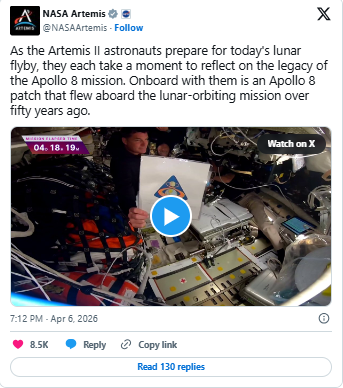
During one such live interview, a small plush toy was seen floating inside the spacecraft. The object, commonly used in space missions as an educational and morale indicator, was shown demonstrating microgravity conditions aboard the vehicle.
The visual quickly gained attention online, with some social media users questioning certain background elements and perceived visual inconsistencies in the broadcast. In particular, some viewers speculated about partial lettering and graphical elements appearing behind the floating object.
These interpretations led to broader online discussions and debate about the authenticity and presentation of live space footage.
Understanding Live Space Broadcast Technology
Technical experts emphasize that live space broadcasts frequently involve complex production techniques, including digital overlays, captions, and real-time data visualization. These tools are used to enhance viewer understanding and provide context during live scientific communication.
One commonly used method is chroma key compositing, which allows production teams to layer informational graphics, text, or backgrounds over live video feeds. This technique is widely used in television broadcasting, weather reporting, and scientific coverage.
In live transmission environments, minor synchronization delays between camera feeds and overlay graphics can occasionally occur. These brief inconsistencies may create visual artifacts or timing mismatches that appear unusual to viewers unfamiliar with broadcast production processes.
Experts note that such effects are generally technical artifacts rather than indications of manipulation. They are a normal byproduct of coordinating multiple live data streams and visual systems in real time.
The Role of Public Perception in Scientific Communication
Public reactions to high-profile space missions often vary widely. While many viewers focus on scientific achievements and engineering milestones, others may analyze visual details in greater depth, sometimes leading to misinterpretation without technical context.
Media specialists explain that viral online discussions are frequently influenced by a lack of familiarity with broadcast production techniques. In the absence of technical explanation, standard visual effects or transmission delays can sometimes be misunderstood.
Space agencies such as NASA consistently emphasize transparency in their mission reporting and scientific data sharing. Their communication strategies aim to make complex space operations accessible to global audiences while maintaining technical accuracy.
Artemis Program’s Broader Objectives
The Artemis program is part of a long-term initiative to return humans to the Moon and establish a foundation for future missions to Mars. Each mission phase builds upon previous technological and operational milestones, gradually expanding human capability in deep space exploration.
Artemis II, in particular, serves as a critical validation step for spacecraft systems, crew safety protocols, and mission procedures. Its outcomes are expected to inform future crewed lunar landing missions and broader exploration goals.
Information Literacy in the Digital Era
The widespread online discussion surrounding space missions highlights a broader challenge in the digital age: distinguishing between verified scientific reporting and speculative interpretation of visual content.
As scientific missions become increasingly visible through live broadcasts and social media, experts stress the importance of media literacy in understanding how such content is produced and presented.
Misinterpretations often arise not from the data itself, but from unfamiliarity with the technologies used to communicate it. Clear explanation of broadcasting methods can help bridge this gap and reduce confusion.
Conclusion
The Artemis II mission remains a significant milestone in modern space exploration, demonstrating advancements in human spaceflight and deep space readiness. At the same time, the online discourse surrounding its broadcast coverage illustrates the complex relationship between science communication and digital media interpretation.
As space agencies continue to share missions in real time with global audiences, the intersection of exploration, technology, and public perception will remain an important area of focus in both science and communication fields.

