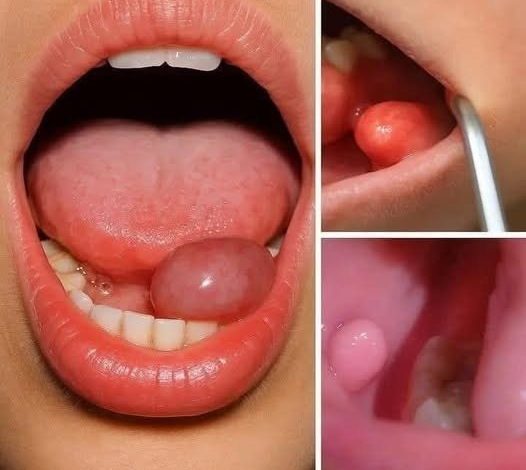
Mouth Cysts and Unusual Oral Bumps: Understanding Mucoceles, Ranulas, and Other Common Causes
Why a New Lump Inside the Mouth Should Not Be Ignored
Finding an unexpected bump inside the mouth can be unsettling. A person may suddenly notice a soft swelling beneath the tongue, a blister-like growth on the inner lip, or a small raised area along the cheek without any obvious explanation.
While many oral lumps are harmless and develop from relatively common conditions, their appearance often creates understandable concern. Questions about whether the growth is dangerous, whether it will disappear naturally, and whether treatment is necessary are common.
In many situations, these growths are not life-threatening. However, persistent changes inside the mouth deserve attention, especially when they continue enlarging, repeatedly return, interfere with normal activities, or remain present for an extended period.
Among the most frequently encountered causes of these soft oral swellings are mucoceles and ranulas. Both conditions involve trapped saliva that collects beneath the tissues of the mouth, forming fluid-filled cysts that can vary greatly in size.
Understanding how these cysts develop, what they look like, and when professional evaluation is needed can help individuals make informed decisions about their oral health.
Understanding Mucoceles
A mucocele is a cyst-like lesion filled with mucus that develops when a salivary gland duct becomes damaged, blocked, or disrupted.
Salivary glands continuously produce saliva, which normally travels through tiny ducts and empties into the mouth. When one of these ducts becomes injured or obstructed, saliva may no longer flow properly.
Instead of reaching the mouth, the fluid can leak into nearby tissue and collect beneath the surface. Over time, this trapped fluid forms a soft swelling known as a mucocele.
Minor injuries are among the most common causes. Accidentally biting the lip, chewing on the inside of the mouth, or experiencing repeated irritation can damage the delicate ducts that transport saliva.
Once the normal drainage pathway is disrupted, the gland may continue producing saliva, causing the swelling to persist or gradually enlarge.
Mucoceles are generally considered benign conditions and do not usually pose a serious health threat. Nevertheless, they can become bothersome because they often recur repeatedly.
Where Mucoceles Commonly Appear
Mucoceles can develop in several locations throughout the mouth.
The inside of the lower lip is one of the most common sites. This area is particularly vulnerable because it is frequently exposed to accidental biting and other minor injuries.
These cysts may also form beneath the tongue, along the inner lining of the cheeks, or on the roof of the mouth.
The exact location often depends on which salivary gland or duct has been affected.
Although they can vary in size, many remain relatively small. Others may gradually enlarge over time, especially when the source of the blockage remains untreated.
Recognizing the Appearance of a Mucocele
Mucoceles often have a characteristic appearance that makes them recognizable during a dental examination.
They typically feel soft when touched and are frequently painless.
The surface may appear clear, translucent, or slightly bluish due to the fluid trapped beneath the tissue.
Some lesions are only a few millimeters wide, while others may grow significantly larger.
Inside the cyst is usually a thick, mucus-like fluid produced by the affected salivary gland.
One of the most frustrating aspects of a mucocele is its tendency to fluctuate in size. The swelling may rupture on its own and appear to disappear temporarily.
After draining, it often becomes smaller or completely flat.
However, because the underlying gland continues producing saliva, the lesion frequently returns days or weeks later.
This cycle of shrinking and reappearing can continue indefinitely if the root cause remains unresolved.
What Is a Ranula?
A ranula is a specific type of mucus-filled cyst that develops on the floor of the mouth beneath the tongue.
Although it forms through a similar process as a mucocele, a ranula originates from one of the larger salivary glands located under the tongue.
Because these glands produce substantial amounts of saliva, ranulas can become significantly larger than many ordinary mucoceles.
The result is a noticeable swelling that may resemble a large bubble beneath the tongue.
In some individuals, the growth remains relatively stable. In others, it may continue expanding and become increasingly difficult to ignore.
Its location often makes it more disruptive than other oral cysts.
How Ranulas Can Affect Daily Life
As a ranula enlarges, it may begin interfering with normal mouth function.
Speaking can become uncomfortable when the tongue’s movement is restricted.
Eating and chewing may become more difficult as the swelling occupies additional space inside the mouth.
Some individuals notice discomfort while swallowing or feel as though something is constantly present beneath the tongue.
When left untreated, larger ranulas can occupy a considerable portion of the floor of the mouth.
This makes professional assessment particularly important whenever a swelling beneath the tongue appears to be increasing in size.
Other Conditions That May Cause Oral Lumps
Although mucoceles and ranulas are common explanations for soft oral swellings, they are not the only possible causes.
Various other conditions can produce bumps, nodules, or unusual growths inside the mouth.
A fibroma is one example. These benign growths consist of connective tissue and often develop in response to repeated irritation or friction.
Papillomas can also appear inside the mouth. These wart-like growths may be associated with HPV infection and often have a distinctive surface appearance.
Inflammatory granulomas may develop when tissues react to chronic irritation, injury, or inflammation.
Less commonly, a lump inside the mouth may originate from a salivary gland tumor.
While many salivary gland tumors are benign, some can be cancerous. This possibility is one reason persistent or unusual lesions should never be dismissed without evaluation.
Because multiple conditions can produce similar symptoms, appearance alone is not always sufficient to establish a diagnosis.
Common Symptoms Associated With Oral Cysts
The symptoms produced by oral cysts vary depending on their location, size, and cause.
Some individuals notice only a visible bump or swelling.
Others experience a sensation that something is lodged inside the mouth.
Mild tenderness may occur, particularly after accidental trauma to the affected area.
Discomfort can become more noticeable during eating, speaking, or chewing.
When a cyst ruptures, clear mucus or fluid may leak into the mouth.
Many lesions remain painless, which sometimes causes individuals to postpone seeking professional evaluation.
However, the absence of pain does not necessarily mean a lesion should be ignored.
The Importance of Proper Diagnosis
Because many oral conditions resemble one another, obtaining an accurate diagnosis is an important step in determining whether treatment is necessary.
Dental professionals and oral and maxillofacial surgeons evaluate several factors when examining an oral lesion.
The location of the growth often provides valuable clues regarding its origin.
Its size, shape, color, and texture are also carefully assessed.
Clinicians typically ask how long the lesion has been present and whether it has changed over time.
A history of lip biting, trauma, irritation, or previous episodes may further assist in identifying the underlying cause.
In many cases, a clinical examination provides enough information to establish a likely diagnosis.
When uncertainty remains, additional testing may be recommended.
Diagnostic Tests That May Be Used
Imaging studies are sometimes helpful when evaluating oral swellings.
Ultrasound examinations can provide information about the size and internal characteristics of a lesion.
More advanced imaging may be considered when deeper structures require assessment.
In certain situations, a biopsy becomes necessary.
A biopsy involves removing a sample of tissue for laboratory examination.
This procedure is especially important when a lesion appears unusual, demonstrates continued growth, or displays features that raise concern about a possible tumor.
Biopsy results can help distinguish benign cysts from other conditions that may require different treatment approaches.
Available Treatment Options
One common misconception is that oral cysts such as mucoceles and ranulas usually disappear permanently without intervention.
While temporary improvement can occur, lasting resolution is often less common.
When a cyst ruptures naturally, the trapped fluid drains and the swelling may decrease significantly.
However, if the damaged duct or affected gland continues leaking saliva, the lesion may return.
Treatment is designed not only to remove the existing cyst but also to address the source of the problem.
One widely used approach involves surgical removal.
During this procedure, the cyst and the involved salivary gland duct may be removed to reduce the chance of recurrence.
Another option is marsupialization.
This technique creates a permanent opening that allows saliva to drain properly, helping prevent future fluid accumulation.
In selected situations, particularly when a lesion is small and causes no symptoms, careful observation may be appropriate.
Even in these cases, ongoing monitoring is important because recurrence remains possible.
Why Self-Treatment Is Not Recommended
Many people feel tempted to puncture or squeeze a mouth cyst themselves.
Although this may seem like a quick solution, it is generally discouraged.
Attempting to remove or drain a lesion at home can introduce bacteria and increase the risk of infection.
Additional irritation may worsen inflammation and delay healing.
Self-treatment can also make it more difficult for healthcare professionals to evaluate the lesion accurately.
Even when a cyst temporarily disappears after being punctured, the underlying salivary duct problem frequently remains unchanged.
As a result, recurrence is common.
When Professional Evaluation Is Necessary
Prompt medical or dental attention is advisable whenever an oral swelling demonstrates concerning features.
Rapid growth should be evaluated as soon as possible.
Severe pain, bleeding, or drainage of pus may indicate complications requiring treatment.
Difficulty eating, swallowing, or speaking should also prompt professional assessment.
A lesion that remains present for more than two or three weeks deserves careful examination, even if it causes little discomfort.
Persistent oral growths should never be ignored simply because they are painless.
Early evaluation helps identify benign conditions while ensuring that more serious causes are not overlooked.
Understanding the Importance of Early Care
Discovering an unusual lump inside the mouth can be alarming, but many cases are linked to benign conditions such as mucoceles and ranulas.
These fluid-filled cysts develop when saliva becomes trapped beneath oral tissues due to blocked or damaged salivary ducts.
Although they are usually not dangerous, they often persist or return repeatedly without appropriate treatment.
Professional evaluation provides the most reliable way to determine the exact cause of an oral swelling and identify the most appropriate management strategy.
Timely diagnosis can reduce the likelihood of complications and improve long-term outcomes.
When changes inside the mouth fail to resolve, continue growing, or interfere with normal activities, seeking expert assessment remains the safest course of action.
Important Medical Disclaimer
This article is intended for informational purposes only and should not be considered medical advice. It is not a substitute for professional diagnosis, treatment, or consultation with a qualified healthcare provider. If you notice a persistent lump, swelling, pain, or any unusual changes inside your mouth, seek evaluation from a dentist or oral and maxillofacial specialist.
