
Is Pork Really Red Meat? The Science Behind the “Other White Meat” Confusion Explained
A Common Misunderstanding About Pork
For many people, pork has long been associated with the idea of “white meat.”
This belief is often shaped by everyday language, family habits, and even advertising campaigns that reinforced the impression that pork belongs in the same category as chicken or turkey.
Because pork often appears lighter in color when cooked, it is easy to assume it is not the same as beef or lamb in terms of classification.
However, scientific nutrition standards tell a different story.
According to widely accepted dietary classifications, pork is considered red meat.
Why Pork Is Classified as Red Meat
The classification of meat as red or white is not based on appearance after cooking.
Instead, it is determined by the biological makeup of the animal it comes from.
Red meat is defined as meat that originates from mammals.
This category includes beef, lamb, veal, and pork.
Pork, therefore, falls into the same biological group as other mammalian meats.
The key factor behind this classification is a protein called myoglobin.
Myoglobin is found in muscle tissue and is responsible for storing and transporting oxygen within muscles.
Animals with higher levels of myoglobin tend to have darker-colored meat in its raw form.
Mammals generally have higher concentrations of this protein compared to birds.
This is why pork, even when it appears lighter in color, is scientifically categorized as red meat.
The classification is based on biology, not marketing or culinary perception.
Why Pork Appears Lighter Than Other Red Meats
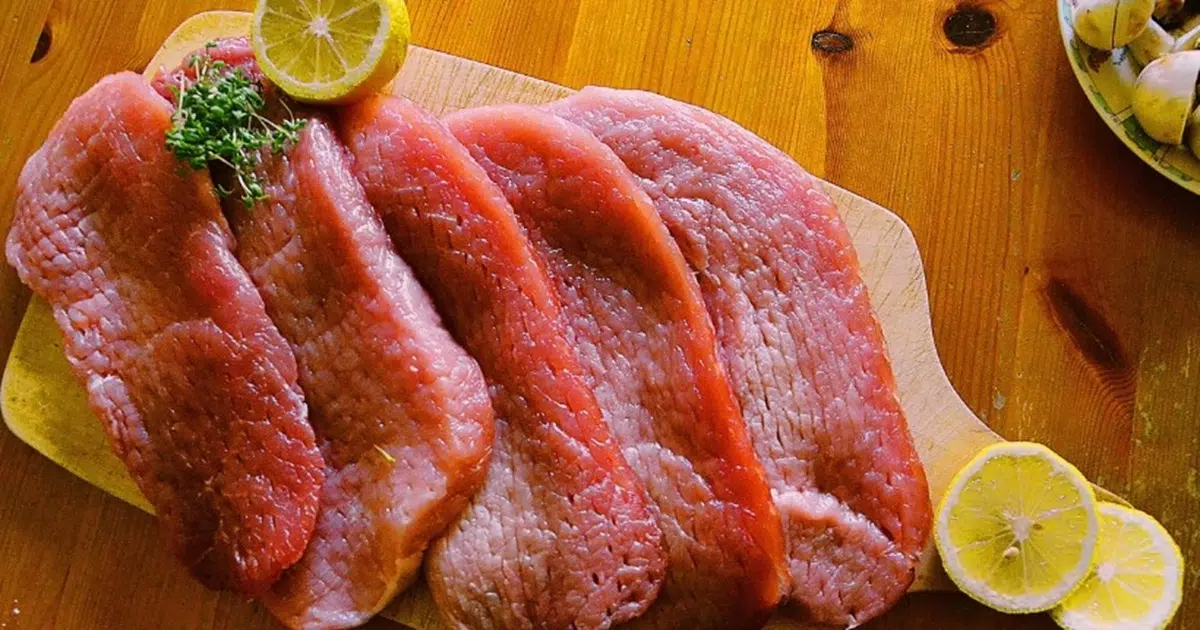
Despite its scientific classification, pork often looks different from beef on the plate.
Raw pork chops are typically lighter in color than raw beef steaks.
Some cuts, such as pork loin and tenderloin, can appear especially pale when cooked.
This visual difference contributes significantly to public confusion about its classification.
The lighter appearance makes pork seem more similar to chicken or turkey, which are commonly labeled as white meats.
However, appearance alone does not determine meat classification under nutritional science.
Instead, internal biological characteristics remain the deciding factor.
The Role of Marketing in Shaping Public Perception
Beyond biology, cultural messaging has also played a major role in how pork is perceived.
In the early 1980s, the pork industry launched a major marketing campaign that promoted pork as “the other white meat.”
The goal of this campaign was to reposition pork as a leaner and healthier alternative to beef in the eyes of consumers.
At the time, public concern about dietary fat levels was increasing, and marketing strategies focused on highlighting perceived health benefits.
The campaign proved highly effective and became deeply embedded in popular culture.
As a result, many people continue to associate pork with white meat despite scientific classifications.
This demonstrates how marketing language can strongly influence long-term food perception.
White Meat Versus Red Meat: A Biological Distinction
The classification of white meat is primarily applied to poultry such as chicken and turkey.
These animals are not mammals, which is a key biological distinction from pork, beef, or lamb.
Poultry contains lower levels of myoglobin, which results in a lighter color and different nutritional profile.
This difference in muscle composition is what separates white meat from red meat in scientific terms.
Therefore, the distinction is not based on how meat looks after cooking, but on the type of animal and its biological structure.
Pork, as a mammal, does not fall into the poultry category regardless of its appearance on the plate.
Science Versus Cultural Understanding
The confusion surrounding pork’s classification comes from the intersection of science and culture.
On one hand, nutritional science provides a clear biological definition.
On the other hand, everyday language and advertising have created a different public understanding.
These two systems use different criteria to describe the same food.
As a result, pork can appear to belong to more than one category depending on the context.
This overlap between science and cultural messaging is what leads to ongoing misunderstanding.
Why the Distinction Matters
Understanding whether pork is red or white meat is not just a matter of terminology.
It also relates to how dietary guidelines are structured.
Nutritional recommendations often differentiate between types of meat based on their biological classification.
This helps provide clearer guidance on consumption patterns and dietary balance.
By recognizing pork as red meat in scientific terms, consumers can better understand how it fits into broader nutritional frameworks.
A Clear Conclusion
Pork is scientifically classified as red meat because it comes from a mammal and contains levels of myoglobin consistent with other red meats.
Its lighter appearance and long-standing marketing campaigns have contributed to widespread confusion.
However, appearance and advertising do not change its biological classification.
The distinction between red and white meat ultimately depends on the animal’s physiology, not its color on the plate.
Once this difference is understood, the long-standing confusion surrounding pork becomes much easier to clarify.

