
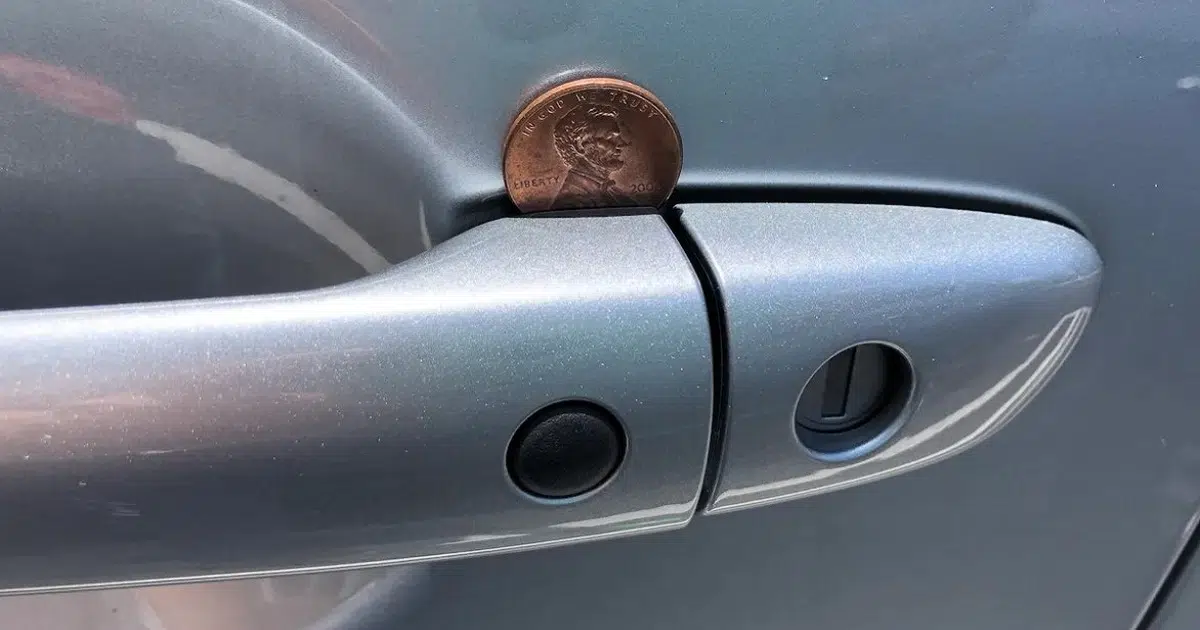
The Coin-in-the-Door Myth: What Drivers Should Know About This Long-Running Car Theft Story
An Unexpected Problem at Your Vehicle
Imagine walking toward your car, ready to leave, only to discover that something feels wrong. You insert your key or try to unlock the vehicle, but the lock does not respond as expected.
For many drivers, that frustrating moment may seem like a simple mechanical issue. Over the years, however, a popular story has circulated claiming that a small coin placed in a car door handle could be part of a car thief’s plan.
The tale has been shared widely online and continues to spark debate among motorists. While some view it as a genuine warning, others consider it little more than an urban legend.
The Story Behind the Coin Trick
According to the commonly repeated claim, thieves use a penny, nickel, or another small coin by inserting it into a vehicle’s passenger-side door handle.
The purpose of the coin is said to be interfering with the locking mechanism. Supporters of the theory believe the object can prevent the central locking system from functioning correctly, making it more difficult for the owner to secure the vehicle.
The idea suggests that the driver may not immediately realize there is a problem. Believing the car has been locked normally, the owner could leave the area while the vehicle remains vulnerable.
Others versions of the story claim the coin creates confusion and distraction, giving a thief an opportunity to observe the situation and wait for the right moment to act.
Why the Passenger Side Is Often Mentioned
In many retellings of the story, the passenger-side door is identified as the preferred location for the coin.
The reasoning is simple. Drivers often pay less attention to the passenger side than to the driver’s side, making it easier for an object placed there to go unnoticed.
According to the legend, the coin can interfere with the locking process, causing unexpected problems when the owner attempts to secure or access the vehicle.
Whether or not this scenario occurs in practice, the passenger-side handle remains a central element of the widely shared warning.
The Alleged Strategy Behind the Tactic
The story does not stop with the coin itself.
Many versions claim that thieves are not looking for an immediate opportunity. Instead, they are described as waiting nearby and watching the vehicle owner struggle with the lock.
As the driver becomes distracted or frustrated, the thief supposedly gains an advantage.
The legend portrays a criminal taking advantage of confusion, hoping the owner will leave the vehicle unattended or become less aware of their surroundings.
This element of the story has helped keep it alive for years because it taps into common concerns about personal safety and vehicle security.
What to Do If Something Seems Wrong
Regardless of whether a coin is involved, any sign of tampering should be taken seriously.
If a lock does not function properly or something appears unusual, it is wise to inspect the vehicle carefully before proceeding.
Checking door handles, locks, and other visible areas can help identify any foreign object or potential damage.
Remaining aware of the surrounding environment is equally important. If a situation feels suspicious, moving to a populated or well-lit area may be the safest choice.
Trusting personal instincts can be valuable when dealing with unexpected circumstances.
Staying Aware of Your Surroundings
Situational awareness is one of the simplest and most effective safety habits.
Whether arriving at a parking lot during the day or returning to a vehicle after dark, paying attention to nearby activity can reduce risk.
If anything appears unusual, seeking assistance from a friend, family member, security officer, or nearby business may provide additional peace of mind.
Drivers who feel uncomfortable should avoid placing themselves in isolated situations whenever possible.
Awareness often serves as an important layer of protection regardless of the specific threat involved.
When Authorities Should Be Contacted
If there is clear evidence that a vehicle has been tampered with, contacting law enforcement may be appropriate.
Visible damage, signs of attempted entry, or suspicious activity around a vehicle can warrant professional attention.
Reporting concerns allows authorities to evaluate the situation and determine whether further action is necessary.
In cases involving suspected criminal activity, prompt reporting may also help protect others in the area.
Additional Ways to Protect a Vehicle
Many drivers choose to add extra layers of security to their vehicles.
Anti-theft systems, steering wheel locks, alarms, and other security devices can discourage opportunistic criminals.
Parking in well-lit locations is another commonly recommended precaution.
Areas with higher visibility often reduce opportunities for tampering and make suspicious activity easier to notice.
Simple habits such as locking doors, closing windows, and removing valuable items from plain sight can also contribute to vehicle security.
Not Everyone Accepts the Theory
Despite the popularity of the coin-in-the-door-handle story, many people remain skeptical.
Critics argue that there is little evidence proving that finding a coin on a vehicle automatically indicates a theft attempt.
Some believe the story has gained attention primarily because it is unusual and memorable.
Others suggest that a coin found near a door handle may have an entirely innocent explanation.
As a result, opinions remain divided.
Some motorists view the warning as a useful reminder to stay alert, while others regard it as an unverified claim that has been repeated over time.
A Story That Continues to Circulate
The persistence of the coin legend highlights how easily unusual stories can spread and endure.
Because the scenario sounds plausible and involves a common object, it has continued to attract attention across social media, online forums, and word-of-mouth discussions.
Its longevity reflects broader concerns about vehicle theft and personal safety.
Even people who doubt the story often agree that it encourages awareness and caution.
That combination of mystery and practical advice has helped keep the tale alive for years.
A Balanced Approach to Vehicle Safety
Whether the presence of a coin in a door handle signals a genuine threat or simply an innocent coincidence remains a matter of debate.
There is no universal proof that such a discovery automatically means a vehicle is about to be stolen.
At the same time, unusual circumstances around a vehicle should never be ignored without consideration.
Taking a moment to inspect the car, remain aware of the surroundings, and verify that everything is functioning properly is a sensible response.
Practical security measures remain valuable regardless of urban legends or online warnings.
Locking vehicles, choosing safe parking locations, and using available security features can help reduce risks and provide greater confidence for drivers.
In the end, caution and awareness are useful habits under any circumstance, whether a coin in a door handle turns out to be a warning sign or nothing more than an unexpected piece of loose change.

