
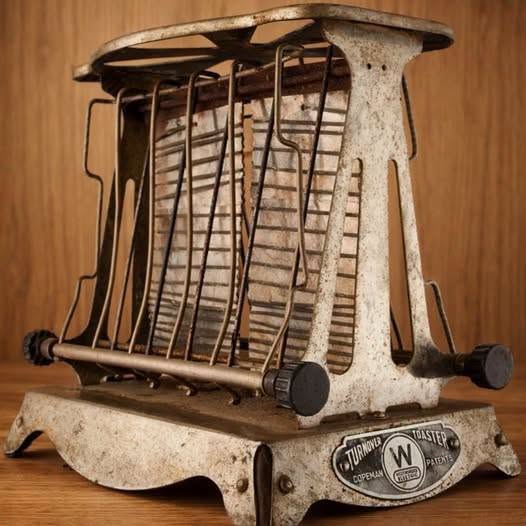
The Vintage Toaster That Helped Transform the Modern Breakfast Experience
An Everyday Appliance From a Different Era
Nearly a century ago, a distinctive style of electric toaster became a common fixture in many homes. Long before modern appliances handled the work automatically, preparing toast required patience, attention, and a hands-on approach.
Families often began their mornings gathered around kitchen tables while breakfast was prepared one slice at a time. The toaster was not simply another appliance on the counter. It represented a growing shift toward convenience and modern living.
Unlike the enclosed models found in most kitchens today, these early electric toasters featured an open-frame design that exposed the bread directly to visible heating elements.
The glowing coils produced heat that gradually browned the bread, but achieving the perfect result depended entirely on the person operating the appliance.
A Breakfast Ritual That Required Attention
Using one of these vintage toasters was a very different experience from pressing a button on a modern machine.
There were no automatic timers, electronic sensors, or spring-loaded mechanisms to pop the toast out when it was finished.
Instead, users had to watch carefully as the bread toasted.
As the heating coils glowed red, the slices slowly changed color. Timing was important because leaving the bread too long could quickly turn a golden slice into a burnt one.
At the right moment, the bread needed to be flipped by hand so the opposite side could toast evenly.
This process demanded attention, but it also created a small daily ritual that many families came to know well.
Breakfast preparation was often a slower and more deliberate part of the morning routine, and operating the toaster became one of those simple tasks woven into everyday life.
A Symbol of Technological Progress
Although it may appear primitive by modern standards, the vintage toaster represented an important advancement in household technology.
During the early decades of widespread electrification, many homes were beginning to adopt electric appliances that promised greater convenience and efficiency.
The toaster became one of the visible examples of how electricity could improve daily routines.
For households accustomed to cooking over stoves or open flames, electric appliances offered a cleaner and more controlled alternative.
The ability to toast bread using electricity felt innovative and exciting.
It demonstrated how emerging technologies could simplify common tasks while reducing smoke, soot, and the mess often associated with older cooking methods.
The Rise of Electric Convenience
The introduction of appliances such as electric toasters marked the beginning of significant changes within the home.
Household technology was evolving rapidly, and manufacturers sought to create products that would save time and effort.
Each new appliance contributed to a broader transformation in domestic life.
Electric irons, refrigerators, washing machines, and toasters gradually became symbols of modern living.
Families embraced these inventions because they offered practical benefits while also representing progress.
The toaster, though relatively simple in design, played a meaningful role in that transition.
Every morning, it provided a visible reminder that technology was becoming part of everyday routines.
A Design Unlike Anything Seen Today
One of the most striking features of these early toasters is their appearance.
The open construction exposes the heating elements and bread, creating a design that differs dramatically from modern appliances.
Today’s toasters are enclosed, insulated, and equipped with safety features intended to minimize user interaction.
In contrast, vintage models placed the mechanics of the process on full display.
Users could see exactly how the appliance worked as electricity heated the coils and transformed ordinary bread into toast.
This visible functionality reflected an era when mechanical and electrical innovations were often celebrated rather than hidden behind sleek exterior panels.
The appliance’s design served both a practical and educational purpose, allowing people to witness technology in action.
More Than a Kitchen Gadget
Over time, these early toasters became more than tools for preparing breakfast.
They came to represent a period of optimism and technological advancement.
As electricity expanded into more homes, appliances like the toaster helped shape expectations about comfort and convenience.
People began to imagine a future in which technology could simplify countless aspects of daily life.
The toaster contributed to that vision by performing a simple task more efficiently than many previous methods.
While its role may seem modest today, it formed part of a much larger story about innovation and changing lifestyles.
The Appeal of Vintage Appliances Today
Decades after their introduction, these classic toasters continue to attract interest from collectors and history enthusiasts.
Many appreciate their distinctive appearance, while others value the historical significance they represent.
For collectors, owning one provides a tangible connection to an earlier period of technological development.
The craftsmanship, materials, and design choices offer insight into how appliances were built during a different era.
Even those who would never use such a toaster regularly often admire its place in the evolution of household technology.
It serves as a reminder of how far everyday appliances have progressed over the years.
Preserving a Piece of Household History
Vintage appliances often reveal details about the lives of the people who once depended on them.
They tell stories about routines, habits, and the technologies available at the time.
The early electric toaster is particularly interesting because it sits at the intersection of tradition and innovation.
It reflects a moment when households were beginning to embrace electrical convenience while still maintaining many older practices.
Each carefully toasted slice represented a small but meaningful example of technological progress.
For families living through that period, the appliance symbolized a future that seemed increasingly connected to electricity and modern invention.
How Small Innovations Create Lasting Change
Many of the technologies people rely on today evolved from simple inventions that addressed everyday needs.
The vintage toaster is a clear example of how a seemingly ordinary object can influence daily life in significant ways.
Its contribution was not measured solely by its ability to brown bread.
Rather, it demonstrated how innovation could improve routine tasks and encourage wider adoption of new technologies.
As more homes incorporated electric appliances, expectations changed. Convenience became increasingly important, and manufacturers responded by developing even more advanced products.
The toaster helped pave the way for that evolution.
A Reminder of an Earlier Era
Looking back at these early appliances offers a glimpse into a time when electricity itself felt transformative.
What appears simple today once represented cutting-edge technology.
The process of making toast required attention and patience, yet it also carried a sense of novelty and excitement.
Families experienced firsthand how innovation could reshape ordinary routines.
That historical significance is one reason vintage toasters continue to fascinate people generations later.
They remind us that some of the most important technological advances begin with practical solutions to everyday challenges.
The Legacy of a Classic Kitchen Innovation
The vintage toaster remains a symbol of a period when household technology was rapidly evolving.
Its open-frame design, hands-on operation, and connection to the early days of electric convenience make it an enduring piece of history.
While modern appliances have largely replaced it, the influence of those early designs can still be seen in kitchens around the world.
Every advancement in appliance technology builds upon innovations that came before it.
This classic toaster stands as a reminder that even the most ordinary household items can have extraordinary stories behind them.
Through its role in transforming breakfast preparation and introducing families to the possibilities of electric living, it secured a lasting place in the history of everyday innovation.

