
Daniel Harper never expected that purchasing an aging Craftsman-style house would lead to a discovery that would reshape his understanding of home, history, and human connection. Yet from the moment he first saw the weathered property on Willow Creek Road, he sensed that it held more than just structural challenges—it carried a quiet, hidden story waiting to be uncovered.
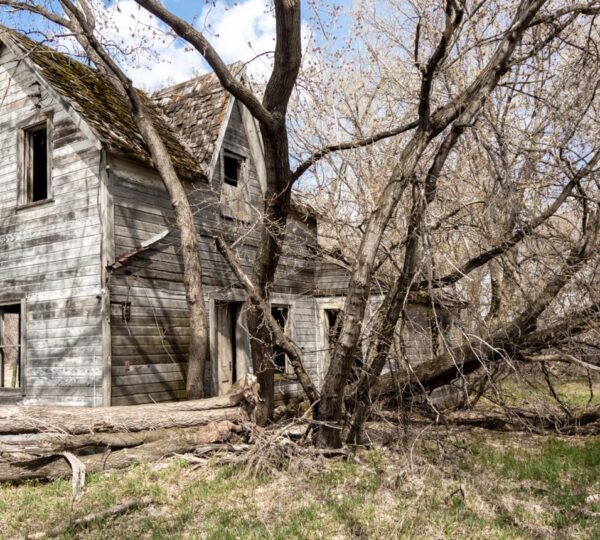
The house had been abandoned for over a decade before Daniel acquired it. Many people in the area considered it beyond repair, pointing to its sagging roof, creaking porch steps, and layers of peeling paint as clear signs of irreversible decline. Time and weather had taken their toll, leaving the structure worn and fragile in appearance.
The backyard reflected the same level of neglect. Dense weeds, tangled vines, and overgrown grass covered what had once been a carefully maintained garden. It was difficult to even identify the original layout of the space, as nature had slowly reclaimed it over the years.
Despite these visible issues, Daniel saw potential where others saw only decay. Recently divorced and searching for a sense of stability, he viewed the property as more than an investment. It represented a chance to begin again, to rebuild both a home and a sense of personal direction.
One feature of the property stood out immediately—a large oak tree positioned near the center of the backyard. Its wide branches stretched outward, casting shade over the entire area. The trunk was thick and deeply textured, suggesting it had stood there for generations, enduring storms and seasons without losing its presence.
Shortly after moving in, Daniel spoke with his elderly neighbor, Mrs. Wheeler, who had lived in the neighborhood for most of her life. She pointed toward the oak tree and explained that it had been part of the landscape for at least eighty years, possibly longer according to local memory. At the time, Daniel appreciated the information but did not fully grasp the deeper significance the tree held.
For several months, life remained quiet. Daniel focused on restoring the house, repairing damaged walls, updating wiring, and gradually clearing debris from both the interior and exterior. The process was slow but steady, giving him time to adjust to his new surroundings.
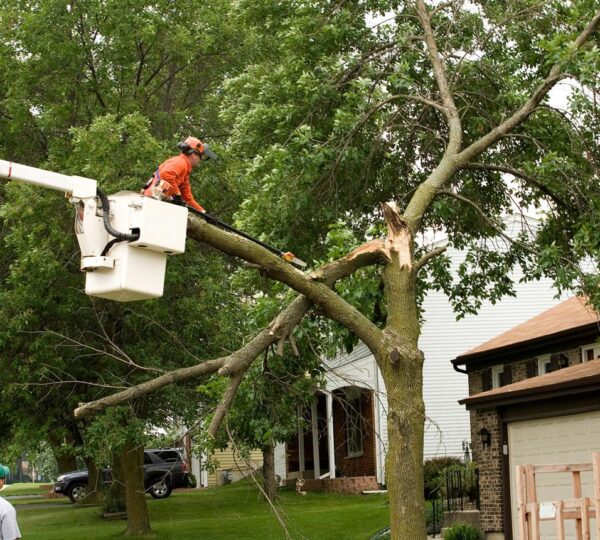
Everything changed one spring night when a severe storm passed through the area. Heavy rain, strong winds, and frequent lightning shook the neighborhood. During the storm, lightning struck the oak tree directly, splitting part of its trunk and damaging several large branches.
By morning, the damage was clear. Broken limbs were scattered across the yard, and deep cracks ran through the tree’s structure. It was no longer safe to leave standing. Concerned about the risk, Daniel contacted a professional crew to remove the damaged tree.
A few days later, the team arrived and began the careful process of dismantling the tree. Using specialized equipment, they cut through large branches and gradually worked their way down the trunk. Daniel watched from a distance as each section fell, the sound echoing through the quiet neighborhood.
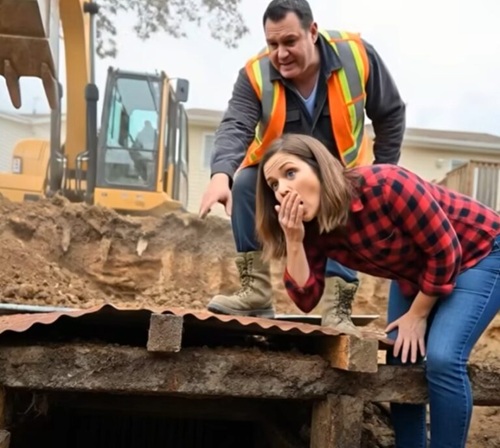
As the workers reached the base of the tree, one of them noticed something unusual beneath the exposed roots. After turning off his equipment, he pointed to a flat surface partially buried under the soil. At first, it appeared to be debris, but its shape suggested something more deliberate.
The crew carefully cleared away dirt, revealing what looked like a wooden hatch. Rusted metal hinges and a central handle indicated that it had been intentionally constructed. It had likely remained hidden for decades beneath the tree.

Curiosity grew as the workers secured the hatch and slowly lifted it open. Beneath it was a narrow opening with a ladder leading downward into darkness. The presence of an underground space raised immediate questions.
With caution, Daniel decided to climb down first. Holding a flashlight, he carefully descended into the space below. At the bottom, he found a small, enclosed room supported by wooden beams. Despite its age, the structure remained intact.
Inside, simple shelves lined one wall. In the corner stood a large cedar chest, preserved in surprisingly good condition. It appeared untouched, as if it had been deliberately sealed away.
Daniel opened the chest and discovered bundles of old photographs tied together with string. Each image captured moments from a life long past. Many featured a young woman standing beside the same oak tree that had once stood above.
On the back of one photograph, a handwritten note identified her as Margaret Whitmore, dated April 12, 1942. The images provided a connection to the past, offering a glimpse into the lives once lived on the property.
Beneath the photographs were carefully preserved letters, all addressed to Margaret. None had been opened. They were written by a man named Theodore Whitmore, who described daily experiences, personal reflections, and his hopes of returning home.
The letters revealed a story of love and longing. Theodore wrote about his desire to return and spend peaceful days beneath the oak tree they had planted together. The tree appeared to hold deep emotional meaning for them both.

At the bottom of the chest was an official document confirming Theodore’s death during military service. The hopeful tone of his earlier letters stood in stark contrast to this final reality.
There was also a handwritten note from Margaret. In it, she explained why the letters had remained unopened. She wrote that she chose to preserve them beneath the oak tree, the place that symbolized the happiest time in their lives together. For her, the location itself served as a memorial.
The discovery deeply affected Daniel. Recognizing the importance of what he had found, he decided not to keep the items. Instead, he began researching local records to locate any surviving members of the Whitmore family.
After several weeks, he found Emily Whitmore, Margaret’s granddaughter, who lived in a nearby town. When Daniel shared the chest and its contents with her, the moment was emotional. She was seeing a part of her family’s history for the first time.
Emily explained that her grandmother had rarely spoken about her past. The letters and photographs revealed a story that had remained hidden for generations.
Together, they read through the letters, uncovering a narrative shaped by love, separation, and loss. What had been buried beneath the tree for decades became a shared moment of remembrance.
In the weeks that followed, Daniel and Emily decided to honor the story in a meaningful way. They planted a new oak tree in the same spot where the original had stood. Beneath it, they placed a small time capsule containing copies of the letters and photographs.

A simple plaque was added nearby with the words: “Love grows deepest where it is remembered.” The gesture ensured that the story would not be lost again.
For Daniel, the house on Willow Creek Road became more than a renovation project. It became a place of connection, memory, and reflection. What once seemed like an abandoned structure had revealed a deeply human story hidden beneath its surface.
The property no longer felt empty. Instead, it stood as a reminder that even the quietest places can hold meaningful histories—waiting patiently to be discovered when the time is right.

