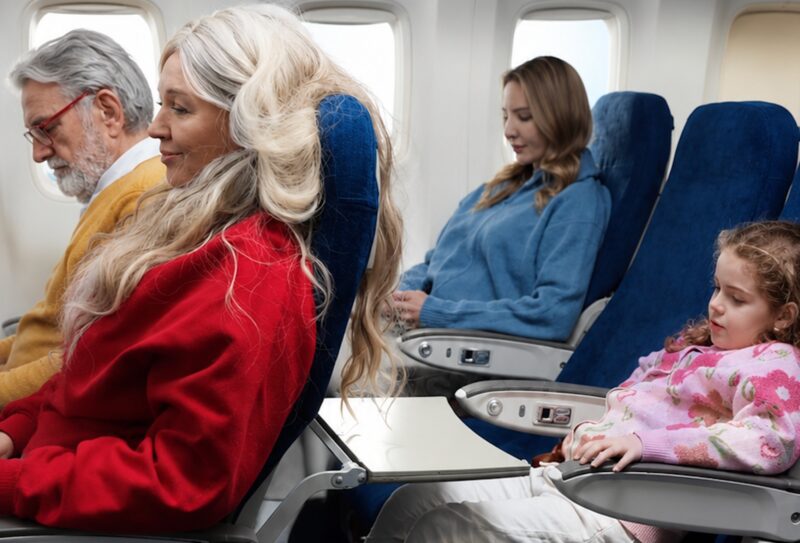
Passenger Confronts Mid-Air Disruption After Child Repeatedly Kicks Seat During Long-Haul Flight
A Long Flight Begins in Calm Conditions
An international flight lasting nearly six hours began like any other routine journey, with passengers settling into their seats and preparing for a long stretch in the air. The cabin was orderly, and the atmosphere initially reflected the quiet expectations of travelers hoping for a smooth trip.
Among them was a passenger who had deliberately prepared for comfort and relaxation. A window seat had been selected in advance, a book had been packed, and several movies had been downloaded with the intention of spending the flight in peace and quiet.
At first glance, nothing suggested that the journey would be anything other than uneventful. Nearby passengers appeared settled, and the general environment inside the aircraft was calm. Even the seating arrangement behind the passenger seemed unremarkable at the start.
Behind the seat was a mother traveling with a young daughter, estimated to be around seven or eight years old. Initially, the child appeared calm, and there were no signs of any behavior that might disturb other passengers.
The Early Part of the Flight Passes Smoothly
During the first hour of the journey, everything unfolded without incident. The child quietly watched animated content on a tablet, while the mother remained focused on her phone. The surrounding passengers, including the narrator, took advantage of the calm atmosphere to read, rest, or look out at the clouds.
For a short time, the flight felt stable and uneventful. The steady hum of the aircraft and the predictable rhythm of travel created a sense of relaxation that many passengers hope for when boarding a long flight.
However, as the initial calm began to fade, subtle changes in behavior from the child gradually shifted the atmosphere inside the cabin.
Noise and Distraction Begin to Disrupt the Cabin
The first noticeable disruption came when the volume from the child’s tablet increased significantly. The sound of cartoons, music, and exaggerated character voices became audible beyond the immediate seat area, drawing attention from nearby passengers.
Some travelers began glancing backward in response to the growing noise, but the mother did not appear to intervene. Her attention remained fixed on her phone, and no adjustments were made to address the disturbance.
As time passed, the child’s behavior changed again. The focus shifted from the tablet to snacks, which were consumed in a noticeably loud and distracting manner. The combination of sound and movement contributed to an increasingly uncomfortable environment for those seated nearby.
What had begun as a quiet flight was slowly turning into a more stressful experience for some passengers.
Repeated Seat Kicking Escalates the Situation
The situation became significantly more disruptive when repeated impacts began against the back of the seat in front of the child. At first, these movements seemed accidental, but they quickly became more frequent.
As the pattern continued, the force and repetition of the kicks increased. The seat began to shake with each impact, making it difficult for the passenger in front to read or concentrate.
What initially might have been dismissed as minor discomfort gradually turned into a persistent disturbance. Despite the growing disruption, no immediate corrective action was taken by the accompanying parent.
Instead, the behavior continued, and the lack of intervention allowed the situation to escalate further.
A Direct Request for Consideration Is Dismissed
After several attempts to ignore the situation, the passenger affected by the repeated kicking decided to address the issue directly. Turning around, the concern was expressed as calmly as possible, with a request for the mother to intervene and help stop the disruption.
The response, however, was dismissive. The mother minimized the concern and suggested that the behavior was not significant, attributing it to the child simply being active and restless during a long flight.
Despite being informed that the kicking was affecting comfort and making it difficult to relax, the situation was not acknowledged as a serious issue. The parent returned her attention to her phone without offering correction or guidance to the child.
Following this exchange, the disruptive behavior continued. In some moments, it even appeared to intensify, as if the lack of response reinforced the behavior rather than discouraging it.
Growing Frustration Inside the Cabin
As the situation persisted, frustration began to build. The repeated disturbances made it increasingly difficult to remain calm, especially in a confined space where passengers have limited ability to avoid one another.
It became clear that the issue was no longer an isolated moment of inconvenience but a sustained disruption affecting the comfort of another passenger. The lack of intervention from the accompanying adult contributed to the growing tension.
At this stage, the focus shifted from personal irritation to finding an appropriate and respectful solution that would restore order without creating a larger conflict onboard.
Rather than escalating the situation directly with the family again, the decision was made to involve cabin crew, who are trained to handle in-flight disturbances and maintain a safe and respectful environment for all passengers.
Flight Attendant Intervention Brings Formal Attention
A flight attendant was called and the situation was explained in a calm and factual manner. The report focused on the ongoing disruption caused by repeated kicking of the seat over an extended period of time.
The crew member listened carefully and then proceeded to speak with the mother and child to assess the situation from their perspective as well.
During the conversation, the mother initially responded in a similar manner as before, suggesting that the behavior was not severe and emphasizing the child’s age as a justification for the lack of control.
However, the cabin crew maintained a professional stance and clarified that all passengers are required to follow basic in-flight conduct rules, including respecting the personal space and comfort of others.
After observing the ongoing behavior firsthand, the crew member confirmed that the disruption was affecting the surrounding seating area and required a practical resolution.
A Decision to Relocate the Passengers
Although a brief period of improvement followed the initial intervention, the disruptive behavior resumed shortly afterward. The continued seat kicking made it clear that the issue was not resolving through verbal guidance alone.
At this point, the flight attendant decided on a practical solution to restore cabin comfort. An alternative seating arrangement was identified in a different section of the aircraft where space was available.
The decision was made to relocate the mother and child to a different row toward the rear of the cabin, where other families with children were already seated. This placement was intended to reduce disruption for nearby passengers while accommodating the needs of the traveling family.
The announcement of the relocation was not well received by the mother, who expressed dissatisfaction and argued that the original seating arrangement had been chosen intentionally. However, the crew maintained a calm and consistent position regarding passenger conduct expectations.
Ultimately, the decision remained unchanged, and the family was required to move their belongings to the assigned seats in the rear section of the plane.
Restoration of Calm in the Cabin
Once the relocation was completed, the environment inside the cabin noticeably changed. The absence of ongoing disruption allowed passengers to return to their personal activities without distraction.
The affected traveler was able to resume reading and finally experience the quiet atmosphere that had been anticipated at the start of the journey.
The remainder of the flight continued without further incident, and the cabin returned to a stable and peaceful state for the duration of the trip.
Reflections on Boundaries and Shared Spaces
After the situation had been resolved, a brief moment of reflection came from another passenger nearby, who quietly acknowledged the importance of addressing disruptive behavior in shared environments.
The observation highlighted a broader reality of air travel, where passengers must coexist in close proximity for extended periods of time and rely on mutual respect to maintain comfort.
The incident underscored how quickly small disturbances can escalate when left unaddressed, and how essential it is for rules to be applied consistently to ensure fairness for everyone onboard.
In the confined space of an aircraft cabin, even minor behaviors can significantly affect the experience of others. Maintaining balance often depends on timely communication and appropriate intervention.
A Simple Outcome With a Clear Lesson
By the end of the flight, the situation had been resolved without confrontation escalating beyond control. The intervention of the cabin crew restored order and ensured that all passengers were able to continue their journey in relative comfort.
The experience served as a reminder of the importance of boundaries in shared spaces and the role of airline staff in maintaining them. It also highlighted how quickly passenger comfort can be disrupted when consideration for others is not prioritized.
In the end, the flight continued peacefully, offering a return to calm after a tense mid-air situation that had briefly disturbed the balance of the cabin environment.
