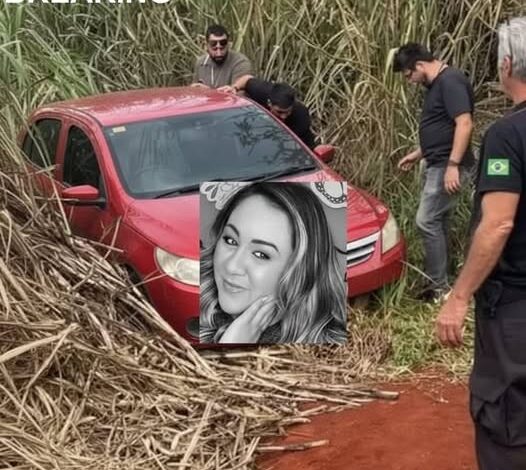
Missing Woman Found Alive After Two Months, but Questions Surround Her Mysterious Return
A Community United by Hope
For sixty difficult days, an entire community remained focused on a single goal: bringing Raisa home.
Residents organized search parties, distributed flyers, attended vigils, and followed every development in the case with growing concern.
Each passing day increased fears about what might have happened to the missing woman.
Families discussed the case around dinner tables, volunteers dedicated countless hours to search efforts, and neighbors held onto hope despite diminishing expectations.
When word finally spread that Raisa had been found alive, the reaction was immediate and emotional.
People who had spent weeks fearing the worst believed the ordeal had finally reached a happy conclusion.
For a brief moment, relief overshadowed every other emotion.
Yet that feeling did not last long.
A Return Marked by Silence
Instead of bringing clarity, Raisa’s return introduced a new layer of uncertainty.
Questions quickly emerged regarding where she had been, how she survived, and what circumstances led to her disappearance.
Those questions remain largely unanswered.
While officials confirmed that Raisa was alive, little additional information was made public.
The lack of details immediately attracted attention.
Community members who had followed the case closely expected explanations once she was found.
Instead, they encountered silence.
Her family withdrew from public view and limited communication with outsiders.
Rather than celebrating publicly, they focused on protecting their privacy during an intensely difficult period.
Their decision only deepened public curiosity.
The Challenges of Returning Home
Many people imagine the recovery of a missing person as the final chapter of a painful story.
Reality is often far more complicated.
Finding someone alive does not erase the experiences they endured while missing.
It also does not immediately restore normal life.
For Raisa and her loved ones, the end of the search marked the beginning of a different challenge.
The focus shifted from finding her to helping her recover.
Family members suddenly faced the difficult task of supporting someone whose life had been interrupted for two months under circumstances that remain unclear.
Healing requires time, patience, and privacy.
Those needs often conflict with public demands for answers.
Rumors Begin to Spread
In the absence of official information, speculation began filling the void.
Neighbors and residents who had participated in the search found themselves discussing possibilities and theories.
Some questioned where Raisa had spent those sixty days.
Others wondered whether she had been alone.
Many tried to piece together a timeline using fragments of information and unverified reports.
As often happens in high-profile cases, rumors spread faster than facts.
The uncertainty created an atmosphere of tension throughout the community.
People who once worked together searching for answers now found themselves struggling to separate reality from speculation.
Without confirmed information, assumptions became increasingly common.
An Investigation Behind Closed Doors
Authorities have continued their work while releasing very little information publicly.
Investigators appear focused on understanding the full sequence of events surrounding the disappearance and recovery.
Officials have provided only limited statements regarding the case.
Many details remain unavailable to the public.
This approach has generated frustration among some residents who invested significant time and energy into search efforts.
Volunteers who spent weeks looking for Raisa naturally hoped for greater transparency once she was found.
Instead, they have been asked to remain patient while the investigation continues.
For some, that adjustment has been difficult.
After playing an active role in the search, they now find themselves observing events from the sidelines.
The Emotional Impact on the Community
Cases involving missing persons often affect entire communities, not just immediate family members.
As search efforts grow, residents become emotionally invested in the outcome.
The disappearance becomes a shared concern that unites people around a common objective.
When the missing person is found, emotions can become surprisingly complex.
Relief may coexist with confusion.
Gratitude may be accompanied by lingering fear.
Questions that remained unanswered during the search often become even more significant afterward.
In Raisa’s case, the emotional transition from searching to waiting has proven especially challenging.
The community knows she survived.
What remains unclear is what happened during the weeks she was gone.
The Importance of Privacy During Recovery
As public curiosity continues to grow, many residents are beginning to recognize another reality.
Not every question requires an immediate answer.
Recovery from a traumatic experience is rarely straightforward.
Individuals who endure significant hardships often need time before discussing what happened to them.
In some situations, speaking publicly too soon can complicate the healing process.
Family members frequently serve as protective barriers during these periods.
Their silence may not be an attempt to conceal information but rather a way of creating space for recovery.
For Raisa’s loved ones, protecting her well-being appears to be the priority.
That decision may be difficult for outsiders to accept, but it reflects the reality of many similar situations.
Learning to Accept Uncertainty
Modern society often expects immediate explanations.
News spreads quickly, information is constantly updated, and people have become accustomed to rapid answers.
Cases involving missing persons do not always follow that pattern.
Some questions require extensive investigation.
Others may never receive complete public explanations.
As a result, communities are sometimes forced to live with uncertainty.
That uncertainty can be uncomfortable.
It challenges assumptions about how stories are supposed to end.
Instead of providing closure, Raisa’s return has highlighted the complexity that often exists behind dramatic headlines.
The search may be over, but understanding the full story remains a separate process.
The Long Road Ahead
For Raisa, the most important challenge now is not explaining the past but rebuilding the future.
Returning home after a prolonged absence involves emotional, psychological, and practical adjustments.
Daily routines must be reestablished.
Relationships may need time to recover.
A sense of normalcy often returns gradually rather than immediately.
The support of family and trusted individuals becomes critical during this period.
Communities frequently focus on the dramatic moment when a missing person is found.
Less attention is given to what happens afterward.
Yet recovery can be one of the most difficult stages of all.
The effects of a traumatic experience may continue long after public attention fades.
A Community Reflects on Its Own Vulnerability
Raisa’s disappearance affected more than those directly involved.
It also challenged the community’s sense of safety.
Many residents were forced to confront unsettling questions about how quickly ordinary life can change.
The case reminded people that unexpected events can disrupt even the most familiar environments.
It also demonstrated the strength of collective action.
Throughout the search, volunteers, neighbors, and local organizations worked together with remarkable dedication.
Their efforts reflected a deep commitment to helping one another during times of crisis.
That spirit remains an important part of the story, regardless of what future investigations may reveal.
Balancing Curiosity and Compassion
As the community continues waiting for additional information, many residents are attempting to balance two competing instincts.
One is the natural desire to understand what happened.
The other is the recognition that healing sometimes requires patience and restraint.
Curiosity is understandable.
People want explanations for events that disrupt their sense of order and security.
At the same time, compassion requires acknowledging that those most affected may not be ready to share every detail.
Finding that balance is rarely easy.
It demands empathy, respect, and an acceptance that some answers arrive slowly.
Waiting for the Silence to Break
For now, many aspects of the case remain unknown.
The circumstances surrounding Raisa’s disappearance and recovery continue to be investigated.
Her family remains focused on supporting her while maintaining privacy.
The community watches and waits.
Although questions persist, there is also a growing understanding that the immediate priority is not satisfying public curiosity.
The priority is ensuring that a woman who endured sixty difficult days has the opportunity to recover and move forward.
The mystery surrounding her absence may eventually be explained.
When that time comes, the truth may provide greater understanding of what occurred.
Until then, residents are learning that not every story concludes with immediate answers.
Sometimes the most meaningful response is patience.
The search that united an entire community has ended, but the process of healing is only beginning.
As everyone waits for more information, one fact remains certain: Raisa is home, and for those who spent two months hoping for her safe return, that reality remains the most important development of all.
