Why Celebrity Before-and-After Photos Often Reveal Less Than People Think
The Power of a Side-by-Side Image
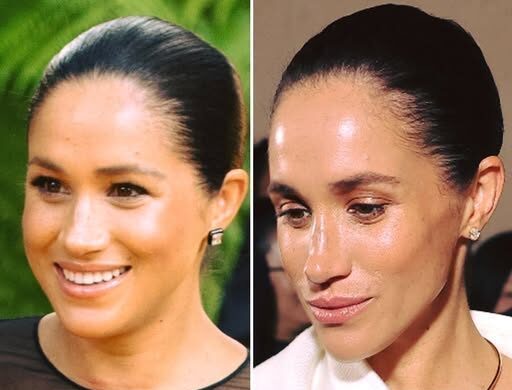
Few things spread faster online than a celebrity before-and-after photo.
A single comparison can generate thousands of comments within hours. One image from years ago is placed next to a recent photograph, and suddenly countless people begin forming conclusions about what happened in between.
The appeal of these comparisons is understandable. They appear straightforward and easy to interpret. A visible difference seems to offer a clear answer, allowing viewers to believe they understand a person’s transformation at a glance.
Yet appearances rarely tell the entire story.
A photograph captures only a fraction of reality. It records a single moment, frozen in time, while leaving countless important details outside the frame.
Factors such as lighting, camera quality, facial expression, makeup, styling, health, stress levels, sleep, and natural aging can dramatically influence how a person appears in a picture. Without that context, even the most striking comparison can create a misleading impression.
The Human Tendency to Fill in the Gaps
People naturally seek explanations when they notice change.
When two photographs show visible differences, the mind often begins constructing a narrative. Some viewers assume cosmetic procedures, while others speculate about health issues, personal struggles, or dramatic lifestyle changes.
The problem is not noticing differences. Observing change is a normal part of human perception.
The challenge arises when assumptions are treated as facts.
A photograph rarely provides enough information to explain why someone looks different. Yet online discussions frequently move from observation to certainty within moments.
What begins as curiosity can quickly become speculation presented as truth.
More Than What the Camera Captures
Every photograph leaves important information unseen.
A person may be experiencing stress, recovery from illness, grief, exhaustion, happiness, or major life changes that are impossible to detect accurately through appearance alone.
Even ordinary circumstances can influence how someone looks. Lack of sleep, travel, seasonal changes, medication, or simple fluctuations in weight can alter facial features and body shape.
Many of these changes are temporary.
Others are part of the natural process of aging.
Regardless of the reason, a picture cannot explain the circumstances behind what it captures.
It only records the surface.
The Role of Lighting, Angles, and Timing
Photography itself can dramatically influence perception.
A different camera angle can change the apparent shape of a face. Harsh lighting may emphasize shadows and wrinkles, while softer lighting can smooth features and create a younger appearance.
Expressions also play a significant role. A smile, a serious look, fatigue, or a candid moment can create striking differences even when photographs are taken only days apart.
Professional photo shoots often involve careful lighting, styling, and editing, while candid images may capture someone at less flattering moments.
When those photographs are compared without context, the differences can appear much greater than they actually are.
Why Celebrity Changes Receive So Much Attention
Public figures exist in a unique environment where appearance is constantly documented and analyzed.
Actors, musicians, athletes, and television personalities are photographed repeatedly over long periods of time. Because these images are so accessible, audiences become accustomed to seeing familiar faces and may quickly notice even minor changes.
Unfortunately, familiarity often creates the illusion of personal knowledge.
Seeing someone frequently does not mean understanding their private experiences. Yet celebrity culture sometimes encourages viewers to feel entitled to explanations about another person’s appearance.
As a result, ordinary human changes can become public discussions, even when no meaningful explanation is available.
The Cost of Constant Speculation
While online debates may seem harmless, repeated scrutiny can have broader consequences.
When every visible change becomes a topic of analysis, people begin to receive the message that aging, weight fluctuations, or natural physical differences require justification.
This pressure extends beyond celebrities.
The standards applied to public figures often influence how ordinary people view themselves. Constant exposure to appearance-based judgment can contribute to unrealistic expectations about how people should look over time.
In reality, change is an unavoidable part of life.
Faces evolve. Bodies change. Circumstances shift.
None of these realities should automatically invite criticism or suspicion.
The Difference Between Observation and Assumption
There is nothing wrong with recognizing that someone looks different.
The important distinction lies in understanding the limits of what can actually be known.
Observing change is reasonable.
Assuming the cause without evidence is not.
A responsible approach allows room for uncertainty. It acknowledges that visible differences may exist while accepting that the explanation may remain private or unknown.
This perspective respects both reality and personal boundaries.
A More Thoughtful Perspective
Before-and-after images will likely remain popular because they are simple, visual, and emotionally engaging.
However, their simplicity can also be deceptive.
Human lives are complex, and appearances rarely provide enough information to explain every transformation. What looks obvious from the outside may have countless explanations hidden from public view.
A photograph can reveal that change occurred.
It cannot always reveal why.
Recognizing that limitation encourages a more thoughtful and respectful way of viewing both celebrities and ourselves.
Looking Beyond the Picture
In a world driven by quick reactions and instant opinions, it is easy to forget how much remains unseen.
A single image may capture a face, but it cannot fully capture a person’s experiences, challenges, growth, or circumstances. It cannot explain years of life between one photograph and another.
The most accurate response to a before-and-after comparison is often the simplest one: acknowledge the change while remaining open to the possibility that the full story is far more complex than any picture can show.
After all, a photograph records a moment.
A human life is much bigger than a moment.
