Blind Puppy Rescued From Busy Interstate Leads Authorities to Suspected Illegal Breeding Operation
Highway Patrol Encounter Sparks Urgent Rescue
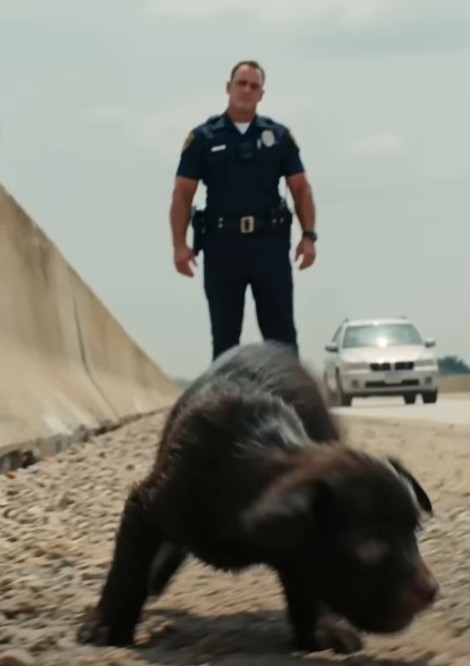
A routine patrol along a scorching interstate turned into a dramatic rescue when a state trooper spotted a small black animal moving erratically near a concrete median.
At first glance, the officer believed the animal was a stray dog struggling in the intense heat. Vehicles were speeding past in both directions, creating a dangerous environment for anything trapped on the roadway.
As the trooper pulled over and approached the scene, it quickly became clear that the situation was far more serious than initially believed.
The animal was not an adult dog. It was a very young puppy lying on the hot pavement, covered in dirt and showing signs of severe physical distress.
The tiny dog appeared exhausted and disoriented. Its body was thin, its condition fragile, and its injured paws suggested it had spent a significant amount of time exposed to the extreme heat of the roadway.
The closer the officer got, the more alarming the discovery became.
The puppy’s eyes were cloudy and unresponsive. After a brief examination, the trooper realized the animal was completely blind.
Unable to see its surroundings, the puppy had been left alone in a hazardous environment filled with traffic noise, intense temperatures, and constant danger.
A Critical Journey to Veterinary Care
Recognizing the urgency of the situation, the trooper carefully picked up the puppy and carried it to his patrol vehicle.
The animal was weak, overheated, and barely reacting to its surroundings. Immediate medical attention was necessary if it was going to survive.
With the vehicle’s air conditioning running, the officer contacted dispatch and requested emergency veterinary assistance.
Northside Veterinary Hospital was notified that a critically injured newborn puppy was on the way and that the case appeared to involve possible animal cruelty.
Knowing that every minute mattered, the trooper began the drive to the clinic using emergency lights and sirens to move through traffic as quickly as possible.
The puppy’s condition remained uncertain throughout the journey. Heat exposure, dehydration, and physical injuries had placed enormous strain on its body.
Veterinary staff were waiting when the patrol vehicle arrived.
Dr. Sarah Evans and her team immediately transported the puppy into treatment and began emergency procedures aimed at stabilizing him.
Doctors Discover the Extent of the Injuries
Medical examinations revealed just how close the puppy had come to losing his life.
His body temperature had risen to a dangerously high level, creating a medical emergency that threatened multiple organ systems.
Severe dehydration had left his veins nearly collapsed, making treatment more difficult.
The pads on his paws had suffered significant burns after prolonged contact with the hot pavement.
Further evaluation confirmed that the puppy was blind in both eyes.
Dr. Evans determined that the blindness appeared congenital, indicating that the condition likely existed from birth.
Additional injuries raised concerns about how the puppy had ended up on the interstate.
Bruising and abrasions consistent with road rash suggested that the animal had not wandered onto the highway by itself.
The injuries pointed toward the possibility that the puppy had been thrown from a moving vehicle before being left near the median.
A Survivor Receives a Name
The veterinary team placed the puppy inside an oxygen incubator and began intensive treatment.
Fluids were administered to combat dehydration while medications addressed pain, infection risks, and complications related to heat exposure.
Temperature management became a critical part of his care as doctors worked to reduce the effects of overheating.
Despite the aggressive treatment efforts, the puppy remained in critical condition during the first several hours.
His kidneys had been affected by dehydration, and his body was struggling to recover from the physical trauma it had endured.
Later that evening, Dr. Evans informed the trooper that the puppy had survived the initial emergency phase but still faced serious challenges.
Hospital staff began referring to him as Miles.
The name reflected the difficult journey he had endured and the distance he had traveled before being rescued.
For everyone involved in his care, Miles became more than a medical case. He became a symbol of determination and survival.
Investigators Search for Answers
Once Miles was receiving professional care, attention shifted toward identifying the person responsible for abandoning him.
The trooper initiated a formal felony animal cruelty investigation and began collecting evidence.
Archived footage from traffic cameras, toll facilities, and nearby weigh stations was requested from locations surrounding the area where Miles had been discovered.
Investigators reviewed extensive amounts of video in an effort to establish a timeline.
The puppy’s injuries and medical condition helped narrow the likely period during which he had been left on the highway.
After examining numerous recordings, investigators located footage showing a dark-colored sport utility vehicle near the median.
The vehicle appeared to slow abruptly before moving closer to the divider.
Moments later, a passenger-side window opened.
Video showed an arm extending from the vehicle while holding a small dark object.
That object was released onto the pavement before the vehicle accelerated away from the scene.
Although the camera angle failed to capture a readable license plate, investigators obtained valuable information regarding the vehicle’s travel direction and the exact time of the incident.
Those details guided the next phase of the investigation.
Footage Leads to a Suspect
Using the established timeline, investigators reviewed toll plaza recordings located south of the abandonment site.
A dark blue 2018 Chevrolet Tahoe appeared in the correct location during the relevant timeframe.
This footage provided a clear image of the vehicle’s license plate.
Registration records linked the Tahoe to Marcus D. Vance.
As investigators examined additional records, they discovered that Vance had previously been connected to a zoning citation involving an unlicensed commercial breeding operation.
The discovery expanded the scope of the investigation.
Authorities began considering whether Miles’ abandonment was part of a larger pattern involving neglect and improper breeding practices.
Investigators believed the puppy may have been discarded because his blindness made him unsuitable for sale through the breeding operation.
Evidence collected from video footage, vehicle records, and veterinary findings strengthened the case.
Authorities moved quickly to obtain legal authorization for further action.
Search Warrant Leads to Major Animal Rescue
A judge approved both an arrest warrant and a search warrant connected to the investigation.
The following morning, state police arrived at Vance’s property on Oak Creek Road.
The blue Chevrolet Tahoe seen in the footage was parked outside the trailer.
Officers entered the property and immediately encountered troubling conditions.
The interior contained numerous wire cages stacked throughout the residence.
Dogs were found living in confined spaces with limited room to move.
Many appeared underweight, frightened, and in poor overall condition.
Several animals displayed visible health concerns, while others appeared exhausted and withdrawn.
Marcus Vance was arrested at the property.
Authorities charged him with felony animal cruelty, operating an illegal breeding facility, and multiple counts of neglect.
The scale of the situation required assistance from Animal Control personnel, veterinarians, and emergency response teams.
The operation continued for several hours as animals were safely removed from the property.
At least forty dogs were rescued during the effort.
Among them was a black Labrador mix believed to be Miles’ mother.
The dog was reportedly weak, underweight, and appeared to have recently given birth.
Investigators determined she had been kept in a crate without adequate care.
Miles Continues His Fight
While authorities executed the search warrant, Miles remained under constant observation at Northside Veterinary Hospital.
Doctors monitored his progress closely as his body responded to treatment.
Gradually, encouraging signs began to emerge.
When the trooper later returned to the hospital, Dr. Evans provided a positive update.
Miles’ kidney function had stabilized.
His fever had subsided, and complications related to heatstroke were beginning to improve.
Although the puppy still faced a lengthy recovery, veterinarians no longer believed his injuries would be fatal.
The burns on his paws remained a significant concern and required ongoing treatment.
Standing beside the incubator, the trooper quietly spoke to the recovering puppy.
For the first time since the rescue, Miles appeared calm and secure.
The encounter marked an important milestone in his recovery.
What began as an emergency rescue was evolving into a story centered on healing, resilience, and trust.
Court Proceedings and Rehabilitation Efforts
The case against Marcus Vance eventually proceeded to trial.
Prosecutors presented evidence that included highway surveillance footage, toll plaza records, veterinary findings, and materials collected during the search of the property.
The evidence established a detailed timeline surrounding Miles’ abandonment and the conditions discovered at the breeding operation.
Following the proceedings, the judge sentenced Vance to five years in state prison.
He was also prohibited from owning or having involvement with animals in the future.
Meanwhile, the rescued dogs began a long process of rehabilitation.
They received medical treatment, shelter, nutrition, and behavioral support designed to prepare them for new homes.
Over time, the animals were placed with adoptive families able to provide safe and stable environments.
A New Beginning for Miles
Miles remained at the veterinary hospital for several weeks as he continued healing.
His burned paws required frequent bandage changes and careful monitoring.
Because of his blindness, he also needed help learning how to navigate unfamiliar environments.
Veterinary staff used sounds, textures, and consistent routines to build his confidence.
Despite the challenges, Miles adapted remarkably well.
As his recovery progressed, he became increasingly comfortable moving independently.
Within a month, he was confidently making his way through the clinic without colliding with obstacles.
His hearing and sense of touch became essential tools that helped him understand the world around him.
When the time finally came for Miles to leave the hospital, the trooper who had rescued him made a life-changing decision.
He adopted the puppy.
The dog who had been found abandoned on a dangerous interstate now had a permanent home.
Miles received a collar with a small shield-shaped tag and left the hospital with the person who had first carried him to safety.
In his new environment, he continued to thrive.
He learned the layout of the home, recognized familiar sounds, and grew comfortable with daily life.
Although blindness remained part of his journey, it did not limit what he could become.
With patience, security, and proper care, Miles transformed from a critically injured puppy into a confident companion.
For the trooper, passing mile marker 114 carried a different meaning after the rescue.
It served as a reminder that a single moment of attention and compassion can alter the course of a life.
Miles’ journey stands as a lasting example of perseverance, recovery, and the impact of acting when an animal is in need.
