
Debate Over Infant “Consent” and Diaper Changes Sparks Widespread Discussion on Modern Parenting
A Parenting Conversation Gains National Attention
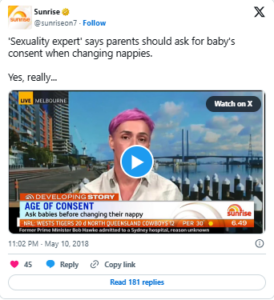
A public discussion involving Australian sexuality educator Deanne Carson has generated significant debate across social media platforms, parenting groups, and online communities. The conversation centers on a suggestion that parents communicate with infants before performing routine caregiving tasks such as changing diapers.
The idea quickly attracted widespread attention after being shared and discussed online. As the topic spread, people from a variety of backgrounds weighed in, creating a larger conversation about parenting practices, child development, communication, and personal boundaries.
While some individuals viewed the concept as a thoughtful approach to respectful caregiving, others questioned whether applying the language of consent to infant care was appropriate or practical. The differing reactions transformed a relatively specific parenting discussion into a broader cultural debate.
Much of the public response focused not only on the recommendation itself but also on how the idea was interpreted. As conversations expanded, supporters and critics often emphasized different aspects of the proposal, leading to varying conclusions about its meaning and purpose.
The Idea Behind the Proposal
According to Deanne Carson, the suggestion is connected to the broader goal of creating what she describes as a “culture of consent” beginning in early childhood. The concept does not involve expecting babies to provide verbal permission before routine care is given.
Instead, the approach encourages caregivers to communicate openly with children from the earliest stages of life. Parents may explain what they are about to do, describe the caregiving activity taking place, and pay attention to the infant’s reactions throughout the interaction.
In practice, this could involve informing a child that a diaper change is about to occur rather than performing the task without any communication. Supporters argue that such habits may help establish patterns of respectful interaction between caregivers and children.
The proposal emphasizes communication rather than decision-making authority. Advocates point out that babies are unable to make many choices concerning their care and safety, but they can still be included in interactions through language and attention.
For supporters, the objective is to encourage parents to become more mindful of how they engage with infants during routine daily activities.
Communication During Early Childhood
Those who support the approach often focus on the value of communication itself. They argue that infants benefit from hearing language regularly, particularly when it is directed toward them in a calm and attentive manner.
Many caregivers already narrate daily activities, describing actions such as feeding, bathing, dressing, or diaper changing. Supporters suggest that these interactions can contribute to a child’s developing awareness of routines and relationships.
Another aspect of the discussion involves observing non-verbal communication. Because infants cannot use spoken language to express themselves, caregivers frequently rely on body language, facial expressions, sounds, and movements to understand a child’s needs.
Supporters argue that paying close attention to these signals can strengthen responsiveness and emotional connection. They view the recommendation as an extension of practices that many parents already use naturally.
From this perspective, the emphasis is less about obtaining permission and more about recognizing that communication can occur even when verbal conversation is not yet possible.

The Importance of Non-Verbal Cues
Infants communicate in ways that differ significantly from older children and adults. Crying, smiling, turning away, kicking, stretching, and changes in facial expression are all common methods through which babies convey comfort, discomfort, interest, or distress.
Caregivers often learn to recognize these signals over time. As familiarity develops, parents become increasingly skilled at interpreting a child’s reactions and responding appropriately.
The proposal highlights the importance of this process. Supporters believe that observing a baby’s responses during caregiving activities can encourage greater awareness and attentiveness.
For example, a caregiver may notice whether an infant appears calm, relaxed, agitated, or uncomfortable during a routine task. These observations can help guide how the caregiver approaches the interaction.
Advocates argue that such attentiveness contributes to a supportive environment in which children experience consistent and respectful engagement from the people responsible for their care.
Criticism of the Consent Framing
Despite support from some individuals, the proposal has also received substantial criticism. Many commentators argue that the concept of consent cannot be meaningfully applied to infants because babies lack the developmental capacity to understand the idea.
Critics emphasize that consent requires comprehension, decision-making ability, and informed agreement. Since infants cannot possess these capabilities, they contend that describing routine caregiving activities in terms of consent creates confusion.
From this viewpoint, diaper changes, feeding, bathing, and other essential responsibilities are not optional activities. They are necessary actions that caregivers must perform to ensure a child’s health, safety, and well-being.
Some critics therefore believe that introducing consent-related language into infant care risks blurring the distinction between necessary caregiving and situations in which genuine consent can be given.
Others argue that the proposal may unintentionally complicate everyday parenting tasks that are already understood as fundamental responsibilities.
Social Media Reactions Fuel the Debate
The discussion expanded rapidly after gaining visibility on social media. As users encountered summaries and interpretations of the proposal, reactions ranged from serious analysis to humor and satire.
Many people expressed confusion about the idea, particularly when encountering brief descriptions without additional context. This contributed to a wide variety of interpretations regarding what the proposal actually involved.
Some social media users responded with jokes and sarcastic commentary, questioning whether similar expectations would eventually be applied to other caregiving situations involving infants or animals.
These reactions helped the discussion reach audiences far beyond parenting circles. As more people joined the conversation, the debate evolved into a broader examination of language, parenting philosophy, and child development.
The viral nature of social media ensured that both supportive and critical viewpoints received significant attention.
Support for Respectful Interaction
Even among people who disagreed with the specific wording of the proposal, some expressed support for the broader principle of respectful communication with children.
These individuals argued that speaking to infants during daily routines can be beneficial regardless of whether the practice is described using the language of consent.
They emphasized the importance of maintaining calm interactions, explaining actions, and creating predictable routines that help children feel secure.
Supporters of this broader perspective suggest that communication serves multiple purposes. It can help build trust, strengthen emotional bonds, and contribute to a child’s developing understanding of the world around them.
As a result, some participants in the discussion distinguished between the value of communication and the specific terminology used to describe it.
Developmental Considerations
Child development professionals often note that infants are highly sensitive to the environment around them. Tone of voice, facial expressions, body language, and repeated routines all play important roles in shaping early experiences.
Babies may not understand complex concepts, but they are capable of recognizing familiar voices, responding to emotional cues, and forming attachments to caregivers.
This understanding forms part of the argument made by those who support frequent communication during caregiving activities. They believe that talking to infants contributes to a stable and nurturing environment.
At the same time, professionals commonly distinguish between communication and informed consent. While infants can react to interactions and express preferences through behavior, they cannot provide the type of informed agreement associated with older individuals.
This distinction has become one of the central points in the ongoing debate.
Different Interpretations of the Same Idea
One reason the discussion has generated so much disagreement is that people often interpret the proposal in very different ways. Some view it primarily as a symbolic educational tool intended to encourage respectful habits.
Others interpret the suggestion more literally, believing it implies that caregivers should seek actual permission from infants before performing routine tasks.
These contrasting interpretations have led participants to debate different versions of the same concept. In some cases, supporters and critics appear to be responding to different understandings of what is being proposed.
The result has been a conversation in which disagreements frequently center on definitions and language rather than caregiving practices themselves.
This dynamic has contributed to the longevity and intensity of the public discussion.
A Reflection of Broader Parenting Trends
The controversy also reflects larger changes in contemporary parenting approaches. In recent years, many caregivers have shown increased interest in emotional awareness, psychological development, and respectful communication.
These trends often encourage parents to consider not only what actions they take but also how those actions are presented and explained to children.
At the same time, more traditional perspectives continue to emphasize practicality, clarity, and the importance of fulfilling caregiving responsibilities without unnecessary complication.
The debate surrounding diaper changes and consent illustrates how these differing viewpoints can sometimes come into conflict. Each side may share similar goals regarding child well-being while disagreeing about the best language and methods to achieve those goals.
As parenting philosophies evolve, discussions like this often emerge as people evaluate new ideas and compare them with established practices.
Common Ground Amid Disagreement
Despite strong differences of opinion, many participants in the debate share certain areas of agreement. Most recognize that attentiveness, responsiveness, and emotional sensitivity are valuable qualities in caregiving.
There is also broad recognition that infants communicate through behavior and that caregivers should pay attention to those signals whenever possible.
Many people agree that speaking to children in a calm, respectful manner can be beneficial, even if they disagree about whether such interactions should be described in terms of consent.
This shared emphasis on communication and responsiveness suggests that the disagreement often concerns framing rather than fundamental caregiving goals.
While opinions remain divided regarding terminology, there is considerable support for the idea that children benefit from engaged and attentive caregiving.
An Ongoing Conversation About Parenting and Language
The discussion surrounding consent and diaper changing has evolved into a broader conversation about parenting, communication, and the role language plays in shaping public understanding of child development.
For some, the proposal represents an effort to encourage awareness, respect, and thoughtful interaction from the earliest stages of life. For others, it reflects an unnecessary application of adult concepts to situations where they do not fit developmental realities.
The debate demonstrates how a single idea can generate dramatically different reactions depending on how it is interpreted. It also highlights the growing public interest in questions related to emotional development and caregiving practices.
As the conversation continues, participants remain divided on the specific concept while often agreeing on the broader importance of attentive parenting.
Ultimately, the controversy has become less about the literal act of changing a diaper and more about differing philosophies regarding communication, child development, and the language used to describe effective caregiving. The discussion continues to serve as a notable example of how modern parenting concepts can spark widespread public debate and reflection.
