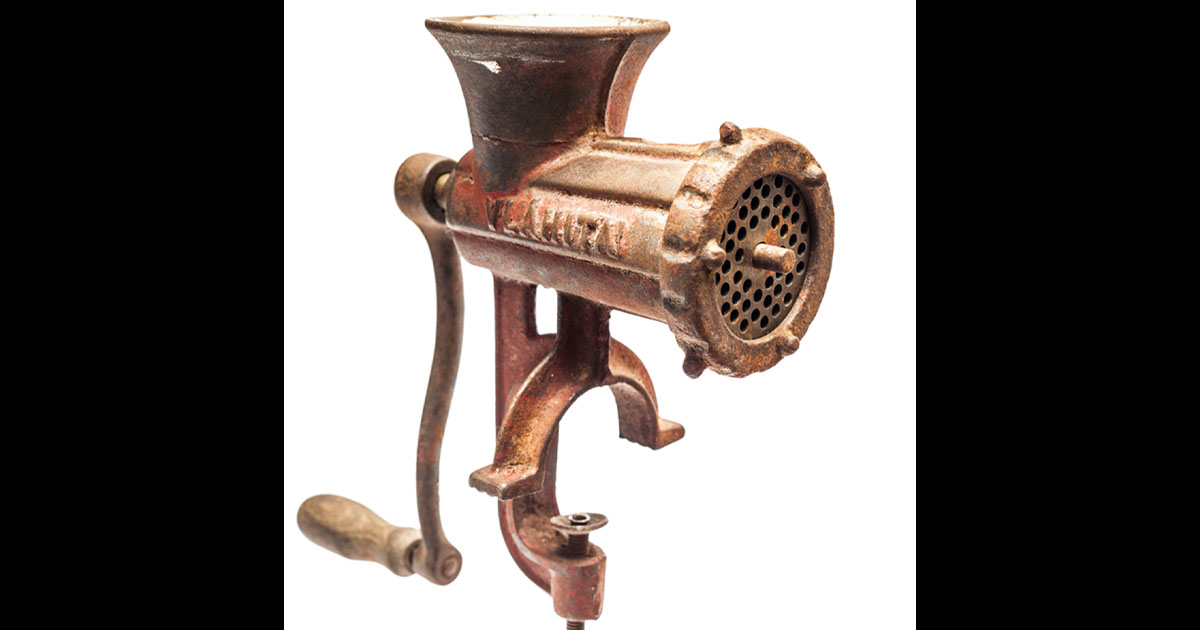
Internet Users Identify Mysterious Steel Tool as Classic Meat Mincer with a Long Industrial History
Confusion Over an Unfamiliar Household Object
Across online communities, it is common for users to encounter unfamiliar objects and struggle to identify what they are. In many cases, these items appear outdated, unusual in shape, or disconnected from modern everyday life, making their purpose difficult to recognize at first glance.
When an image of a steel mechanical device began circulating, it sparked exactly this kind of curiosity. The object’s structure and design were not immediately obvious to many viewers, leading to widespread discussion and speculation about its possible function.
Situations like this often highlight how quickly collective online discussion can form around unknown objects. People from different backgrounds contribute interpretations, comparisons, and historical knowledge until a clear explanation eventually emerges.
In this particular case, the mystery surrounding the steel tool quickly attracted attention, with users attempting to determine what it was used for and how it might have functioned in daily life. The lack of immediate recognition only increased interest in the object.

The Object Identified as a Traditional Meat Mincer
After further discussion, the object was identified as a meat mincer, a mechanical device historically used in households for processing food. Its primary function was to mince and mix a variety of ingredients, including raw or cooked meat, fish, vegetables, and other food items.
This type of tool was once widely used, particularly in domestic kitchens before modern electric appliances became common. Its design allowed users to manually process food into smaller, more manageable pieces for cooking and preparation.
The meat mincer gained prominence in earlier centuries as a practical household solution for food preparation. Its presence in kitchens reflected a time when manual tools played a central role in everyday cooking tasks.
Although it may appear unfamiliar to many modern viewers, the device was once considered a standard kitchen item in many households, especially in regions where home food preparation relied heavily on manual equipment.

Early Development and Historical Background
The development of the meat mincer is linked to early mechanical innovation in food preparation tools. One of the earliest versions is associated with Karl Drais, who is credited with inventing a precursor to the modern design in the nineteenth century.
During this period, household tools were being redesigned to improve efficiency and reduce the physical effort required in food preparation. The meat mincer emerged as part of this broader trend toward mechanical assistance in domestic tasks.
Early versions of the device were simple in construction but effective in purpose. They were designed to break down food by forcing it through a metal plate containing small openings, gradually producing finely minced strands of meat or other ingredients.
This mechanical approach represented a significant improvement over purely manual chopping methods, offering more consistent results and reducing preparation time for households that prepared food from scratch.
Manual Operation and Mechanical Function
Traditional meat mincers operated using a hand-cranked mechanism. The user would place food into a chamber and rotate a handle that activated an internal screw-like component.
As the handle turned, the internal mechanism pushed the food forward toward a perforated metal plate. The pressure forced the food through small holes, resulting in finely processed strands that collected on the other side of the device.
This process required steady physical effort, but it allowed users to control the texture and consistency of the minced ingredients. The method was widely used for preparing meat mixtures and other food preparations in household kitchens.
The simplicity of the design contributed to its durability and long-term use. With relatively few moving parts, the device could be maintained easily and used repeatedly without the need for complex repairs or specialized knowledge.
For many households, this manual system represented a reliable and practical solution for food preparation before the introduction of powered kitchen equipment.
Transition to Electric Food Processing
As electrical technology became more widely available, kitchen tools such as the meat mincer underwent significant changes. Manufacturers began developing electric versions capable of performing the same tasks with far less manual effort.
Electric grinders and mincers allowed users to process larger quantities of food in shorter periods of time. This advancement made food preparation more efficient and reduced the physical labor associated with manual cranking systems.
Over time, electric models became the standard in many households, gradually replacing older manual versions. The shift reflected broader changes in domestic technology, where convenience and speed became increasingly important.
Despite this transition, the fundamental principle of the device remained the same. Food was still fed into a chamber and pushed through a perforated surface to achieve a minced texture, whether powered manually or electrically.
Modern Capabilities and Attachments
Modern versions of the meat mincer are often designed with additional features and attachments that expand their functionality beyond basic grinding. These enhancements allow the device to be used for a wider range of food preparation tasks.
Some models include attachments that support the preparation of sausages, allowing ground meat to be shaped and filled into casings. Others are designed to assist with preparing traditional food mixtures and specialized recipes.
In addition to meat processing, certain configurations can also handle other ingredients, providing flexibility in kitchen use. This adaptability has helped the tool remain relevant in modern cooking environments.
Even with advanced technology, the core mechanism remains rooted in the original concept of mechanically processing food through controlled pressure and perforation. This continuity highlights the lasting effectiveness of the original design.
Why Unfamiliar Objects Go Viral Online
Objects like the meat mincer often generate confusion when viewed outside of their historical or practical context. As everyday life changes, tools that were once common can become unfamiliar to later generations.
When such items appear online, they frequently spark curiosity because their purpose is not immediately recognizable. The unusual appearance of older mechanical devices can make them seem mysterious or even unrelated to household use.
Online communities often respond quickly to these situations by sharing interpretations and collective knowledge. This collaborative process allows users to gradually identify objects that might otherwise remain unknown to individuals unfamiliar with them.
The discussion surrounding unfamiliar tools also reflects how technology and domestic life have evolved. Items that once played an essential role in daily routines may now appear obsolete or purely historical.
As a result, even simple household tools can become subjects of widespread interest when rediscovered in modern digital spaces, especially when their purpose is not immediately obvious.
The Broader Significance of Everyday Tools
The identification of the meat mincer highlights how ordinary objects can carry long histories of practical use and technological development. What may appear confusing or outdated today was once an important part of daily life.
The evolution from manual devices to electric appliances demonstrates broader changes in how food is prepared and how domestic labor has been transformed over time. Each stage of development reflects an effort to improve efficiency and convenience.
While modern kitchens rely heavily on advanced equipment, earlier tools like the meat mincer represent foundational steps in the progression of food processing technology. Their design principles continue to influence modern appliances in subtle but meaningful ways.
The renewed attention such objects receive online serves as a reminder of how rapidly everyday technology changes. Items that once required no explanation may eventually become unfamiliar, requiring collective knowledge to rediscover their purpose.
In this case, the steel device that initially caused confusion ultimately revealed a long-standing tradition of mechanical food preparation. Its identification as a meat mincer connected modern curiosity with a historical tool that has played a role in kitchens for generations.
