Deputy Discovers Abandoned Puppy on Highway and Uncovers Hidden Breeding Operation
A Routine Patrol Turns Into an Unexpected Rescue
A late-night patrol on Highway 9 began like any other shift for a rookie deputy assigned to monitor quiet stretches of roadway. Traffic was minimal, and the surroundings were mostly dark and still, with only the occasional reflection of headlights breaking through the night.
As the patrol neared its final hours, the deputy approached a remote section of the highway bordered by wooded terrain. It was in this isolated area that something unusual appeared along the shoulder of the road, partially obscured by darkness and brush.
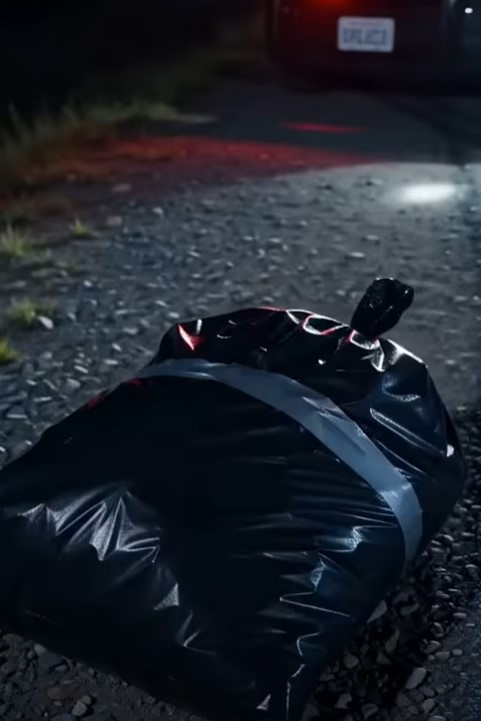
At first glance, the object seemed like nothing more than discarded roadside debris. It was a large black contractor bag, tightly sealed with layers of silver duct tape and positioned near the edge of the woods. In an area known for occasional illegal dumping, it initially did not appear out of place.
The deputy considered continuing past the object without stopping. However, as the vehicle slowed slightly, a subtle movement caught attention. The bag shifted in a way that did not match wind or external disturbance. The motion repeated, stronger and more deliberate, suggesting something inside was struggling.
The Moment of Discovery
The deputy stopped the patrol vehicle and reversed back toward the location. Headlights illuminated the bag fully, removing any doubt that the movement had been imagined. The shape of the bag changed with each subtle motion, confirming that something alive was inside.
Exiting the vehicle with a flashlight, the deputy approached cautiously. The beam of light revealed a small tear in the plastic surface, barely visible but enough to allow a glimpse of what was inside. Through that opening, a pair of frightened brown eyes briefly appeared before disappearing again.
The deputy immediately began cutting away the layers of duct tape and plastic. As the bag was opened, it became clear that the contents were not trash or wildlife but a young Golden Retriever puppy in critical condition.
The puppy was weak and visibly distressed. Her body was cold to the touch, and she showed signs of exhaustion and dehydration. Dirt and debris clung to her fur, and she struggled to move after being confined for an unknown period of time. Her paws had been tightly bound, leaving her unable to stand or walk properly.
Carefully, the deputy lifted the puppy from the bag and placed her into the warmth of the patrol vehicle. The heater was turned on immediately, and trauma shears were used to free her restrained paws. The focus remained on stabilizing her condition and ensuring she remained conscious.
Evidence That Pointed to Something Larger
While examining the puppy, the deputy noticed unusual markings on her body. These included purple ink stamps and a crude serial-like marking near her inner thigh reading MV-0492. The presence of such identifiers suggested that the puppy may have been part of a structured system rather than an isolated case of abandonment.
The markings raised immediate concern that this incident could be connected to a larger operation involving systematic animal handling or commercial breeding activity. The format of the identifier suggested tracking or categorization rather than random labeling.
Given the seriousness of the discovery, the deputy contacted dispatch and requested animal control assistance. Arrangements were made for the puppy to be transported to a county veterinary clinic where emergency care could be provided.
Emergency Care and First Signs of Survival
Upon arrival at the veterinary clinic, the puppy was taken in by an on-call veterinarian who immediately began emergency treatment. Her condition was critical, with severe dehydration, low body temperature, and untreated physical trauma requiring urgent attention.
Medical stabilization became the first priority. The veterinary team worked to restore body heat, administer fluids, and address visible injuries. The focus remained on preventing further deterioration while assessing the extent of her condition.
During examination, the veterinary staff noted the same serial marking identified earlier. The marking appeared consistent with a tracking code that may have been associated with the Mill Valley area, a region characterized by remote terrain, abandoned agricultural structures, and limited visibility from main roads.
In an effort to give the puppy a sense of safety and identity, the deputy named her Daisy. The name was chosen as a simple marker of a new beginning during a moment defined by uncertainty and urgency.
Return to the Scene and Emerging Clues
After ensuring Daisy was receiving care, the deputy returned to the area where the bag had been discovered. The intention was to determine whether additional evidence could be found nearby that might explain how the puppy had arrived at that location.
In the damp soil along the shoulder of the highway, fresh tire tracks were visible. The impressions were distinct and appeared recently formed, cutting into the soft ground near the roadside vegetation.
The tracks indicated a heavy-duty vehicle, and one tire pattern showed noticeable wear or damage that made it identifiable among other impressions. The direction of the tracks pointed north toward Mill Valley, leading away from the highway and deeper into wooded terrain.
Despite instructions to return to station duties, the deputy followed the trail. The possibility that other animals could be in immediate danger became the driving concern behind continuing the investigation beyond the initial scene.
Discovery of a Concealed Property
The tire tracks eventually led to a secluded property resembling an old chicken farm. The structure was hidden behind a rusted gate and surrounded by overgrown vegetation, giving the appearance of long-term abandonment from the outside.
However, closer observation revealed signs of recent activity. Industrial ventilation fans could be heard operating inside the buildings, suggesting that the structures were still in use despite their deteriorated exterior condition.
Additional sounds confirmed further activity within the property. Dogs could be heard barking and whining from behind enclosed metal structures, indicating that animals were being kept inside the facility.
Near one of the barns, a white commercial van was located. Its rear tire matched the damaged tread pattern identified earlier on the highway, linking it to the tracks observed at the scene of the puppy’s discovery.
Confrontation and Exposure of the Operation
Shortly after the deputy arrived at the property, a man emerged from one of the barns carrying another black contractor bag. The deputy identified himself and took immediate action to detain the individual at the scene.
Following the initial confrontation, the situation escalated into a broader investigation of the property. Inside the barn structures, multiple rows of cages were discovered containing numerous dogs. The animals included Golden Retrievers, Labradors, and French Bulldogs, many of which showed signs of neglect and confinement.
The conditions observed suggested a large-scale operation involving the housing and breeding of dogs under unauthorized and unsafe circumstances. The setup appeared hidden from public view and maintained in a way intended to avoid detection.
Given the scale of the discovery, the deputy requested immediate backup, including animal control units, state investigators, and additional law enforcement support to secure the area and begin processing the scene.
A Large-Scale Rescue Effort Begins
Within a short time, the previously quiet rural location became a coordinated emergency response site. Multiple vehicles arrived, and teams began documenting conditions while preparing for the safe removal of the animals found inside the facility.
Rescue personnel and volunteers worked together to carefully extract the dogs from cages and transport them for medical evaluation. Each animal required assessment due to varying levels of neglect, dehydration, and confinement-related stress.
The initial puppy found on Highway 9 became central to the unfolding situation. Her discovery led directly to the location of the hidden facility, transforming what began as a single rescue into a broader intervention involving many animals in need of care.
Daisy’s survival was significant in that it created the first identifiable link between the highway location and the concealed property. Without her being found in time, the operation may have remained undiscovered.
Recovery and a New Beginning
After the operation was secured and the animals removed, attention returned to Daisy’s recovery at the veterinary clinic. She had begun to stabilize following emergency treatment and was resting under medical supervision.
A video later sent from the clinic showed Daisy awake, lying on a clean bed, and gradually regaining strength. Her condition had improved enough to allow moments of rest without visible distress, and she responded calmly to her surroundings.
The contrast between her earlier condition on the highway and her recovery environment marked a significant shift in her trajectory. The care provided at the clinic became the foundation for her continued healing process.
Daisy’s survival became symbolic of a larger outcome connected to the events of that night. What began as an isolated roadside discovery ultimately led to the exposure of a hidden operation and the rescue of multiple animals.
She was no longer the abandoned puppy found on the side of a highway. Her journey had transitioned into one of recovery and safety, and her presence played a central role in uncovering conditions that had remained hidden behind rural isolation.
