
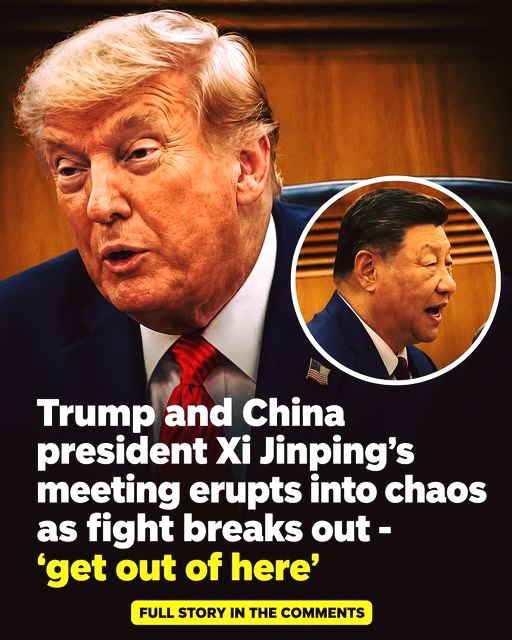
U.S.–China Diplomatic Meetings Continue to Reflect Global Tensions and Strategic Interdependence
Inside the High-Stakes Environment of Global Diplomacy
The atmosphere inside major diplomatic meetings between global powers is often carefully managed, with every gesture, pause, and public statement carrying strategic importance.
Behind closed doors, however, these encounters are far more than ceremonial exchanges. They are shaped by decades of geopolitical competition, economic dependence, security concerns, and competing visions for the future global order.
When representatives from the United States and China meet, the significance extends well beyond the meeting room itself. The two nations remain the world’s largest economic and strategic powers, meaning every interaction is closely watched by governments, financial markets, and international observers.
Even subtle changes in tone or wording can influence diplomatic momentum, market confidence, and broader geopolitical perceptions.
Although these meetings are typically planned in advance and carefully structured, they often carry underlying tension tied to growing uncertainty within international relations.
Contrasting Diplomatic Styles Shape Discussions
One of the defining features of recent U.S.–China diplomacy has been the contrast between the leadership approaches of President Donald Trump and Chinese President Xi Jinping.
Trump’s diplomatic style has frequently emphasized direct negotiation, personal rapport, and public messaging centered on economic outcomes and deal-making.
His interactions with foreign leaders have often been framed around personal relationships and the possibility of securing favorable agreements.
In contrast, Xi Jinping represents a more structured and state-focused diplomatic philosophy centered on long-term planning, national sovereignty, and strategic stability.
Chinese diplomacy under Xi has consistently prioritized institutional continuity and carefully controlled messaging.
When these two approaches intersect during high-level meetings, the negotiations become about more than policy differences alone. They also reflect deeper contrasts in political systems, diplomatic traditions, and strategic priorities.
Public Statements Often Mask Underlying Disagreements
Following major diplomatic meetings, official public statements are usually crafted with extreme care.
Leaders commonly emphasize cooperation, mutual respect, and shared interests while avoiding language that could escalate tensions publicly.
Even when significant disagreements remain unresolved, both sides frequently present discussions as constructive in order to maintain diplomatic stability.
In U.S.–China relations, areas such as trade policy, technology restrictions, military activity in the Asia-Pacific region, and the future of Taiwan consistently remain sensitive subjects.
Minor differences in wording within official statements can carry major diplomatic significance because each phrase is often interpreted as a signal of strategic intent.
As a result, much of the most important negotiation occurs privately rather than through public announcements.
Taiwan Remains a Central Source of Tension
Among the most sensitive issues in U.S.–China relations is the status of Taiwan.
China continues to view Taiwan as an inseparable part of its territory under the “One China” principle, a position that remains central to Chinese foreign policy.
The United States, meanwhile, maintains a more complex position based on strategic ambiguity and support for regional stability without formally recognizing Taiwan as an independent nation.
This difference in interpretation has created one of the most persistent tensions between the two countries.
Although official statements often refer to Taiwan indirectly, the issue remains one of the most potentially destabilizing aspects of the broader relationship.
Because of its political and strategic sensitivity, discussions surrounding Taiwan are handled with exceptional caution during diplomatic engagements.
Competition Between Global Powers Continues to Expand
Another major theme in discussions between Washington and Beijing involves the broader question of global power transition.
Strategic analysts frequently reference the concept known as the “Thucydides Trap,” which describes the historical risk of conflict between rising and established powers during periods of shifting influence.
Although the idea does not represent official policy, it has become a widely discussed framework for understanding long-term tensions between the United States and China.
Both nations remain highly aware of these strategic narratives as they shape economic, military, and diplomatic planning.
The United States continues seeking to maintain its role as the leading global power, while China steadily expands its economic and diplomatic influence across multiple regions.
China’s growing presence in Asia, Africa, and other parts of the world has become an increasingly important factor in international relations and strategic competition.
Economic Interdependence Creates a Complex Relationship
Despite ongoing rivalry, the United States and China remain deeply connected economically.
Trade, investment, manufacturing, and global supply chains continue linking the two economies in ways that make complete separation extremely difficult.
This interdependence creates a unique relationship in which competition and cooperation exist simultaneously.
Both countries rely on stable economic conditions to support domestic growth and broader international financial stability.
At the same time, disagreements over tariffs, technology access, manufacturing control, and trade imbalances continue creating friction.
These competing realities produce a diplomatic environment where confrontation can coexist with ongoing collaboration in selected areas.
Global issues such as climate change, public health concerns, and international financial stability are often viewed as areas where cooperation remains necessary despite broader strategic tensions.
Symbolism Plays a Powerful Role in Diplomacy
Public perception of diplomatic meetings is often shaped as much by symbolism as by actual policy outcomes.
Media coverage frequently focuses on gestures, facial expressions, handshakes, and moments of visible tension during leadership encounters.
Political messaging and analyst commentary can amplify the meaning of seemingly small interactions.
In reality, many high-level discussions are procedural and focused heavily on technical policy details rather than dramatic confrontations.
Nevertheless, symbolism remains important because leadership interactions are viewed as reflections of broader international relationships.
Leaders also understand that their conduct during diplomatic meetings carries political significance within their own countries.
Domestic audiences often evaluate these meetings through the lens of national strength, leadership image, and strategic positioning.
Cycles of Cooperation and Friction Continue
Relations between the United States and China have repeatedly shifted between periods of cooperation and conflict.
Trade negotiations have often been followed by disputes involving tariffs, technology restrictions, or military positioning in strategic regions.
At other times, both governments have emphasized the importance of maintaining stable communication and avoiding unnecessary escalation.
Despite recurring tensions, direct communication channels between the two countries have generally remained open.
This ongoing dialogue reflects recognition on both sides that a complete collapse in relations could create significant global economic and political consequences.
The relationship remains highly pragmatic in many respects, even when public rhetoric becomes confrontational.
Both nations continue balancing competition with the practical necessity of managing global stability.
Diplomatic Meetings Focus on Long-Term Management
High-level diplomatic engagements between global powers are rarely designed to produce immediate or dramatic breakthroughs.
Instead, they often serve as opportunities to manage long-term relationships, clarify strategic intentions, and establish limits within ongoing competition.
Leaders use these meetings to signal priorities, test negotiating positions, and evaluate potential areas for cooperation or compromise.
While public attention may focus on visible disagreements or symbolic moments, the underlying diplomatic process tends to move gradually.
Progress is often measured through incremental changes rather than sweeping resolutions.
In the case of U.S.–China relations, this gradual approach reflects the complexity of balancing rivalry, economic dependence, and global responsibility.
Both countries continue operating within a relationship defined by strategic competition while simultaneously recognizing the importance of avoiding instability.
The Global Importance of U.S.–China Relations
The relationship between the United States and China remains one of the most influential dynamics shaping modern international politics.
Decisions made during high-level meetings can affect global markets, security alliances, technology development, and international diplomatic priorities.
Because both nations hold enormous economic and political influence, even small shifts in relations can create worldwide effects.
As global challenges continue evolving, the interaction between Washington and Beijing is likely to remain central to discussions about the future international order.
Competition between the two powers is expected to continue across economic, technological, and strategic areas.
At the same time, mutual dependence and shared global responsibilities ensure that diplomacy will remain essential.
The complexity of the relationship means that cooperation and confrontation are likely to continue existing side by side for the foreseeable future.
Ultimately, high-level diplomatic meetings between the United States and China reflect a broader effort to manage one of the most important and consequential international relationships of the modern era.

