
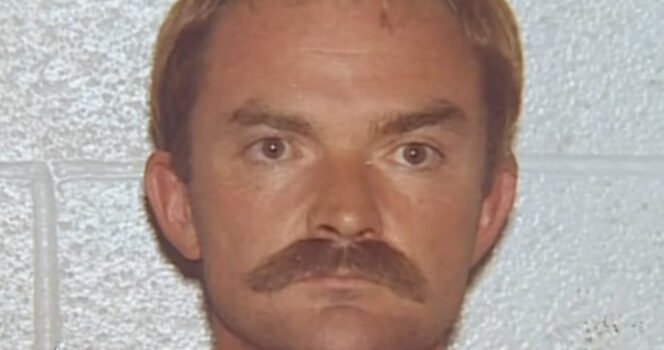
The Chilling Story of Randy Kraft, the California Killer Accused of Terrorizing a Generation
A Childhood That Appeared Completely Ordinary
It is often difficult to imagine that some of history’s most notorious criminals once lived seemingly normal childhoods.
The quiet boy born on March 19, 1945, in Long Beach, California, would later become one of the most feared killers in the state’s history.
Authorities eventually linked Randy Steven Kraft to a horrifying series of murders that spread fear across California for more than a decade.
Investigators believe he may have been responsible for the deaths of as many as 51 young men and boys between 1971 and 1983.
Yet in his early years, nothing about his appearance suggested the darkness that would later emerge.
Life Inside a Working-Class Family
Kraft grew up as the only son in a modest family that had relocated from Wyoming to Southern California in search of opportunity and stability.
The family settled into suburban life during the postwar years, blending into neighborhoods filled with young families pursuing the American dream.
His mother, Opal, was devoted to her son, while his father, Harold, spent long hours working at a factory and valued discipline and structure.
Neighbors later described the boy as polite, intelligent, and unusually organized.
His bedroom was always spotless, his belongings carefully arranged, and his behavior rarely caused concern.
Even at a young age, people noticed his need for order and control.
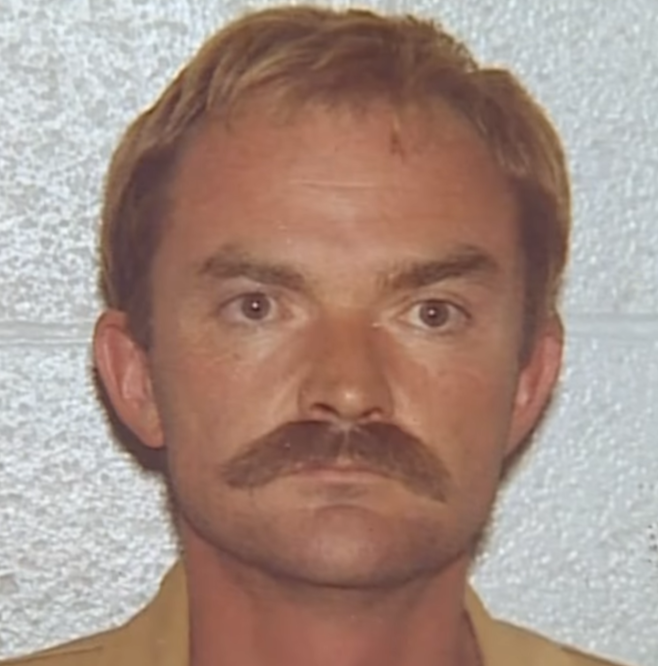
A Bright Student With Conservative Values
When the family later moved to Westminster in Orange County, Kraft adapted easily to the conservative atmosphere of the 1950s.
Teachers and classmates viewed him as disciplined, intelligent, and respectful.
He performed well academically, joined debate activities, and became active in student government.
Friends from high school remembered him as clean-cut and politically outspoken.
He strongly supported traditional values, military service, and conservative politics during his teenage years.
After graduating in 1963, he attended Claremont Men’s College, where he studied economics and remained deeply involved in political activities.
He campaigned for Barry Goldwater and openly supported the Vietnam War.
A Personal Transformation Begins
As college continued, classmates noticed changes in his appearance and behavior.
Kraft gradually became less politically rigid and started participating in anti-war demonstrations.
At the same time, he privately struggled with his sexuality.
By 1969, he openly acknowledged that he was gay, a revelation that deeply shocked members of his family.
The disclosure also ended his involvement with the Air Force Reserve, where he had been serving as a trainee.
Officially, he was discharged for “medical reasons,” though the real cause was widely understood to be his sexuality.
Life in Southern California Nightlife
Following his discharge, Kraft remained in Southern California and worked a variety of jobs.
He spent time as a bartender, waiter, and computer programmer.
To people around him, he appeared articulate, calm, and highly intelligent.
Friends often described him as courteous and well-spoken.
Behind that carefully controlled exterior, however, his behavior was beginning to shift.
He developed heavy habits involving alcohol and drugs, particularly amphetamines and barbiturates.
People close to him later recalled sudden mood swings, periods of isolation, and bursts of anger.
During this time, Kraft became heavily involved in the nightlife scene surrounding Long Beach and Sunset Beach.
He worked at a gay bar known as The Stables, where he easily socialized with customers and regular visitors.
At the same time, investigators later believed he had already begun searching for victims.
The Incident That Nearly Exposed Him
In March 1970, a 13-year-old runaway named Joseph Fancher appeared frightened and disoriented after escaping from an older man who had offered him shelter.
Police soon identified a suspect connected to the assault.
When officers searched Kraft’s apartment, they discovered the boy’s shoes as well as large quantities of drugs and sedatives.
However, investigators had entered the apartment without a warrant.
Because of that mistake, the evidence was ruled inadmissible, and Kraft was released without charges.
The case would later be viewed as a chilling warning sign that failed to stop the violence that followed.
A Pattern of Disappearances Across California
During the early 1970s, young men and teenage boys began disappearing throughout Southern California.
Many of the victims were hitchhikers, Marines, or young travelers.
Their bodies were later discovered near highways, isolated fields, and remote areas.
Investigators noticed disturbing similarities between the crimes.
Victims had often been drugged, restrained, and subjected to severe abuse before being killed.
Authorities from several California counties eventually realized they were hunting a single predator moving quietly across the region.
Despite the growing number of victims, the killer remained unidentified for years.
Meanwhile, Kraft continued living what appeared to be an ordinary life in Long Beach while maintaining steady employment as a computer programmer.
Investigators later concluded that between 1971 and 1983, he murdered at least sixteen young men and boys, though many believe the real number was far higher.
The Traffic Stop That Changed Everything
The case finally shifted dramatically during the early hours of May 1983.
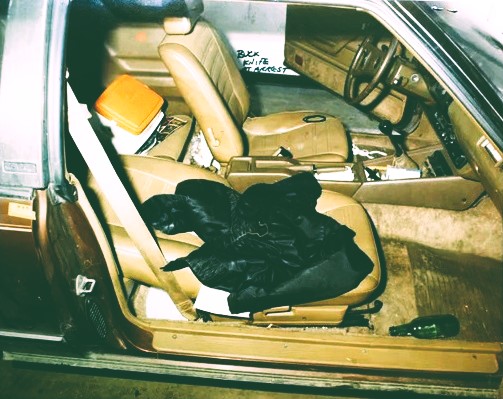
Two California Highway Patrol officers stopped a Toyota Celica on the 405 Freeway near Mission Viejo after noticing erratic driving.
The driver appeared intoxicated, and an open beer bottle was visible inside the vehicle.
As one officer looked into the passenger seat, he made a horrifying discovery.
A young Marine named Terry Gambrel was sitting motionless beside the driver, already dead.
A belt had been fastened around his neck.
The driver identified himself as Randy Kraft.
That arrest would eventually reveal one of the most disturbing murder investigations in California history.
Evidence Inside the Car and Home
Police searching Kraft’s vehicle discovered drugs, alcohol, and suspicious materials connected to violent crimes.
Further investigations at his residence uncovered photographs, personal belongings linked to victims, and additional evidence spanning years of disappearances.
One of the most shocking discoveries was a handwritten document containing more than sixty cryptic phrases.
Investigators later referred to the list as a “scorecard.”
Each coded entry appeared to represent one of Kraft’s victims.
Some references matched locations where bodies had been discovered.
Others appeared connected to bars, highways, or personal details known only to investigators.
The document suggested a calculated effort to catalog killings over many years.
A Carefully Planned Method
Authorities determined that Kraft’s victims were primarily young white men in their late teens or early twenties.
Many had drugs or alcohol in their systems when their bodies were discovered.
Investigators believed Kraft commonly lured victims into his car by offering drinks or companionship before sedating them.
Once unconscious, victims were restrained and tortured.
Many bodies showed signs of severe abuse and calculated violence.
Police also uncovered Polaroid photographs that became some of the most disturbing pieces of evidence in the investigation.
Several images showed victims posed in unsettling positions, some appearing unconscious and others clearly deceased.
The Double Life That Shocked Friends
People who knew Kraft struggled to understand the accusations against him.
Friends and former classmates described him as intelligent, reliable, and outwardly normal.
Many said he never displayed behavior that would have suggested extreme violence.
One former acquaintance recalled that “everybody liked Randy.”
His calm demeanor and professional appearance helped him avoid suspicion for years.
Investigators later described him as a man who blended easily into everyday life while hiding horrifying crimes.
The Lengthy Trial and Conviction
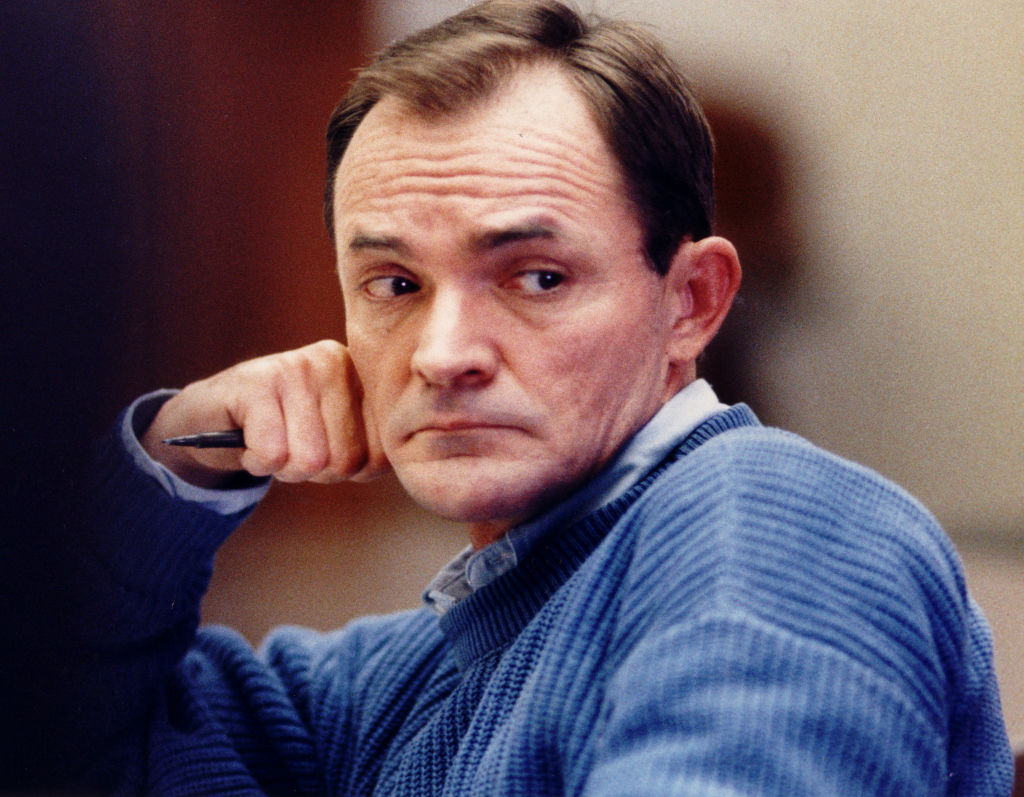
In 1989, after one of the longest and most expensive murder trials in Orange County history, Randy Kraft was convicted of sixteen murders.
He was also convicted on multiple counts involving torture and sexual violence.
Throughout the trial, Kraft maintained his innocence.
Before sentencing, he stated, “I have not murdered anyone. I believe any reasonable review of the record will show that.”
When the death sentence was announced, Kraft reportedly showed no visible emotion.
Relatives of the victims reacted with grief, relief, and anger inside the courtroom.
Some family members cried openly, while others expressed rage toward the convicted killer.
Life on Death Row
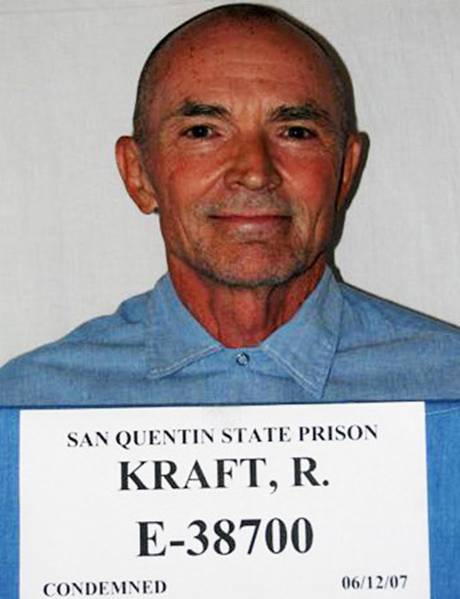
Kraft was transferred to San Quentin’s death row following his conviction.
Despite decades behind bars, he has never admitted responsibility for any of the murders.
Investigators continue to believe that numerous additional victims connected to his crimes remain unidentified.
Retired homicide detective Dan Salcedo later described meeting Kraft inside prison decades after the conviction.
According to Salcedo, the killer appeared completely ordinary and showed little emotion during their conversation.
The detective later described him as the embodiment of “quiet evil.”
What disturbed investigators most was not only the brutality of the crimes, but how ordinary Kraft appeared to everyone around him.
A Legacy of Fear and Unanswered Questions
Even decades later, the case continues to haunt investigators and the families of victims.
Authorities still revisit unsolved murders in hopes of connecting them to entries listed on Kraft’s handwritten scorecard.
Some families have finally received answers through modern forensic testing, while many others continue waiting for closure.
Kraft’s conviction and death sentence were upheld by the California Supreme Court on August 9, 2000.
As of 2025, he remains incarcerated at the California Institution for Men in San Bernardino County.
Now an aging prisoner living in isolation, he continues denying any involvement in the killings that made him one of California’s most notorious murderers.
The horrifying case remains one of the darkest chapters in the state’s criminal history, remembered for both the scale of the violence and the chilling normalcy of the man accused of carrying it out.

