
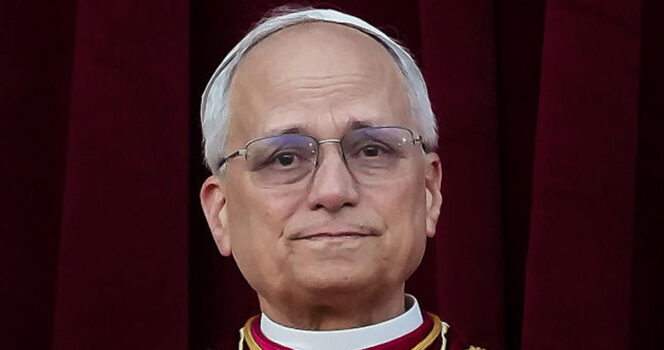
What Salary Does the Pope Receive? Inside the Financial Reality of Pope Leo XIV’s New Role
The First American Pope Sparks Global Curiosity
When Robert Francis Prevost was announced as the first American pope in history, attention immediately turned toward what his leadership could mean for the Catholic Church and the Vatican.
Alongside questions about his priorities, leadership style, and global influence, many people also became curious about a more personal topic: how much money the Pope actually earns.
Despite leading one of the world’s most influential religious institutions, the Pope’s financial situation is very different from that of most globally recognized leaders.
Unlike presidents, chief executives, or other high-profile public figures, the Pope does not receive a traditional salary in the way many people might expect.
A Role Unlike Any Other
The Pope serves as both the spiritual leader of the Catholic Church and the head of Vatican City, the smallest independent state in the world.
Although the position carries enormous religious and political influence, it is not structured around personal financial gain.
Instead of collecting a large paycheck, the Pope has his essential needs covered directly by the Vatican.
This includes housing, meals, healthcare, transportation, security, and travel expenses.
Pope Leo XIV, like previous pontiffs, is expected to live within a system where daily life is fully supported by the Vatican rather than funded through personal income.
The arrangement allows the Pope to focus entirely on his religious responsibilities and international duties.
Does the Pope Receive Any Salary?
While the Pope may technically be entitled to a modest monthly payment, the amount associated with the role is far smaller than many would imagine.
Estimates suggest the papacy would provide approximately €2,500, or around $2,650, per month.
Even so, the Pope does not traditionally treat the amount as a salary in the conventional sense.
For many observers, the figure resembles more of a living stipend than a personal income.
The Vatican already provides virtually everything necessary for daily life, including residence, transportation, and operational support.
As a result, the role itself has historically emphasized spiritual duty over financial compensation.
Pope Francis Established a Public Image of Simplicity
The tradition of a pope avoiding personal wealth became especially visible during the leadership of Pope Francis, who led the Catholic Church from 2013 until 2025.
Pope Francis gained international attention for his modest lifestyle and his repeated rejection of luxury and excess.
Rather than embracing symbols of wealth associated with his position, he consistently promoted simplicity and humility.
One widely discussed example occurred in 2017 when he received a luxury Lamborghini Huracán valued at nearly $950,000.
Instead of keeping the vehicle, Pope Francis chose to auction it and direct the proceeds toward humanitarian causes.
The decision reflected the values he consistently promoted throughout his papacy.
A Lifestyle Inspired by Humility
Pope Francis frequently expressed admiration for St. Francis of Assisi, the patron saint associated with poverty and simplicity.
That admiration strongly influenced the way he approached his own role within the Vatican.
Rather than residing in the grand Apostolic Palace traditionally used by popes, he chose to live in the more modest Domus Sanctae Marthae guesthouse inside Vatican City.
The decision became a powerful symbol of the lifestyle he wanted to represent.
His approach helped reinforce the idea that the papacy is intended to center on service and spiritual leadership rather than luxury.
Pope Leo XIV is now expected to continue many of those same traditions.
Pope Leo XIV Expected to Continue Similar Traditions
As the first American pope, Pope Leo XIV will likely face close public attention regarding both his leadership style and personal choices.
However, early expectations suggest he will follow a path similar to that of Pope Francis by emphasizing humility and service over material wealth.
Like his predecessor, he is expected to focus on spiritual stewardship and charitable priorities rather than personal financial accumulation.
Although the Vatican provides extensive resources and support, the role of the Pope has long been associated with sacrifice, discipline, and dedication to religious mission.
For that reason, the position continues to stand apart from traditional political or executive leadership roles tied to personal financial reward.
The Pope’s Access to Wealth and Resources
Even without a traditional salary, the Pope still has access to significant institutional resources.
Estimates connected to Pope Francis suggested his overall access to Vatican-supported assets and services could be valued at as much as $12 million.
That figure does not represent personal ownership in the usual sense, but rather the extensive support structure connected to the papacy.
The Pope has access to official residences, vehicles, security services, charitable funding networks, and administrative resources necessary to carry out papal duties.
These resources are primarily intended to support the operations of the Church and charitable missions around the world.
They are not generally viewed as personal luxury assets for private use.
Resources Often Directed Toward Charity
During his time as pope, Francis frequently directed resources toward humanitarian efforts and support programs.
One example included a donation of $215,000 intended to support prisoners in Rome.
Such actions reinforced his image as a religious leader focused on helping vulnerable populations rather than expanding personal comfort.
The Vatican’s financial support system allows the Pope to carry out charitable work on an international scale.
In many cases, funds associated with the papacy are directed toward relief efforts, outreach programs, and assistance for those in need.
The role therefore combines spiritual leadership with responsibility for managing and distributing resources connected to global Catholic missions.
How the Vatican Supports Itself Financially
The Vatican maintains its operations through several major financial sources.
These include donations from Catholics worldwide, tourism revenue, and income connected to the Vatican Museums.
One of the most important annual fundraising efforts is known as Peter’s Pence, a worldwide collection that generates an estimated $25 million each year.
Large portions of these donations come from countries such as the United States, Germany, and Italy.
The Vatican’s governing body, known as the Holy See, does not publicly release complete financial details in the same way many governments do.
However, estimates published in the past suggested Vatican revenues reached approximately $315 million in 2013, while expenditures totaled around $348 million.
Those figures highlighted the financial complexity involved in maintaining global Church operations and Vatican administration.
Financial Challenges Inside the Vatican
Despite its global influence and significant fundraising ability, the Vatican has faced growing financial difficulties in recent years.
In 2023, reports indicated the Vatican was dealing with an operating deficit of approximately $90 million.
The deficit raised concerns about long-term financial sustainability, including questions surrounding pension funds for Vatican employees.
In response to those pressures, Pope Francis introduced measures intended to reduce spending and improve transparency.
One major step came in 2021 when salary reductions were implemented for senior clergy members, including cardinals and bishops.
The cuts reflected ongoing efforts to control expenses while addressing broader concerns about Vatican finances.
A Different Definition of Wealth
Although the Pope does not receive a massive salary, the office itself still provides access to extraordinary institutional resources and global influence.
At the same time, the modern papacy has increasingly emphasized simplicity and responsibility over personal luxury.
Pope Leo XIV now enters a role where spiritual leadership carries far greater importance than financial reward.
His daily needs will be fully supported by the Vatican, but expectations surrounding the position continue to center on humility, service, and devotion.
For many observers, that distinction remains one of the most unique aspects of the papacy.
While the Pope may lead one of the world’s most influential institutions, the position is ultimately designed not around accumulating wealth, but around guiding the Church and serving others.

