
Investigators Trace Deadly Cruise Ship Hantavirus Outbreak to Suspected Landfill Exposure in Argentina
Health Officials Focus on Possible Source of Infection
Authorities investigating the deadly hantavirus outbreak linked to a cruise ship voyage now believe they may have identified where the infection first originated.
Health officials in Argentina suspect the virus may have been contracted during a birdwatching excursion near a landfill site in Ushuaia, the southernmost region of the country.
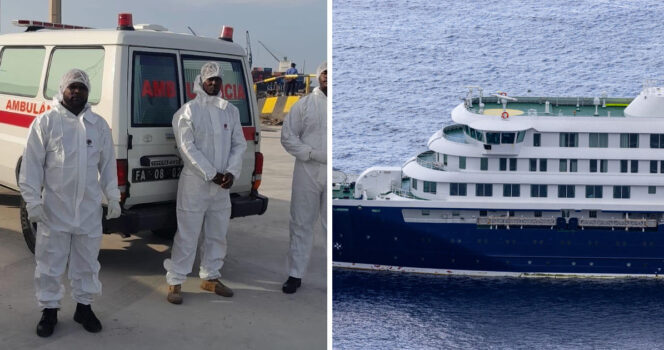
The investigation centers on the MV Hondius, where multiple passengers became infected with the rare illness during a voyage traveling from Argentina toward Cape Verde.
Three passengers died during the journey, while more than 150 people aboard the vessel were temporarily stranded off the coast of Cape Verde as authorities worked to control the outbreak and evaluate the risk of further transmission.
The ship has since received clearance to dock in the Canary Islands after health officials completed containment measures connected to the incident.
Landfill Site Emerges as Key Focus of Investigation
Investigators believe a Dutch couple may have unknowingly become infected while visiting a landfill area during a stop in Ushuaia.
Officials suspect the location may have contained a large rodent population, creating conditions that increased the likelihood of exposure to hantavirus.
The couple is believed to have later boarded the cruise ship while unknowingly carrying the infection, potentially introducing the virus into the confined environment onboard the vessel.
Authorities have focused attention on the landfill excursion because hantavirus is commonly linked to exposure to rodents and contaminated environments.
The birdwatching activity reportedly took place before the outbreak was identified among passengers aboard the ship.
Investigators continue examining how the infection may have spread after the initial exposure occurred.
Three Deaths Reported During Voyage
The outbreak became a major public health concern after three passengers died during the ship’s journey.
The deaths triggered an urgent response from health officials as concerns grew over the possibility of additional infections spreading among those onboard.
More than 150 passengers and crew members remained stranded near Cape Verde while authorities monitored the situation and attempted to contain the outbreak.
The isolation measures were introduced to reduce the possibility of further transmission while medical experts assessed the extent of the infections.
The incident drew international attention because hantavirus outbreaks are considered rare, especially in settings involving large numbers of travelers aboard a cruise ship.
Public concern increased further after experts confirmed the outbreak involved a strain capable of spreading between people in certain conditions.
Rare Andes Strain Confirmed
Health experts confirmed that patients linked to the outbreak were infected with the “Andes” strain of hantavirus.
The Andes variant is considered especially concerning because it is one of the few forms of hantavirus known to spread from person to person through close contact.
Most hantavirus infections are associated primarily with exposure to infected rodents rather than direct human transmission.
The discovery of the Andes strain heightened concern among medical officials monitoring the outbreak aboard the MV Hondius.
The close quarters and prolonged contact typical on cruise ships can create challenges when attempting to prevent the spread of infectious diseases.
Health authorities have continued working to determine how many people may have been exposed during the voyage and whether additional infections could emerge.
How Hantavirus Spreads
Hantavirus infections are generally linked to rodents and environments contaminated by rodent waste.
The virus can spread through exposure to urine, feces, saliva, or airborne particles from dried droppings left behind by infected animals.
People may become infected after inhaling contaminated particles or coming into contact with contaminated surfaces in enclosed or heavily affected areas.
Landfill sites and locations with significant rodent activity are often considered high-risk environments for exposure.
The investigation into the Ushuaia excursion has therefore become a central focus as officials work to understand how the outbreak began.
Although human-to-human transmission is considered uncommon with most hantavirus strains, the Andes variant has previously demonstrated the ability to spread in close-contact situations.
Severe Illness With High Fatality Rate
Medical experts warn that hantavirus infections can become extremely serious and potentially fatal.
The illness associated with hantavirus can develop into Hantavirus Cardiopulmonary Syndrome, also known as HCPS.
The condition can severely affect the lungs and respiratory system, leading to life-threatening complications.
Health officials emphasized that the disease carries a significant fatality rate.
According to information shared by the World Health Organization, “HCPS has a high case fatality rate, commonly between 20% and 40%, making it a disease of major public health concern.”
The severity of the illness has contributed to growing anxiety among passengers, crew members, and observers following the outbreak aboard the cruise ship.
Fears Rise Over Possible Wider Spread
The outbreak has sparked concern among some health experts and members of the public because of comparisons being made to the early stages of Covid-19.
Questions surrounding the potential for person-to-person transmission aboard a cruise ship have intensified fears about how quickly infections could spread in confined environments.
Public anxiety increased further after reports confirmed that multiple passengers had already become infected before the outbreak was fully identified.
Despite those concerns, health experts have stressed that the situation differs significantly from the global Covid-19 pandemic.
Medical officials have emphasized that hantavirus infections remain relatively rare and are not commonly encountered by the general public.
Authorities continue monitoring the situation closely while working to reassure travelers and provide accurate information about the risks involved.
WHO Expert Addresses Public Concerns
World Health Organization epidemiologist Maria Van Kerkhove addressed growing fears surrounding the outbreak during a recent press conference.
She stressed that although the disease is serious, it should not be viewed as a repeat of the Covid-19 crisis.
“This is not the next Covid, but it is a serious infectious disease. If people get infected, and infections are uncommon, they can die. People on the ship who are hearing this are very scared, rightly so.
“The general public might be scared as well. Accurate information is critical. Knowing what your actual exposure might be – most people will never be exposed to this.”
Her comments reflected the balance health officials are attempting to strike between acknowledging the seriousness of the outbreak and preventing unnecessary panic.
Authorities continue emphasizing that the illness remains uncommon and that most people are unlikely to encounter exposure to hantavirus.
Cruise Ship Cleared to Dock
After days of concern and containment efforts, the MV Hondius was eventually cleared to dock in the Canary Islands.
The decision came after health authorities completed evaluations tied to the outbreak and worked to limit the possibility of further spread among passengers and crew members.
The temporary delay left those onboard isolated off the coast of Cape Verde while investigations and medical assessments continued.
During that period, officials focused on identifying infected individuals, monitoring symptoms, and tracing possible exposure routes connected to the outbreak.
The clearance to dock marked an important step in resolving the immediate crisis, although investigations into the source and spread of the virus remain ongoing.
Investigation Into Outbreak Continues
Authorities in Argentina and international health experts continue examining the timeline of the outbreak and the sequence of events that led to infections aboard the cruise ship.
The suspected landfill exposure in Ushuaia remains one of the strongest leads identified so far in the investigation.
Officials are also studying passenger interactions and onboard conditions to better understand how the Andes strain may have spread once introduced to the vessel.
The outbreak has renewed attention on the risks associated with rare infectious diseases and the challenges of controlling outbreaks in confined travel settings.
As investigators continue gathering information, health authorities remain focused on monitoring those potentially exposed and preventing any further transmission linked to the voyage.

