
Man Born With Rare Skin Condition Speaks Out After Viral Photo Sparks Cruel Online Reactions
Australian Man Opens Up About Life With a Rare Genetic Disorder
Dean Clifford, an Australian-born man living with a rare genetic skin condition, has spoken publicly after receiving a wave of hurtful comments online following the posting of a personal photo.
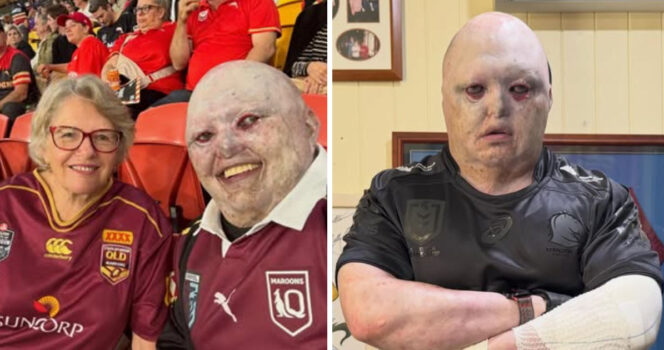
The 46-year-old shared a selfie taken during a rugby league game with his mother, expecting it to simply capture a fun moment from the event. Instead, the image quickly spread across social media and drew widespread attention for reasons he never anticipated.
Alongside the viral attention came harsh remarks about his appearance, prompting Clifford to address the online criticism directly.
His response highlighted not only the emotional toll caused by internet bullying, but also the lifelong challenges he has faced while living with a severe medical condition that affects his skin every day.
Living With Epidermolysis Bullosa
Clifford was born with Epidermolysis Bullosa, a rare condition that causes the skin to blister, tear, and develop painful wounds with even minor friction or injury.
The disorder is known for being extremely difficult to live with because the skin becomes fragile and vulnerable to constant damage.
Many individuals diagnosed with the condition face serious health complications throughout their lives. In many cases, people affected by the disorder do not survive beyond the age of 30.
When Clifford was born, doctors reportedly warned his parents that he would likely not live past the age of five.
Despite those early predictions, he survived childhood and continued building a life while managing the condition’s daily impact.
Over the years, Clifford has remained determined not to allow the disorder to define him or limit the experiences he wants to enjoy.
He continues to travel, attend public events, and spend time doing activities he enjoys, even while dealing with ongoing medical difficulties connected to his skin condition.
Photo Taken at Rugby Match Goes Viral
The controversy began after Clifford posted a selfie featuring himself and his mother during a rugby league game.
The image was intended to capture a positive family moment, but it quickly gained traction online as users began sharing it widely across social media platforms.
As the post spread, Clifford said the reaction became increasingly hostile, with many people mocking his appearance in comment sections.
The situation became even more upsetting after Meta’s artificial intelligence system reportedly labeled him as appearing to wear a “zombie costume.”
The automated description sparked additional ridicule online and intensified the attention surrounding the viral image.
After seeing the comments and reactions continue to grow, Clifford chose to publicly respond to both the online abuse and the AI-generated label connected to the photo.
Public Response to Online Abuse
In a lengthy message, Clifford expressed frustration over the way his appearance became the target of online jokes and insults.
“Who would have thought posting a fun photo at a football game with my mum on Friday night would result in so many trolls finding the way my skin looks as something they can try to make fun of. Thanks Facebook #METAAI for sharing my photo without my consent and tagging my the way I look the way you did. It just goes to highlight what why Facebook is quickly becoming completely irrelevant in real life.
“But to the thousands of you who thought they were being smart or having fun at my expense here’s something you may not be aware of.”
His comments quickly attracted additional attention online as people reacted to his account of the situation and the challenges he has faced throughout his life.
Clifford then described years of public reactions to his appearance, explaining that the experience of being stared at or judged has followed him since childhood.
Years of Bullying and Public Reactions
Clifford explained that living with such a visible and uncommon condition has often caused fear and misunderstanding from both children and adults.
He shared how strangers regularly react to his appearance in public settings and how those experiences have shaped much of his life.
“Living with such a rare genetic skin condition has meant throughout my entire life, kids / adults, EVERYONE has been scared of me. People have pointed and stared to the point where they trip over themselves or walk into walls which is f****g hilarious. I hear all the whispers behind my back. I have had people try to fight me because they thought I was the weakest link. I have even had people threaten to kill me in the past.”
The statement revealed the extent of the hostility he says he has encountered over the years because of the way he looks.
Although the viral photo reignited painful experiences, Clifford made clear that he refuses to let hateful comments control his life or determine how he sees himself.
Defiant Message to Internet Trolls
Clifford’s response also included a direct message to people who insulted him online.
He challenged those posting cruel remarks from behind anonymous accounts and said he would not be intimidated by criticism aimed at his appearance.
“Let me be clear. I do not care what you think of me. You think you can sit behind your keyboard and your comments are going to impact my life. Come say it directly to my face. Go on. I DARE YOU.”
He continued by describing how he intends to keep enjoying life despite the negativity directed toward him.
“Enjoy your pathetic small life in your parents basement or your childhood bedroom. I will continue to travel the world and live life to its absolute fullest and have a kick ass time doing it!”
The remarks reflected both frustration and determination as he addressed the online abuse publicly.
Many people online later responded with supportive messages praising Clifford for speaking openly about the experience and confronting the criticism directly.
Concerns Raised Over AI-Generated Labels
The incident also drew attention to the role artificial intelligence systems can play in moderating and labeling content online.
Clifford’s concerns centered on the automated description attached to his photo, which reportedly categorized his appearance as a “zombie costume.”
The label became a major focus of criticism after users argued that the AI-generated description was offensive and inappropriate.
The situation highlighted ongoing concerns surrounding how artificial intelligence tools interpret images and how mistakes made by automated systems can affect real people.
As social media companies increasingly rely on AI-generated features, incidents involving inaccurate descriptions or offensive labels have become a growing point of debate.
In Clifford’s case, the description attached to his image amplified attention toward his appearance and contributed to the wave of negative reactions online.
Meta Issues Public Apology
Following the backlash, Meta released a statement addressing the incident and apologizing for the distress caused to Clifford.
“We’re sorry to hear about Mr Clifford’s experience and sincerely apologise for any distress caused,” the company said.
The technology company explained that the prompts involved in the situation were generated automatically and acknowledged that the system may not always produce accurate or appropriate results.
“These prompts were generated automatically and may not always produce the results intended.”
Meta also stated that it continues working to improve its artificial intelligence systems and takes user feedback seriously.
“We take this matter seriously and constantly seek feedback on our AI products and models to make them better over time.”
The company added that users have the option to report AI-generated content they believe is inappropriate through in-app reporting tools.
“People can report AI-generated content they find inappropriate with our in-app reporting tools.”
Ongoing Conversation Around Online Behavior
The incident involving Clifford has renewed broader discussions about online behavior, digital harassment, and the impact social media comments can have on individuals.
While the internet provides opportunities for people to connect instantly across the world, it also allows harmful comments and personal attacks to spread rapidly.
For people living with visible medical conditions or physical differences, viral attention can sometimes bring intense scrutiny and cruel reactions from strangers.
Clifford’s decision to speak publicly about the experience shed light on the emotional challenges connected to years of public judgment and online bullying.
At the same time, his response demonstrated his refusal to allow internet criticism to prevent him from continuing to live life on his own terms.
Despite the painful experience, he made clear that he intends to keep traveling, enjoying public events, and embracing life fully while continuing to live with Epidermolysis Bullosa.

