
Gabriel Batista, a 59-year-old businessman, was reported missing after a tragic incident while attempting to cross the Komati River in northeastern South Africa. What initially appeared to be a routine journey quickly escalated into a serious situation that prompted a multi-day search and a complex investigation by local authorities.
According to official statements, Batista was driving across a low bridge over the river when his vehicle became stuck. The exact cause of the situation has not been fully clarified, but such crossings can become hazardous due to changing water levels, slippery surfaces, or strong currents. When police arrived at the scene, they found the car abandoned, with no sign of Batista nearby. This immediately raised concerns and led to the launch of a coordinated search effort.
Authorities initiated an extensive operation involving police divers, aerial surveillance, and local rescue teams. The search focused on areas along the river where a person could have been carried by the current. The Komati River, like many waterways in the region, is known for both its unpredictable flow and the presence of wildlife, which added further complexity to the operation.
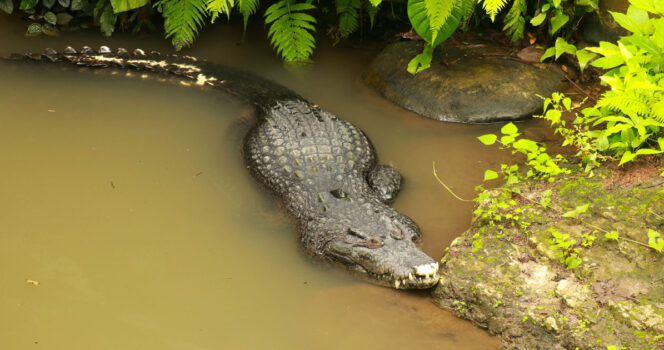
After four days, search teams identified a large Nile crocodile in the river. The animal measured approximately 14 feet 9 inches in length and weighed around 1,100 pounds. What drew attention was its noticeably swollen abdomen, which raised suspicion among investigators. Due to the circumstances and the ongoing search for Batista, authorities decided to euthanize the crocodile and remove it from the river using aerial support.
A post-mortem examination of the animal revealed the presence of human remains in its stomach. Investigators reported finding body parts consistent with those of an adult male. While these findings strongly suggested a connection to Batista’s disappearance, officials emphasized that DNA testing would be required to confirm the identity with certainty.
Captain Johan “Pottie” Potgieter, who led the police dive unit involved in the search, stated that the evidence found was significant enough to support the belief that the crocodile had consumed the missing man. However, he also stressed that final confirmation would depend on forensic analysis. Authorities have maintained a careful and methodical approach, ensuring that all conclusions are based on verified evidence.
At this stage, it remains unclear whether Batista drowned before encountering the crocodile or if the animal was directly involved in his death. Investigators are working to establish a clear sequence of events, which is often challenging in cases involving natural environments and wildlife. Rivers can present multiple risks simultaneously, including strong currents and limited visibility, making it difficult to determine exactly what occurred.
Gabriel Batista was known in the local community as the owner of the Border Country Inn and a nearby sports bar. Although he resided in Johannesburg, he frequently traveled to the area to manage his business. People who knew him described him as a dedicated and well-liked individual who maintained strong relationships with customers and colleagues.
A spokesperson familiar with Batista’s work described him as a “lovely guy and a family man,” noting that he spent a great deal of time in the region and was appreciated by those who interacted with him. At the time of the incident, he was reportedly on his way to attend to work responsibilities.
Throughout the search and recovery efforts, Batista’s family remained closely connected to the situation. His wife was present during the operation and followed developments closely. However, the family has chosen not to make public statements until the DNA results are finalized, preferring to wait for official confirmation before speaking further.
The incident has also highlighted the potential dangers associated with crossing rivers in areas where wildlife is present. Crocodiles inhabit many waterways in parts of Africa, and while encounters with humans are relatively uncommon, they can occur under certain conditions. Local authorities often advise caution when attempting to cross low bridges or flooded areas, particularly when visibility is limited or water levels are high.
In response to the tragedy, officials have reiterated the importance of safety awareness in such environments. Avoiding risky crossings, staying alert to surroundings, and recognizing the presence of wildlife are all essential precautions that can reduce the likelihood of similar incidents.
As the investigation continues, authorities are focused on completing the forensic analysis and providing clear answers regarding the circumstances of Batista’s disappearance. The pending DNA results will play a crucial role in confirming the identity of the remains and helping bring closure to the family.
This case underscores the unpredictable nature of certain environments and the challenges faced by emergency responders in conducting search operations under difficult conditions. It also serves as a reminder of the importance of caution and preparedness when navigating natural landscapes.
For now, the priority remains on concluding the investigation with accuracy and care, while supporting the family during a deeply difficult time.

