
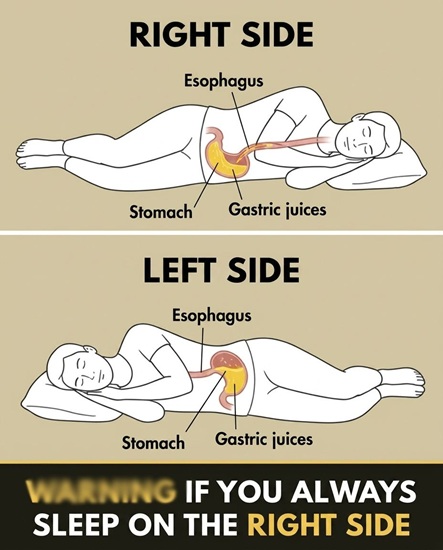
Sleep is one of the most important biological functions for maintaining physical health, mental clarity, and emotional balance. While most people focus on how many hours they sleep each night, far fewer pay attention to how they sleep. In reality, sleep posture can influence breathing, spinal alignment, digestion, and overall rest quality. However, sleep science does not support the idea of a single “perfect” sleeping position that works for everyone. Instead, the best position depends on individual body structure, comfort levels, and specific health needs.
Different sleeping positions place the body under different types of pressure. Gravity affects how the spine aligns, how muscles relax, and how easily air moves through the airways. Because of these factors, sleep posture should not be viewed as a strict rule, but rather as a personal balance between comfort and physical support. Over time, small adjustments can significantly improve sleep quality without requiring drastic changes.
Side Sleeping and Its Effects on the Body
Side sleeping is one of the most common sleep positions worldwide. Many people naturally adopt this posture during the night because it feels stable and comfortable. Sleeping on the side can help reduce pressure on the spine when the body is properly supported with pillows.
Left-side sleeping is often associated with certain digestive benefits. In this position, the stomach and intestines are aligned in a way that may support natural digestive movement. Some individuals report reduced bloating or discomfort when resting on their left side, particularly after eating in the evening. Although these effects can vary from person to person, side sleeping is generally considered supportive for those with mild digestive sensitivity.
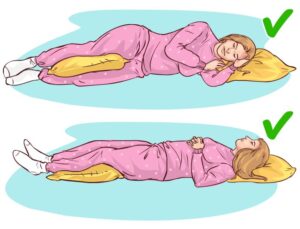
Proper support is essential for side sleeping. Without it, the shoulder and hip on the lower side of the body can experience pressure throughout the night. A pillow placed between the knees helps maintain hip alignment, while a supportive head pillow keeps the neck in a neutral position. These adjustments reduce strain on joints and help maintain a more natural spinal curve.
However, side sleeping is not perfect for everyone. Some individuals may experience shoulder discomfort or numbness in the arm if they remain on one side for too long. In such cases, alternating between sides during the night can help distribute pressure more evenly and improve overall comfort.
Right-side sleeping offers similar benefits to left-side sleeping. It is often a matter of personal preference rather than medical necessity. Some people find it more comfortable depending on their body structure or daily posture habits. The most important factor in both right and left side sleeping is maintaining proper alignment of the head, neck, and spine rather than focusing on direction alone.
Back Sleeping and Spinal Support
Sleeping on the back is often associated with spinal alignment and a neutral body position. When supported correctly, this position allows the head, neck, and spine to remain in a straight line, which can reduce unnecessary strain on muscles and joints. For many people, this can contribute to a more relaxed and stable sleep experience.
Back sleeping may also help distribute body weight evenly across the mattress, reducing pressure points that can develop in other positions. A supportive pillow under the head and neck is important in this posture, as it helps preserve the natural curve of the spine..

However, back sleeping is not suitable for everyone. Some individuals may experience increased snoring or mild breathing difficulties due to airway positioning. Others may find it difficult to remain comfortable in this position if they are not accustomed to lying flat on their back.
The type of mattress also plays a key role in back sleeping comfort. A surface that is too soft may cause the lower back to sink, while one that is too firm may create tension in pressure areas. The goal is to achieve balanced support that allows the body to relax naturally without forcing unnatural alignment.
Why No Single Sleep Position Is Universally Best
Although sleep position influences comfort, it is only one of many factors that determine sleep quality. Daily habits, stress levels, sleep environment, and overall health all play significant roles in how well a person sleeps. Even the most ideal posture cannot fully compensate for poor sleep routines or an uncomfortable environment.
It is also important to understand that the human body naturally shifts positions throughout the night. Very few people remain completely still while sleeping. These natural movements help relieve pressure, improve circulation, and prevent stiffness. This means that sleep is a dynamic process rather than a fixed position held for several hours.
Because of this natural movement, focusing too heavily on finding a single perfect sleeping position may not be practical. Instead, it is more effective to aim for general comfort and support that allows the body to move freely without disruption.
How to Identify the Best Sleep Position for Your Body
The most reliable way to determine a suitable sleep position is to observe how your body feels after waking up. Signs such as stiffness, discomfort, or fatigue may indicate that adjustments are needed. On the other hand, waking up refreshed and without pain suggests that the current position is working well.
Sleep quality should be evaluated over time rather than based on a single night’s experience. Consistent patterns provide more accurate information about whether a sleep position is beneficial or needs modification.
Small changes can often make a significant difference. Adjusting pillow height, changing mattress firmness, or slightly altering body alignment may improve comfort without requiring a complete change in sleeping habits.
The Importance of Sleep Environment
Sleep posture is closely connected to the overall sleep environment. A supportive mattress and properly chosen pillows can greatly influence comfort regardless of sleeping position. For example, side sleepers often benefit from additional knee support, while back sleepers may require neck support that maintains natural spinal curvature.
Room conditions such as temperature, lighting, and noise levels also play an important role in sleep quality. A cool, dark, and quiet environment promotes relaxation and allows the body to maintain deeper rest.
Bedding materials can also affect comfort. Breathable fabrics help regulate temperature, reducing nighttime discomfort caused by overheating or excessive sweating. These environmental factors often have a greater impact on sleep quality than position alone.
Conclusion
There is no universal sleeping position that is ideal for every individual. Side sleeping, back sleeping, and other variations can all be beneficial depending on personal comfort, physical structure, and health considerations. The most important factor is not the position itself, but how well the body is supported within that position.
Sleep quality depends on a combination of posture, environment, and individual habits. By paying attention to how the body responds and making gradual adjustments, it is possible to improve rest without strict rules or rigid guidelines.
Ultimately, good sleep is defined by comfort, consistency, and the body’s ability to fully relax and recover. When these conditions are met, the specific sleeping position becomes secondary to the overall quality of rest achieved.

