
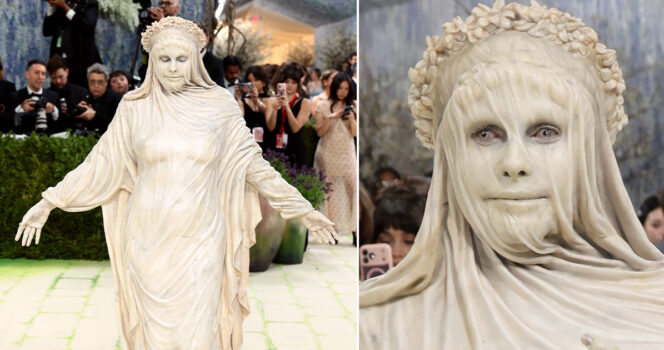
The Met Gala has long been known for bold fashion statements, and in 2026 it once again delivered moments that dominated headlines. Among the most talked-about appearances this year was Heidi Klum, whose striking look sparked a wave of mixed reactions across social media.
Held at the Metropolitan Museum of Art in New York City, the event embraced the theme “Costume Art,” encouraging guests to interpret fashion as a form of living sculpture. Klum took that idea to an extreme, arriving in an elaborate ensemble that transformed her into what many described as a “living marble statue.”
Her look featured a sculptural design with a delicate veil effect, combined with intricate prosthetics and detailed body work that mimicked the texture and tone of carved stone. The transformation was so convincing that some viewers initially questioned whether the images circulating online were digitally altered. The concept drew inspiration from classical sculptures, particularly pieces known for their lifelike drapery and illusion of soft fabric carved in marble.
The outfit was created in collaboration with Mike Marino, a well-known special effects makeup artist recognized for his work in film and high-concept transformations. Using latex, body paint, and carefully designed prosthetics, the team achieved a visual effect that blurred the line between human form and sculpture.
As expected with such a dramatic interpretation, public reaction was divided. Some viewers praised the creativity and dedication behind the look, noting that it aligned perfectly with the theme of the evening. Supporters argued that Klum fully embraced the artistic direction of the event, turning herself into a literal embodiment of “Costume Art.”
Others, however, reacted less positively. Critics described the look as unsettling or overly theatrical, with some comparing it more to a Halloween costume than a red carpet ensemble. A number of social media users commented that they barely recognized her, which for some was part of the appeal, while for others it crossed a line into discomfort.
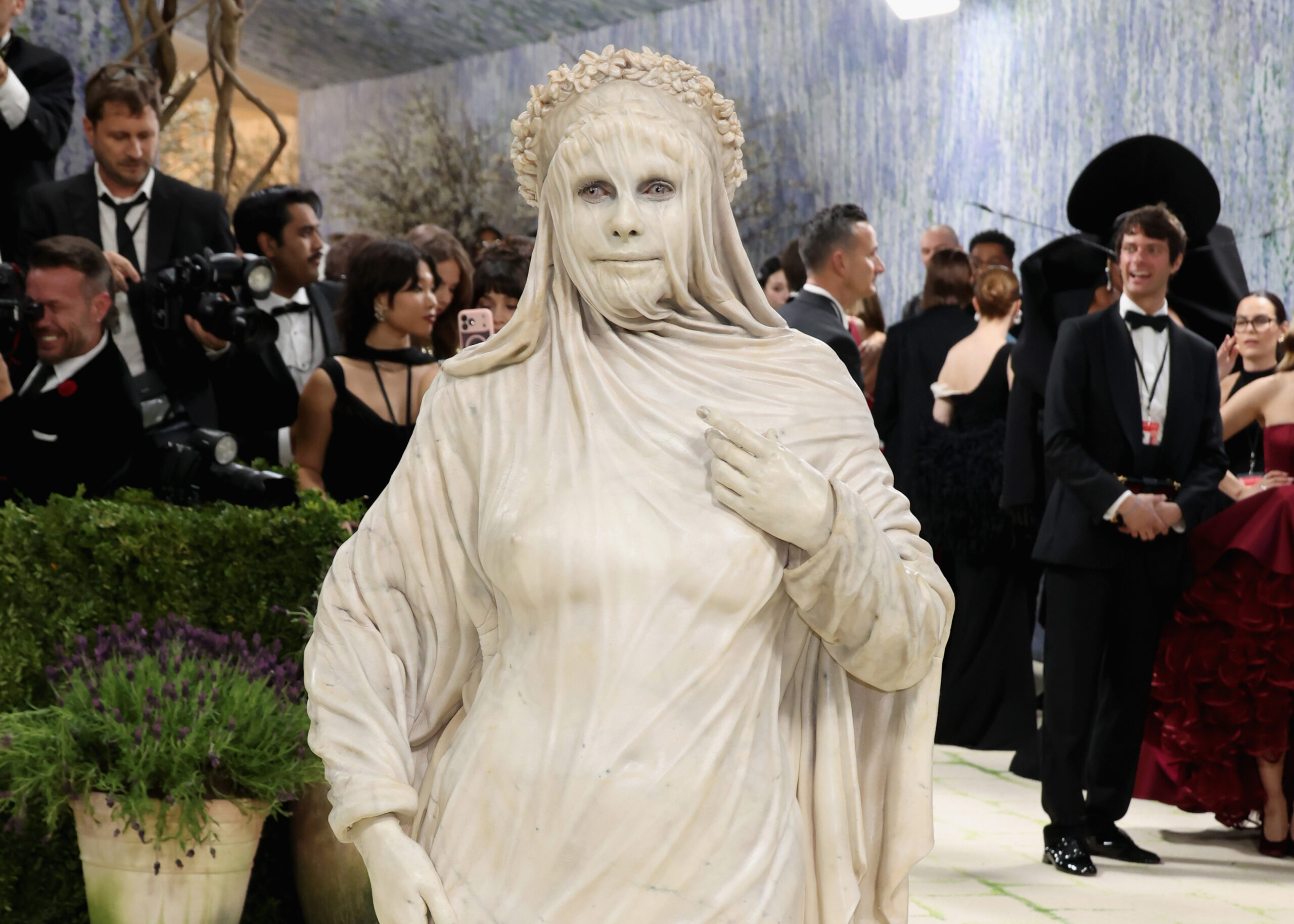
This contrast in reactions highlights a familiar pattern at the Met Gala, where the most memorable looks are often the most polarizing. The event itself encourages risk-taking, and attendees who push boundaries tend to generate both admiration and criticism.
For Klum, this kind of response is nothing new. Over the years, she has built a reputation for elaborate transformations, particularly during Halloween, where she is widely known for her highly detailed and sometimes unrecognizable costumes. Her willingness to experiment with full-body prosthetics and immersive character design has made her a standout figure in costume-driven fashion moments.
In that context, her 2026 Met Gala appearance can be seen as an extension of her established style — one that prioritizes transformation, theatricality, and artistic impact over conventional glamour. Whether viewed as innovative or excessive, the look succeeded in capturing attention and sparking conversation, which is often the ultimate goal at an event like the Met Gala.
As with many fashion moments from the gala, the discussion surrounding Klum’s appearance reflects broader questions about what fashion represents: personal expression, artistic interpretation, or public approval. In this case, her choice clearly leaned toward artistic experimentation, even if it divided opinion.
Ultimately, her appearance reinforced one thing — whether praised or criticized, she remains one of the most talked-about figures when it comes to bold, unconventional fashion on the world’s most watched red carpet.

