
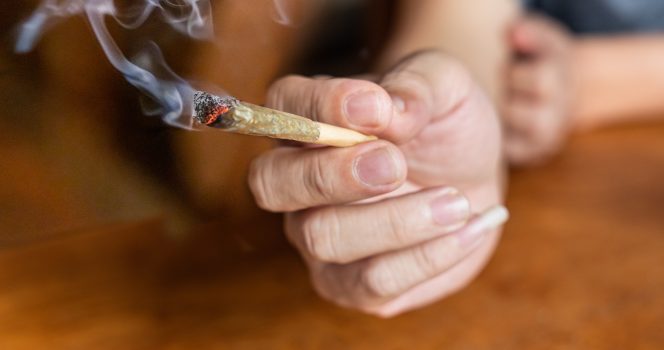
Recent public health data and sleep research are prompting renewed discussion about the growing use of cannabis and related products as a nighttime sleep aid. While many people report short-term benefits such as falling asleep more quickly, experts caution that long-term use may come with trade-offs that are not always immediately obvious.
A recent report from the Centers for Disease Control and Prevention (CDC) indicates that nearly 13% of adults in the United States reported using some form of sleep aid on most days or every day during a one-month period in 2024. Within that group, a smaller but notable portion reported relying on cannabis or cannabidiol (CBD) products to help them sleep. According to the same findings, about 3.7% of respondents used marijuana or CBD for sleep, while 5.2% used prescription sleep medications and 5.7% turned to over-the-counter medications or supplements.
These numbers reflect a broader shift in how people are attempting to manage sleep difficulties, particularly in an era where stress, irregular schedules, and screen exposure have become common factors affecting rest. Cannabis, in particular, has become a widely discussed option because of its perceived calming effects and its accessibility in many regions.
Broader patterns in cannabis use for sleep
Surveys conducted by sleep research organizations suggest that cannabis use as a sleep aid is not limited to a small group. A 2025 report from the Sleep Foundation found that a significant percentage of adults have experimented with cannabis to help with sleep at some point in their lives. The report estimated that approximately 77% of men and 64% of women between the ages of 21 and 64 have used cannabis in some form for sleep-related reasons.
This widespread use highlights why the topic has become a focus for sleep researchers and medical professionals. While anecdotal reports often describe cannabis as helpful for falling asleep, clinical studies present a more complex and less consistent picture regarding sleep quality and long-term effects.
How cannabis may affect sleep in the short term
Cannabis contains compounds known as cannabinoids, which interact with the body’s endocannabinoid system. These interactions can influence mood, relaxation, and perception of stress. Many users report that certain strains or formulations help reduce the time it takes to fall asleep, a metric known as sleep latency.
Some guidance from sleep organizations, including the Sleep Foundation, notes that different cannabis strains may produce different subjective effects. For example, strains commonly labeled as “indica” are often associated with relaxation and drowsiness, while “sativa” strains are sometimes described as more stimulating. However, researchers emphasize that these distinctions are not absolute and that individual responses vary widely depending on biology, dosage, and product composition.
Hybrid strains, which combine elements of both categories, may produce mixed or unpredictable effects. Because of this variability, experts caution against assuming consistent sleep outcomes based solely on strain type.
Concerns about sleep quality and sleep cycles
While cannabis may help some individuals fall asleep more quickly, research suggests that it may also influence the structure of sleep itself. One of the key concerns is its potential effect on REM sleep, the stage of sleep associated with dreaming, memory consolidation, and emotional processing.
Studies referenced by the American Academy of Sleep Medicine (AASM) indicate that regular cannabis use may reduce the amount of REM sleep a person experiences. This reduction is significant because REM sleep plays an important role in cognitive and emotional health. Disruptions in this stage of sleep have been associated with changes in mood regulation and learning ability.
In addition, some research suggests that while cannabis users may fall asleep more easily, they may also experience more fragmented sleep throughout the night. This can lead to increased awakenings and reduced overall sleep efficiency.
A 2019 study published in BMJ Open Respiratory Research observed that frequent cannabis users experienced longer sleep latency compared to non-users, meaning it took them more time to fall asleep after going to bed. The same research also suggested differences in perceived sleep quality between users and non-users, though findings vary across studies.
Health considerations beyond sleep
Medical experts also emphasize that the effects of cannabis are not limited to sleep patterns alone. According to the Centers for Disease Control and Prevention, cannabis use can have measurable effects on cardiovascular and neurological function. These include increased heart rate and changes in blood pressure, which may be relevant for individuals with underlying heart conditions.
The CDC also notes that cannabis can influence several cognitive functions, including memory, attention, coordination, and decision-making. These effects are particularly important when considering long-term or frequent use, as they may accumulate over time depending on dosage and frequency.
Respiratory health is another area of concern, particularly for individuals who smoke cannabis. Inhalation of smoke can expose the lungs to irritants and fine particles, which may contribute to respiratory discomfort or longer-term lung issues in some users.
Mental health considerations
Mental health effects are also part of the ongoing scientific discussion. The Cleveland Clinic has noted that prolonged cannabis use may be associated with changes in brain regions involved in thinking, memory, and emotional regulation. These areas include gray matter, which plays a central role in processing information and controlling movement.
Additionally, cannabis use has been linked in some studies to an increased risk of anxiety, depression, and, in rare cases, more severe psychiatric conditions such as schizophrenia. However, researchers emphasize that the relationship between cannabis use and mental health is not fully understood. It remains unclear in many cases whether cannabis contributes directly to these conditions or whether individuals with certain conditions are more likely to use cannabis in the first place.
Because of these uncertainties, health professionals continue to call for more long-term studies to better understand how cannabis interacts with mental health over time.
Scientific uncertainty and ongoing research
One of the central challenges in evaluating cannabis as a sleep aid is the variability in products, usage patterns, and individual responses. Unlike regulated pharmaceutical sleep medications, cannabis products can differ widely in potency, composition, and method of consumption.
Researchers at institutions such as Harvard Health Publishing have emphasized that while some evidence suggests potential short-term benefits for sleep onset, the long-term effects on sleep architecture remain less clear. In particular, there is ongoing interest in understanding how chronic use may alter the balance between different sleep stages and whether these changes persist after discontinuation.
Another area of active research involves tolerance. Some studies suggest that individuals who use cannabis regularly may develop tolerance over time, meaning they require higher amounts to achieve the same sleep-inducing effect. This may contribute to a cycle where initial benefits diminish and sleep issues potentially return or worsen.
Balancing short-term relief with long-term effects
For individuals experiencing occasional sleep difficulties, cannabis may appear to offer a quick solution. However, sleep experts generally emphasize the importance of evaluating both immediate and long-term outcomes. While falling asleep faster may feel beneficial, changes in sleep quality, duration, and structure can have broader implications for overall health and daytime functioning.
As research continues, health organizations stress the importance of understanding sleep as a complex biological process that depends on multiple stages working together. Disrupting this cycle, even subtly, may have cumulative effects that are not immediately noticeable.
At present, medical consensus remains cautious. Cannabis is not universally recommended as a first-line treatment for insomnia or chronic sleep disorders. Instead, behavioral approaches such as sleep hygiene improvements, cognitive behavioral therapy for insomnia, and medical evaluation for underlying conditions are often prioritized.
Conclusion
The growing use of cannabis as a sleep aid reflects a broader search for solutions to widespread sleep difficulties. While many users report subjective improvements in falling asleep, scientific research suggests a more nuanced reality. Potential changes in sleep structure, including reduced REM sleep and altered sleep continuity, raise important questions about long-term use.
Health authorities such as the CDC, along with sleep research institutions and medical organizations, continue to study the effects of cannabis on sleep and overall health. While it may provide short-term relief for some individuals, its long-term impact remains an area of active investigation, with experts urging caution and further research before drawing definitive conclusions.

