
There is something deeply engaging about solving riddles, especially when they are presented as visual puzzles. An image-based riddle challenges the mind in a unique way because it forces us to observe carefully, interpret details, and question what we initially assume to be true. Unlike straightforward questions, riddles require a different kind of thinking, one that blends logic with perception and attention to detail. This is exactly what makes them so enjoyable and mentally stimulating.
When people attempt to solve riddles, their minds naturally shift into a problem-solving mode. This is not just casual thinking; it is a structured mental process where the brain begins to analyze patterns, compare possibilities, and eliminate unlikely answers. It encourages critical thinking and trains the mind to look beyond the obvious. Instead of accepting what is immediately visible, the brain is pushed to explore what might be missing, hidden, or implied.
This type of mental exercise is often compared to training or working out the brain. Just as physical exercise strengthens muscles, solving riddles strengthens cognitive abilities. Skills such as focus, patience, observation, and emotional control are all engaged during the process. Over time, regularly engaging in such activities can improve overall mental agility and enhance problem-solving skills in everyday life situations.
What makes riddles especially appealing is that they do not feel like traditional learning or work. They are often presented in a playful or entertaining format, making the challenge enjoyable rather than stressful. This combination of fun and mental effort is what keeps people interested and motivated to solve them. It feels less like an obligation and more like a game where the reward is the satisfaction of discovering the correct answer.
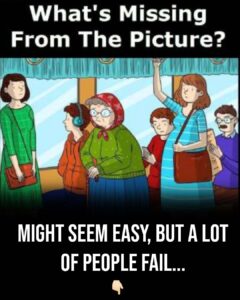
In this particular scenario, we are presented with a visual situation inside a bus. The image shows six passengers traveling together. Among them are three women standing and three men seated. At first glance, everything may appear normal, but the purpose of the riddle is to identify what is missing from this situation. This requires careful observation and interpretation rather than simply describing what is visible.
The three women standing include an elderly woman, a younger woman, and a pregnant woman. Their presence immediately draws attention because they are in a physically demanding position while others remain seated. Across from them, three men are comfortably seated, appearing unaware or indifferent to the situation around them. The contrast between those standing and those sitting becomes an important clue in understanding the deeper meaning behind the image.
When people attempt to solve this type of riddle, they often interpret it in different ways. Some focus on moral values, while others focus on social behavior or etiquette. One common interpretation is that what is missing is respect. Respect in this context refers to the consideration shown to individuals who may need a seat more than others, such as elderly passengers or pregnant women. From this perspective, the absence of respect is highlighted by the behavior of those who remain seated without offering assistance.
Another common answer suggested by viewers is manners. Manners refer to socially acceptable behavior, especially in shared public spaces. In situations like public transportation, manners often include offering a seat to someone in need or being aware of others’ comfort. The image suggests a lack of awareness or willingness to act considerately, which leads some to conclude that good manners are missing from the scene.
Some interpretations go further and describe the missing element as common sense. This refers to the basic understanding that certain situations require simple, thoughtful actions, such as giving up a seat to someone who may struggle to stand. From this perspective, the image is not just about physical positioning but about the failure to recognize an obvious social expectation.
Others describe the missing element as chivalry. Chivalry is often associated with courteous and respectful behavior, particularly in helping or protecting others. In modern usage, it extends beyond gender and refers broadly to kindness and consideration in everyday interactions. In this interpretation, the image reflects a lack of chivalry because no one is offering assistance or acknowledging the needs of those standing.
Regardless of the specific wording used, all of these interpretations point toward a similar idea. The riddle is not simply asking what object is missing, but what human quality or behavior is absent in the situation. This is what makes the puzzle more meaningful than a simple visual challenge. It encourages reflection on how people behave in shared spaces and how small actions can reflect larger values.
Riddles like this also serve an educational purpose. They remind us to pay attention to the world around us and to think about how our actions affect others. In a real-life setting, situations like the one shown in the image are common in public transportation systems around the world. People of different ages, health conditions, and circumstances share the same space, and small gestures of kindness can make a significant difference in their experience.
For example, offering a seat to an elderly person or a pregnant woman is a simple act, but it demonstrates awareness and empathy. It does not require effort beyond a moment of decision, yet it can have a meaningful impact on someone else’s comfort. This is why many people view such riddles as reminders of basic human values rather than just entertainment.
Another important aspect of this type of puzzle is how differently people interpret the same situation. While some focus on social behavior, others may interpret it purely visually, searching for a literal missing object in the image. This difference in interpretation shows how human perception can vary based on experience, values, and perspective. It also highlights how riddles can be designed to challenge not only intelligence but also awareness and empathy.
In addition to encouraging critical thinking, riddles also promote discussion. When people share their answers, they often explain their reasoning, compare interpretations, and debate what the correct answer might be. This social aspect makes riddles even more engaging, as they become a shared experience rather than an individual task.
Ultimately, the purpose of this riddle is not just to find a single correct answer, but to encourage reflection on behavior and awareness in everyday life. Whether one believes the missing element is respect, manners, common sense, or chivalry, the underlying message remains consistent. It highlights the importance of kindness, consideration, and attentiveness toward others.
In conclusion, visual riddles like this one serve as more than simple puzzles. They are tools that engage the mind, encourage observation, and promote thoughtful reflection on human behavior. They challenge us to look beyond what is immediately visible and consider what may be missing on a deeper level. In doing so, they remind us that sometimes the most important things are not objects we can see, but values we choose to practice.

