
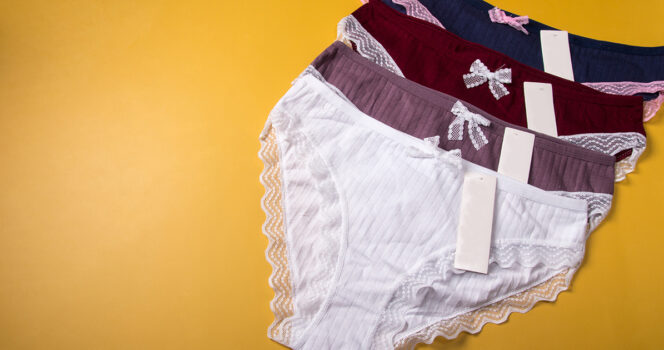
Many people have noticed the small bow sewn onto the front of women’s underwear and wondered why it is there. At first glance, it appears to be purely decorative, a simple design detail added for style. However, this small feature actually has roots that go back much further than modern fashion, combining both practical use and historical tradition.
Today, the bow is commonly seen on a wide variety of underwear styles across different brands. It is usually placed at the center of the waistband on the front, where it is easily visible. While many people do not pay much attention to it, others have questioned its purpose, leading to discussions that reveal a mix of historical context and practical reasoning.
One of the most widely shared explanations relates to functionality. Before modern clothing materials were developed, underwear did not include elastic waistbands. Instead, garments were often secured using ribbons or drawstrings. These strings would be threaded through small openings at the top of the garment and tied at the front to keep everything in place. The knot created by tying the ribbon would naturally sit at the center of the waistband, and over time, this knot evolved into a small bow.
This means that the bow originally had a very practical role. It was not just decoration but the actual fastening mechanism that held the garment securely around the waist. Because tying a ribbon at the front was the easiest and most accessible option, the bow became a standard feature in that position.
Another practical reason for the bow relates to orientation. In earlier times, especially before the widespread use of electricity, people often dressed in low-light conditions, such as by candlelight or in dim rooms. Without clear visibility, it could be difficult to quickly determine the front and back of a garment. The bow provided a simple solution. By placing it at the front, it acted as a tactile marker, allowing someone to identify the correct orientation by touch alone.
This small detail made dressing more efficient and reduced the likelihood of putting on clothing incorrectly, particularly in situations where speed or limited lighting was a factor. Even today, some people still find this aspect useful, especially when dressing quickly or in the dark.
There is also a broader historical context tied to the design of early undergarments. In earlier centuries, what we now think of as underwear was constructed differently. Some garments consisted of two separate leg pieces connected at the waist by a string or ribbon. When tightened, the string would gather the fabric together, and the ends would be tied into a bow. This method of fastening contributed to the terminology and structure of garments known as “drawers,” referring to the action of drawing the pieces together.
Over time, as clothing technology advanced, elastic materials replaced ribbons and drawstrings, making garments easier to wear and more comfortable. Despite this change, certain design elements remained. The bow, no longer necessary for function, continued to appear as a visual reminder of earlier construction methods.
In modern fashion, the bow has largely taken on a decorative role. Designers often include it to add a soft, traditional, or feminine detail to the garment. It can contribute to the overall aesthetic by creating a balanced and visually appealing design. For many people, it is simply a familiar feature that has become part of the standard look of certain types of underwear.
However, not everyone views the bow in the same way. Some see it as unnecessary and choose styles without it, while others remove it altogether. Preferences vary depending on individual taste, comfort, and style choices. Even so, its continued presence across many designs shows how strongly tradition can influence modern fashion.
The persistence of the bow highlights an interesting aspect of clothing design. Features that once served a clear practical purpose can remain long after that purpose has disappeared. Over time, they become symbolic, representing continuity with past styles and practices. In this case, the bow acts as a small historical reference embedded in everyday clothing.
It also reflects how design can combine function and appearance. What began as a simple knot for securing fabric gradually transformed into a decorative element that still carries subtle practical benefits, such as helping identify the front of a garment.
Ultimately, the small bow on women’s underwear is more than just a decorative touch. It is a detail shaped by history, practicality, and evolving fashion trends. While it may no longer serve its original purpose, it remains a recognizable feature that connects modern clothing to its earlier forms.
Understanding these origins provides a clearer perspective on how even the smallest elements of everyday items can have meaningful backgrounds. What seems like a minor detail today often has a story rooted in the way people lived, dressed, and adapted their clothing to meet practical needs in the past.

