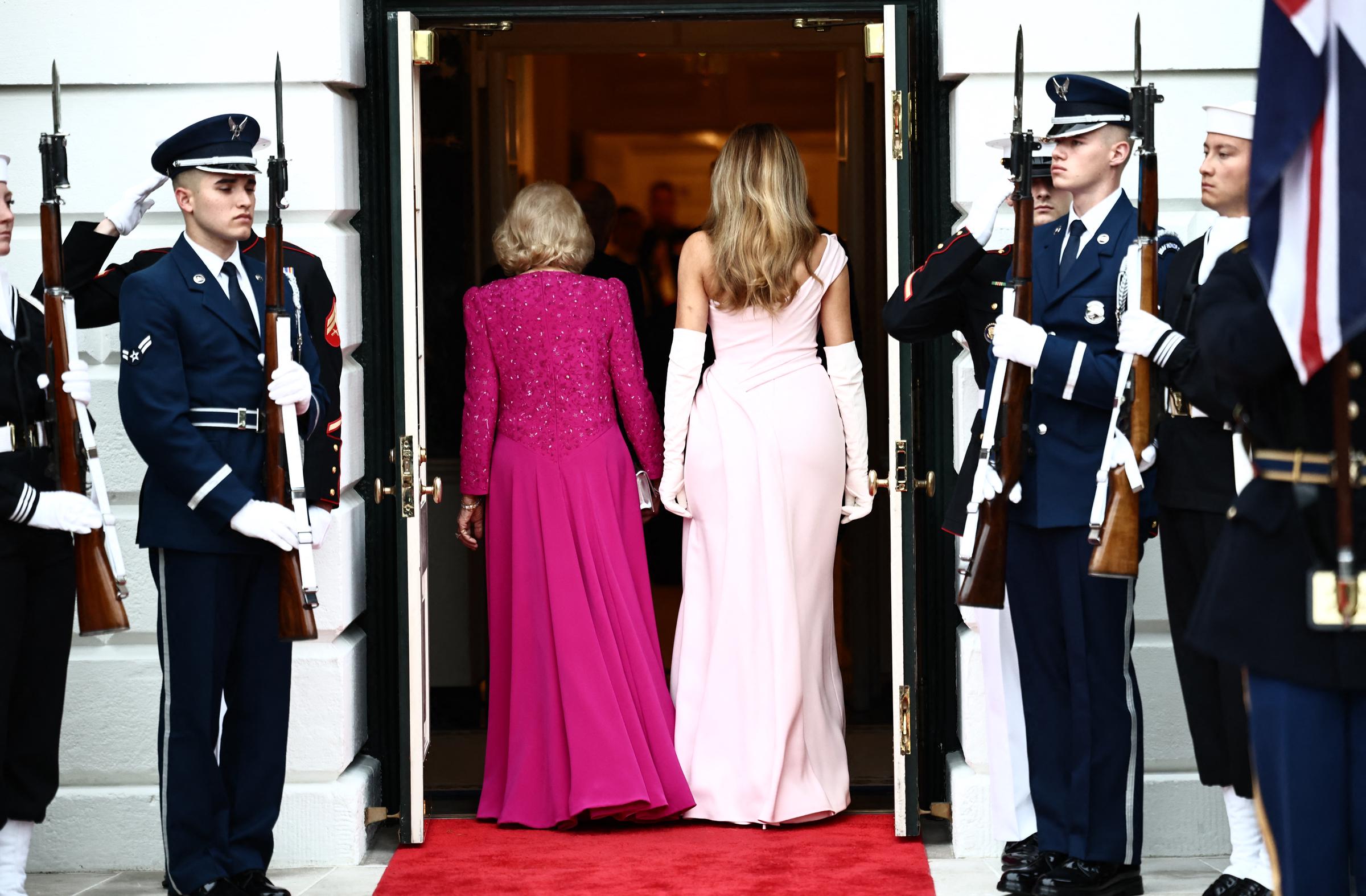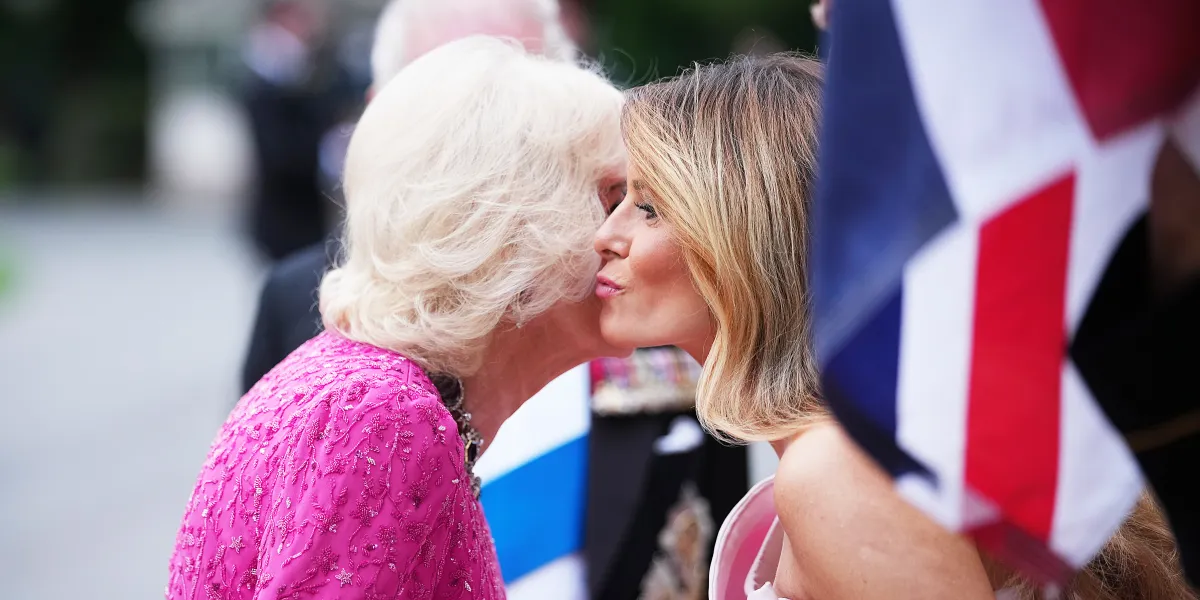
The state visit of King Charles III and Queen Camilla to the United States drew widespread attention, not only for its diplomatic significance but also for the visual details that accompanied the occasion. Among the most discussed aspects of the visit were the fashion choices made by Melania Trump and Queen Camilla during key public appearances, particularly at the formal White House state dinner held on April 28, 2026.
The evening was designed to reflect tradition, formality, and mutual respect between two longstanding allies. Hosted by Donald Trump and the First Lady, the event followed a day of official engagements that included King Charles’s address to Congress. As expected, the dinner adhered to a white-tie dress code, one of the most formal standards in diplomatic settings. However, while the structure of the event remained traditional, the fashion choices of the evening introduced subtle variations that prompted discussion among observers.
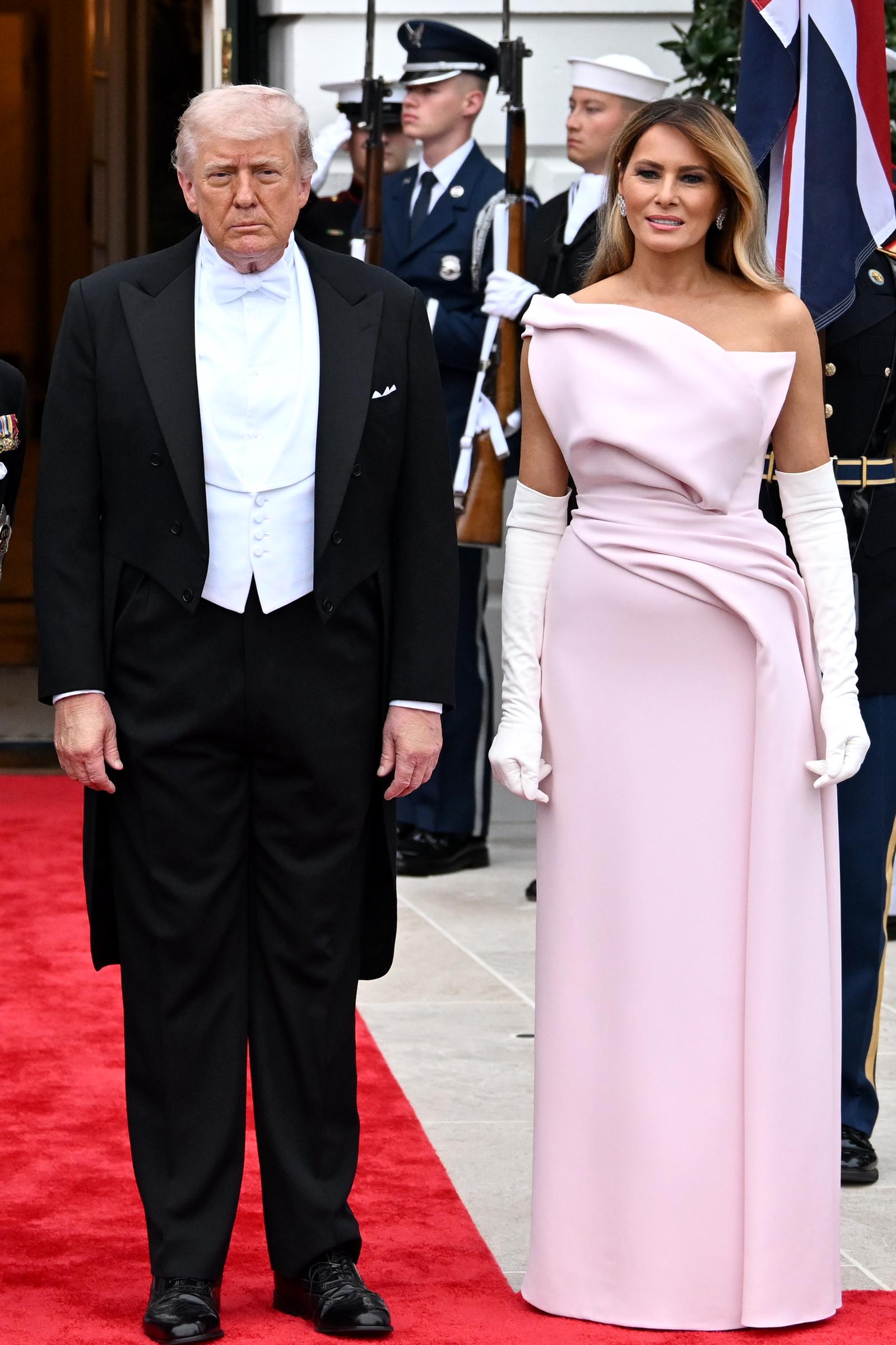
Melania Trump’s appearance quickly became a focal point. She wore a pale pink, strapless silk gown designed by Christian Dior, created under the direction of designer Jonathan Anderson. The gown featured a clean, structured silhouette, emphasizing simplicity and refinement rather than elaborate embellishment. She paired the dress with long, off-white opera gloves and coordinated heels, creating a cohesive and polished look.

The choice of color appeared deliberate. The soft pink tone, often associated with delphinium flowers, is known to hold personal significance for King Charles. While not officially confirmed as symbolic, the selection suggested an awareness of detail that aligns with the careful planning typical of diplomatic events. At the same time, the modern cut of the gown—particularly its strapless design—represented a subtle departure from more traditional expectations of modesty often associated with state banquets.
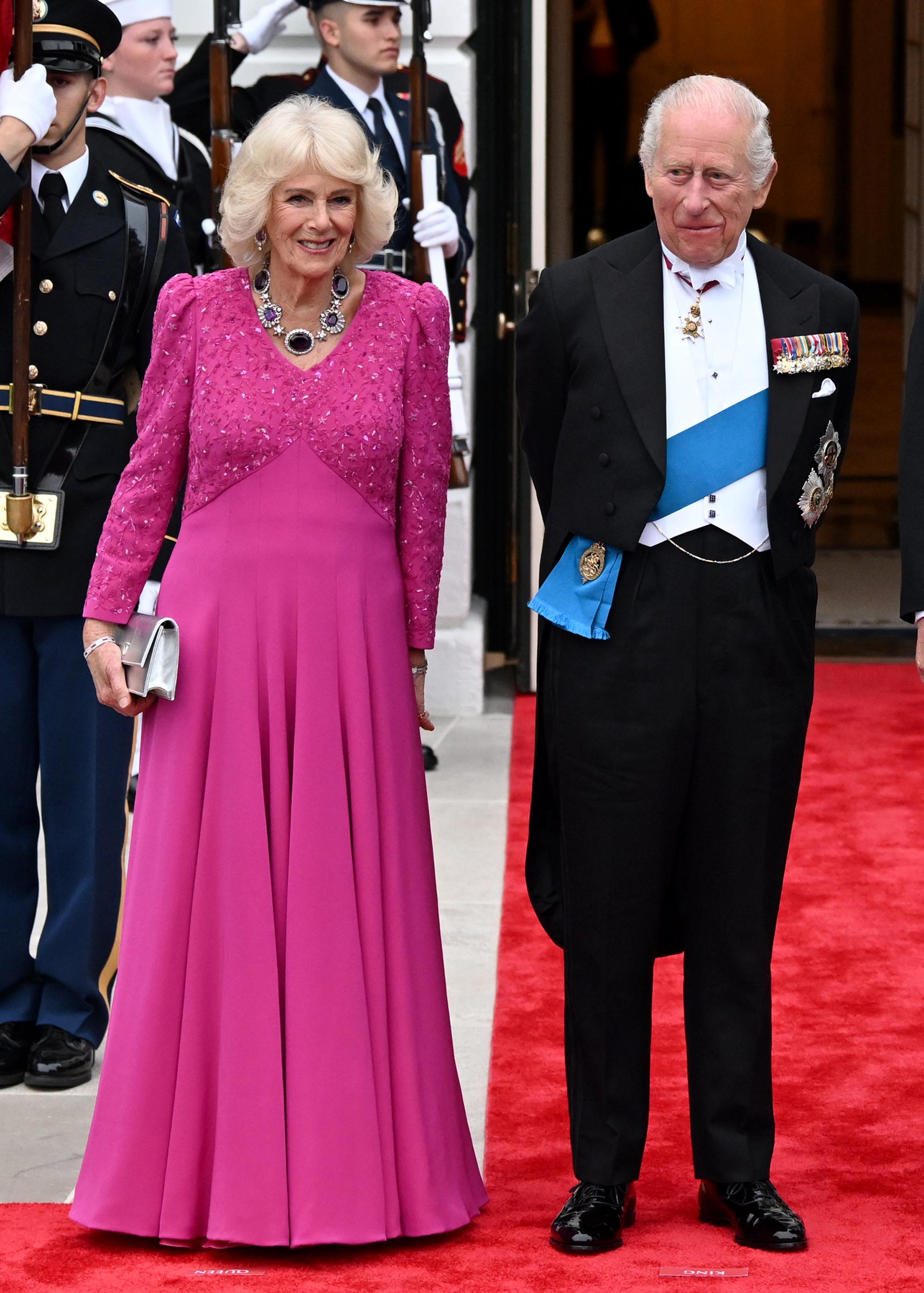
Queen Camilla’s attire also drew attention, though for different reasons. She wore a bright pink evening gown with a classic silhouette, complemented by a historic diamond necklace that added a sense of continuity with royal tradition. Her choice of a more vibrant shade of pink contrasted with Melania Trump’s softer tone, yet together the two created a visually coordinated presence.
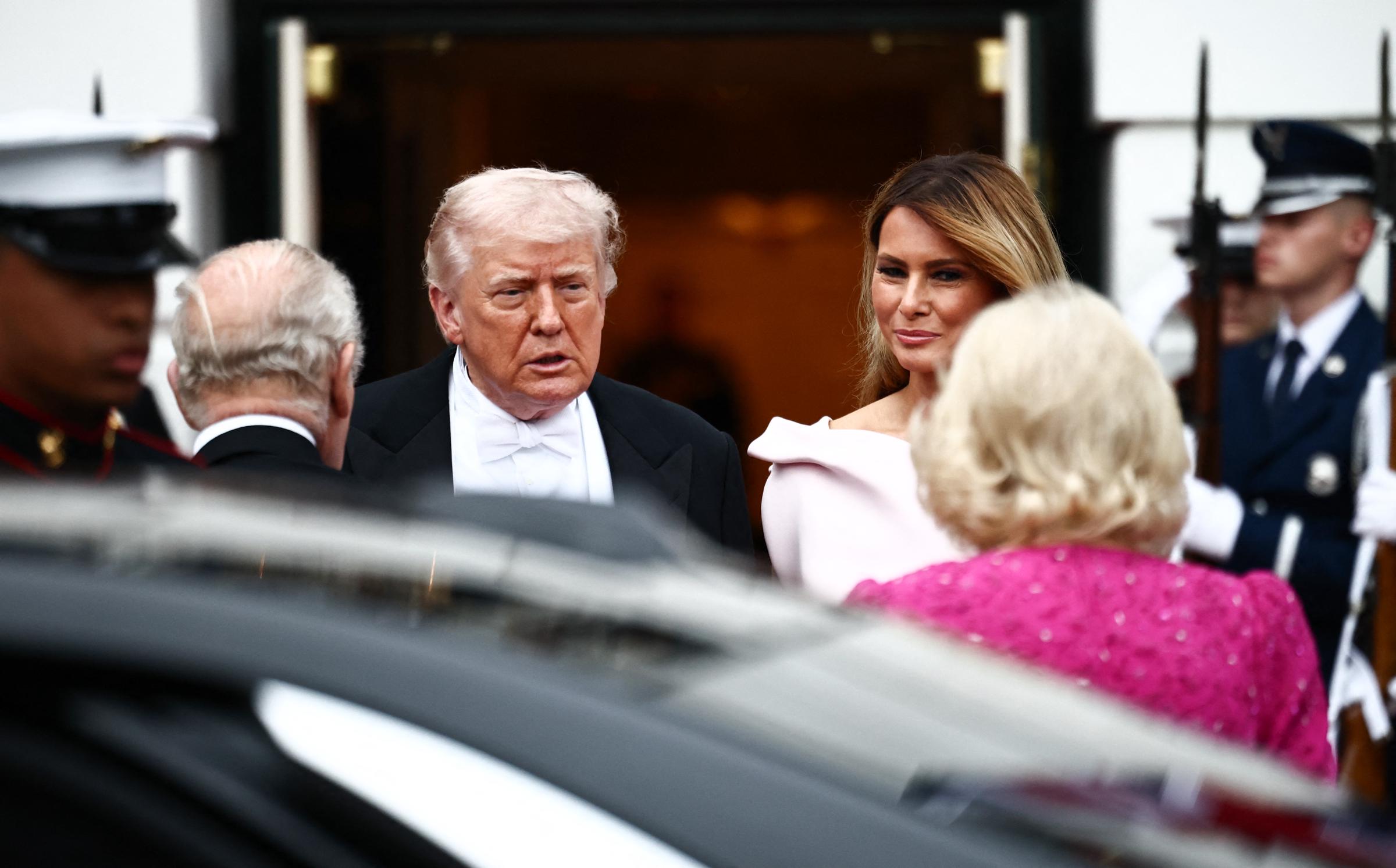
The coordinated yet distinct fashion choices contributed to a broader visual narrative. Both women opted for variations of pink rather than the traditionally favored white, a color long associated with royal state banquets. Historical precedent supports this expectation; previous attendees, including Michelle Obama, have worn white gowns at similar events. Royal commentators have often noted that white symbolizes formality and continuity within these settings.
By choosing pink instead, both Melania Trump and Queen Camilla signaled a subtle shift. While the overall presentation remained formal and appropriate, the variation in color introduced a degree of personal expression. This shift did not break protocol outright, but it demonstrated that modern state events can accommodate evolving interpretations of tradition.
Public reaction to these choices was mixed. On social media platforms, some viewers praised Melania Trump’s appearance as elegant and refined, highlighting the clean lines and understated design of her gown. Others expressed uncertainty about the structure or questioned whether the style aligned with the expectations of a formal diplomatic event. Similarly, Queen Camilla’s look received both positive and critical responses, with some observers appreciating its classic approach and others suggesting it lacked contemporary appeal.
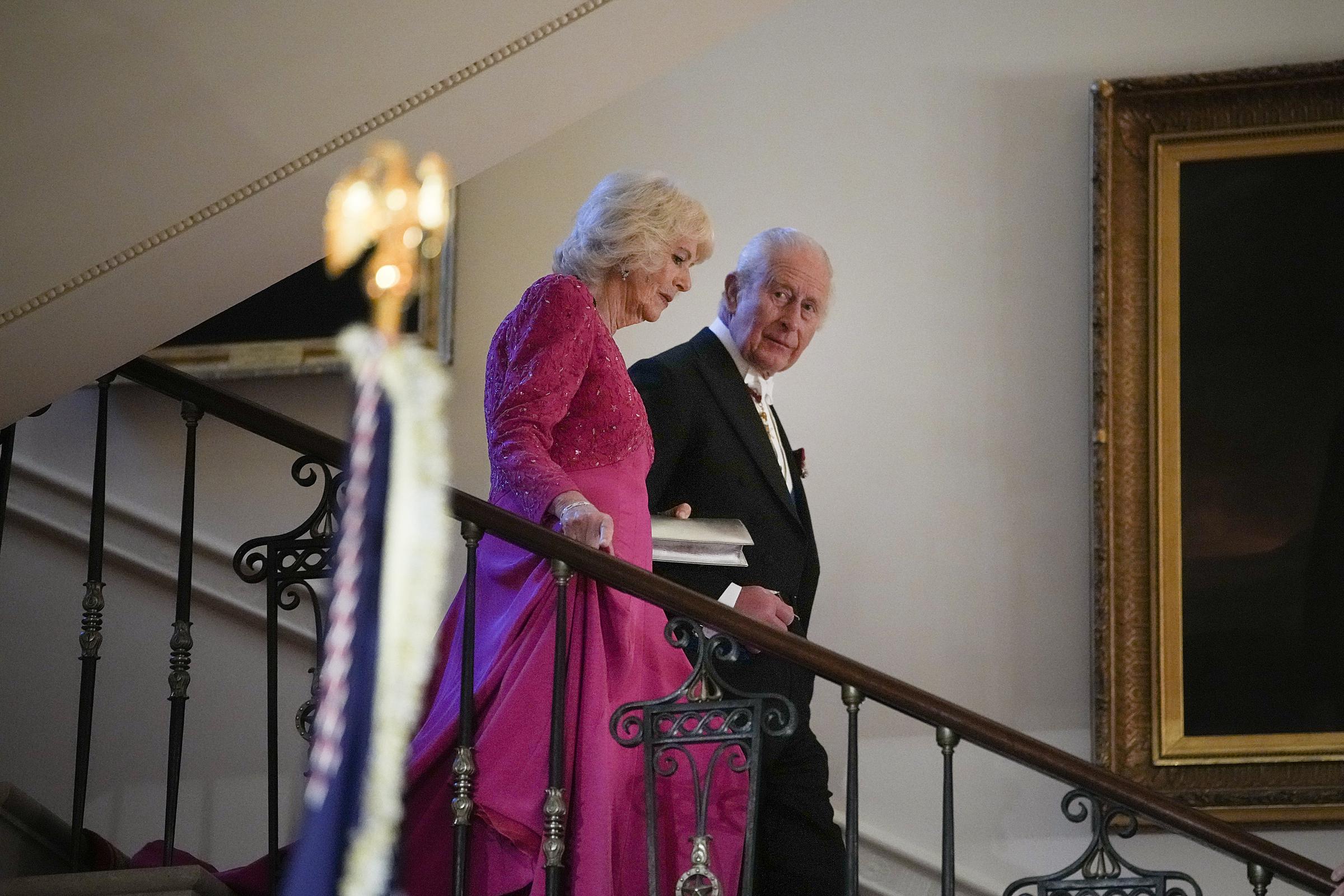
These varied reactions reflect the heightened scrutiny that accompanies high-profile events. State dinners are not only diplomatic occasions but also cultural moments in which visual presentation becomes part of the broader narrative. Clothing, in this context, functions as a form of nonverbal communication, capable of conveying respect, identity, and even subtle messaging.
The discussion surrounding fashion extended beyond the state dinner itself. During a visit to the White House on April 27, both women made additional wardrobe choices that reinforced a more personalized approach to diplomacy. Melania Trump wore a tailored butter-yellow suit designed by American designer Adam Lippes, while Queen Camilla chose a white chiffon dress by British designer Anna Valentine. These selections highlighted designers from their respective countries, subtly emphasizing national identity through fashion.
Together, these moments suggest a broader trend toward individuality within formal frameworks. Rather than adhering strictly to longstanding conventions, both women appeared to balance tradition with personal expression. This approach reflects a modern understanding of diplomacy, where symbolism can be conveyed through a combination of established practices and contemporary interpretation.
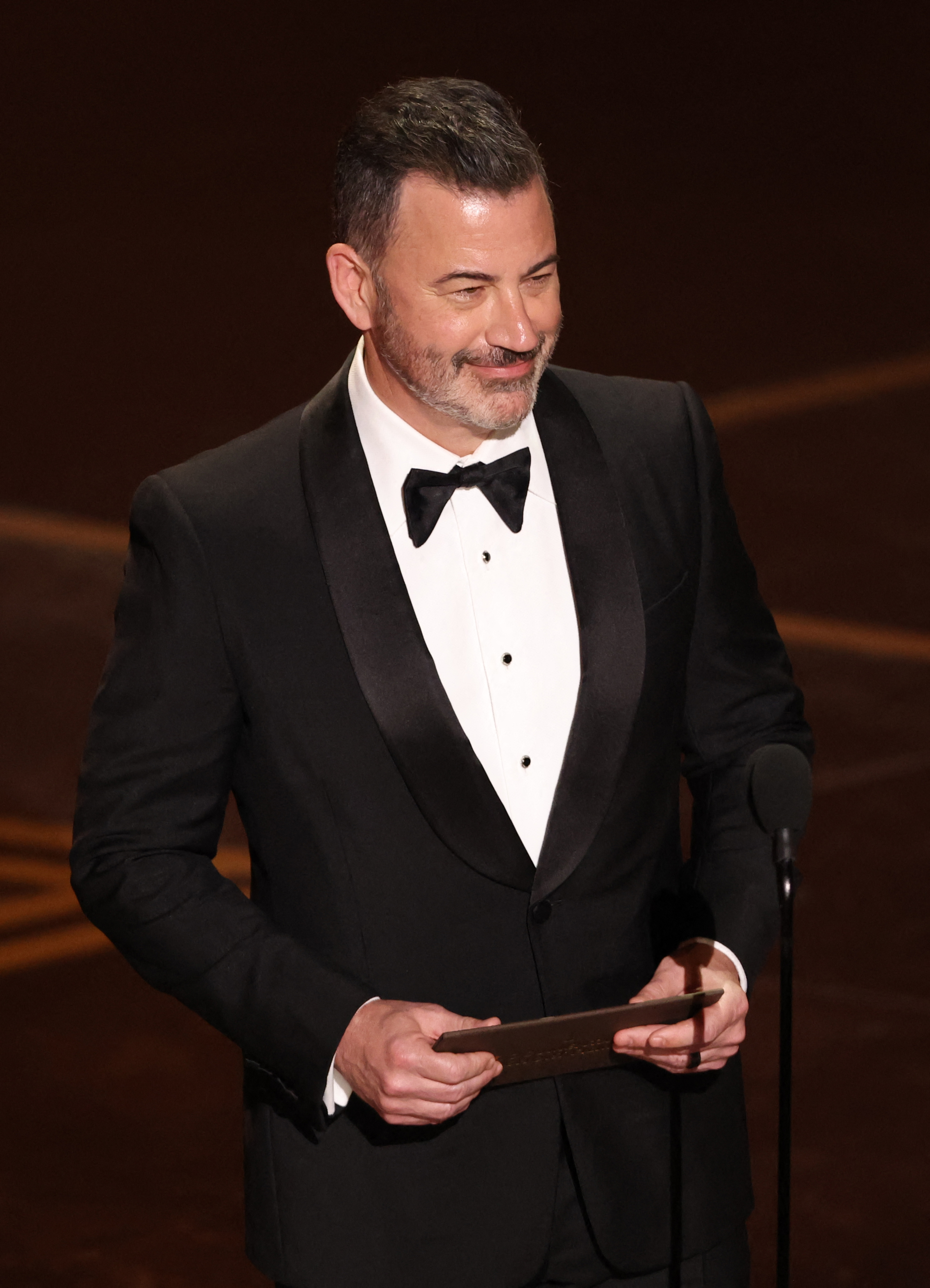
At the same time, the state visit was not without controversy. Public attention also turned to comments made by Jimmy Kimmel in the days leading up to the event. During a monologue on his late-night show, Kimmel made remarks about Melania Trump that were widely circulated online. The comments prompted a strong response from both Melania and Donald Trump.
In a public statement, Melania Trump criticized the remarks, describing them as divisive and inappropriate. She emphasized concerns about the tone of public discourse and its potential impact. Donald Trump echoed these sentiments, calling for accountability and expressing dissatisfaction with the nature of the commentary.
Jimmy Kimmel later addressed the situation on his show, clarifying that his remarks were intended as humor and not as a call for harm. He also acknowledged the seriousness of a separate incident that occurred at the White House Correspondents’ Dinner, where security concerns heightened tensions surrounding public commentary. While defending his position, he expressed regret for any distress caused by the broader situation.
This exchange illustrates the complex intersection between politics, media, and public perception. While the state visit itself focused on diplomacy and international relations, surrounding discussions highlighted the influence of media narratives on public understanding. The overlap of formal events and informal commentary underscores the challenges of maintaining constructive dialogue in a highly connected environment.
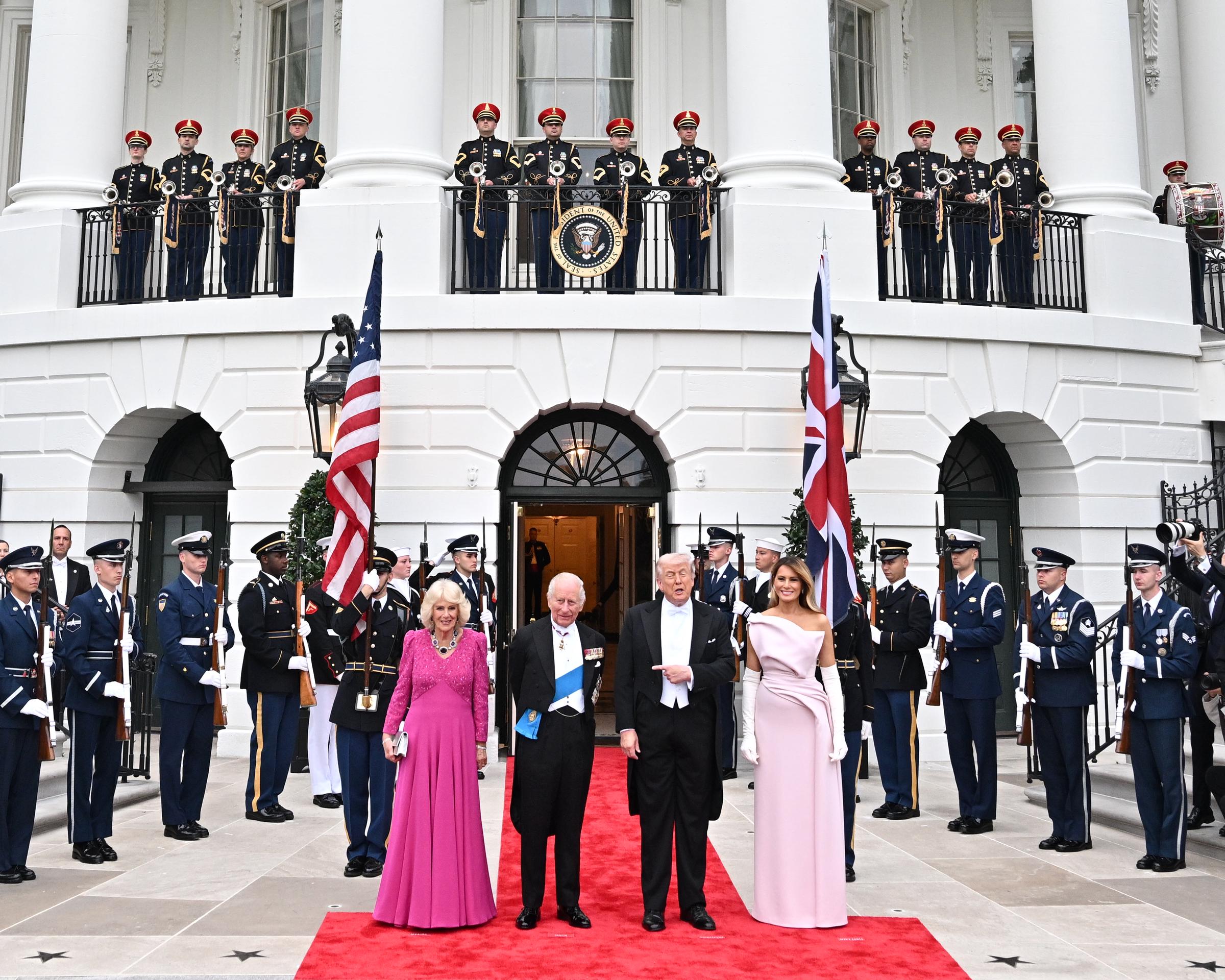
Despite these distractions, the state dinner proceeded as planned, maintaining its ceremonial significance. The presence of King Charles III and Queen Camilla reinforced the enduring relationship between the United States and the United Kingdom, a partnership shaped by shared history and ongoing cooperation.
In this context, the attention given to fashion choices should not be viewed as trivial. Instead, it reflects the broader role of symbolism in diplomacy. Clothing, color, and presentation contribute to the overall message conveyed during official visits. They offer a visual representation of respect, awareness, and, at times, subtle communication.
The events of April 2026 demonstrate how tradition and modernity can coexist within diplomatic settings. While the structure of the state visit remained grounded in established protocol, individual choices introduced nuance and variation. This balance allows for continuity while also acknowledging the evolving nature of public representation.
As discussions continue, the state visit will likely be remembered not only for its formal proceedings but also for the conversations it generated. From fashion to media commentary, each element contributed to a multifaceted narrative that extends beyond the event itself.
Ultimately, the visit serves as a reminder that diplomacy operates on multiple levels. Official speeches and agreements form its foundation, but visual details, personal choices, and public reactions all play a role in shaping perception. In this case, the interplay between tradition and individuality created a moment that was both respectful of the past and reflective of the present.