
On our son’s birthday, we returned home in the early evening, tired but content after a long day of celebration. The house still carried traces of the party—balloons gently swaying near the ceiling, a half-finished cake on the table, and the distant echo of children’s laughter that had filled every room just hours earlier. It had been a warm, memorable day, the kind that reminds you of how quickly time passes when a child is growing up.
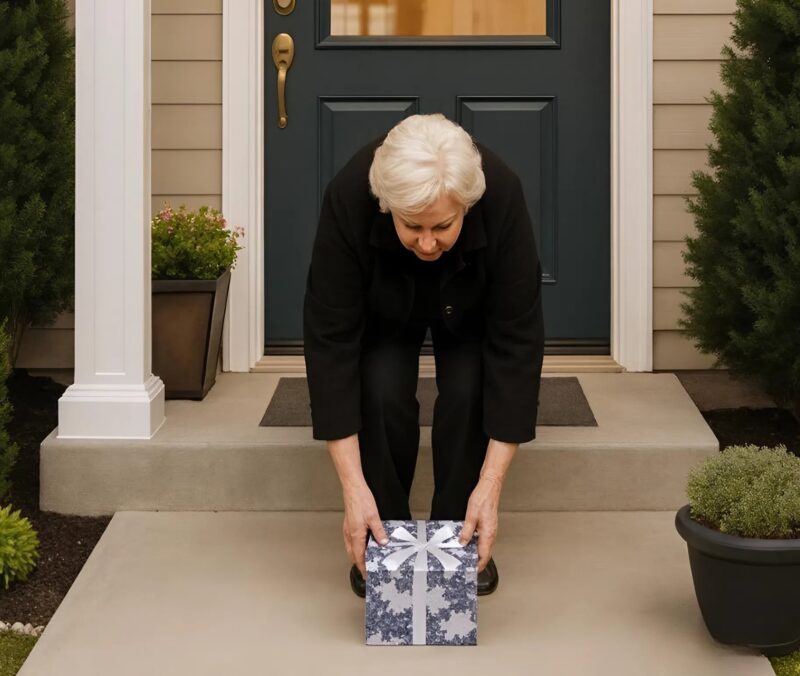
As we approached the front door, something caught our attention. Sitting neatly on the doorstep was a small gift box. It was carefully wrapped in blue and white paper, tied with a silver ribbon that reflected the porch light. Resting on top was a short handwritten note that read: “For my grandson.” The handwriting was immediately familiar—sharp, precise, and unmistakably belonging to my mother-in-law.
We didn’t need to guess who had been there. It was clear she had come and gone while we were out celebrating.
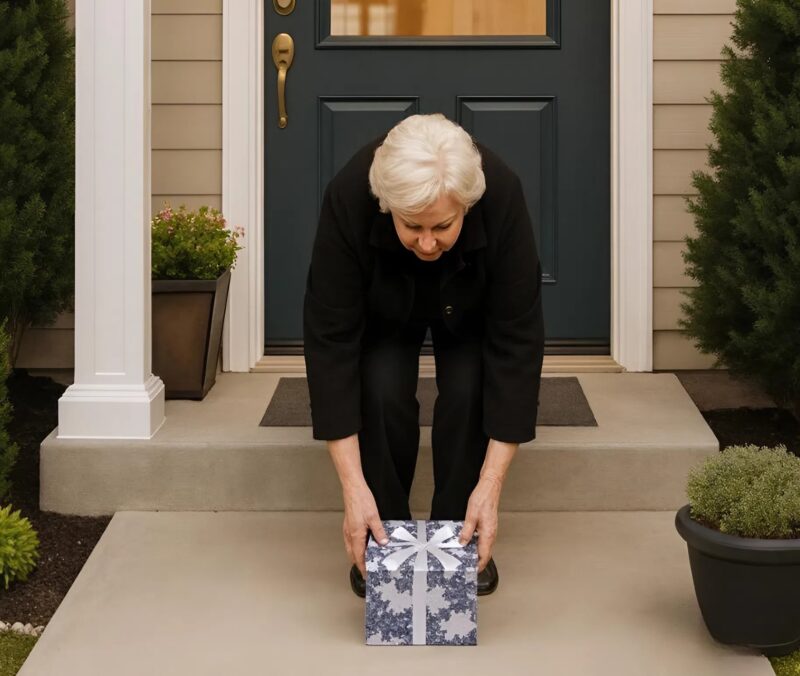
What made the situation feel even stranger was how she had handled the visit. There was no knock on the door, no ringing of the bell, and no attempt to join the celebration or even greet her grandson on his special day. According to our entryway camera, she had only stood at the doorstep for less than a minute. She placed the box down, looked briefly around as if uncertain or anxious, and then quickly returned to her car and drove away. It felt rushed, almost avoidant, as though she had wanted to leave no room for conversation.
We brought the box inside, exchanging a puzzled glance. Our son had already fallen asleep after the excitement of the day, so we decided to open the gift ourselves in the kitchen, thinking it might be something fragile or easily damaged. At first, there was nothing unusual about it. The wrapping was neat, the presentation simple but deliberate.
However, the moment I lifted the lid, everything changed.

Inside the box was not a toy, not clothing, and not a traditional birthday present. Instead, there was a thick sealed envelope. The logo printed on the front immediately drew our attention—it belonged to a private genetic testing laboratory. The atmosphere in the room shifted instantly. My husband froze beside me, and in that silence, we both seemed to understand that this was not an ordinary gift.
I carefully opened the envelope, and several documents slid onto the table. They were test results—DNA analysis papers. The implications were immediate and deeply unsettling. My mother-in-law had apparently arranged for genetic testing using her own sample and compared it with our son’s.
As our eyes scanned the page, one line stood out more than anything else: “Biological relationship — not detected.”
The words felt heavy, almost unreal. For a moment, neither of us spoke. My hands began to tremble slightly as I placed the papers back on the table. My husband slowly sat down, as though the weight of what he had just read had physically affected him.
It became clear that this was not a sudden action. It was something she had been thinking about for a long time. She had expressed doubts before, repeatedly suggesting that our son did not resemble her side of the family. She had made comments over the years, subtle at first, then more direct, questioning his appearance and insisting that something did not seem right.
We had always tried to respond calmly. We explained that children often resemble distant relatives or even alternate between family traits as they grow. We reassured her that there was nothing unusual. But despite our efforts, her suspicion never fully disappeared. Instead, it seemed to grow quietly in the background, eventually leading her to take matters into her own hands.
What made the situation even more complicated was the truth that she had now uncovered—though not in the way she likely expected.
My husband and I had known from the very beginning that he was unable to have biological children. It was a difficult realization that came after medical consultations, examinations, and a long emotional process of acceptance. After exploring every option, we were eventually told that natural conception would not be possible. It was a painful truth, but one we faced together.

After careful discussion and reflection, we made the decision to pursue a donor. It was not a decision taken lightly, but one we agreed on completely. It allowed us to build the family we deeply wanted while ensuring that our future child would be born into a stable and loving home. From the beginning, we chose to keep this private. Not because we felt ashamed, but because we believed that our child deserved to be seen simply as our son—without explanation or outside judgment.
We never intended to hide it in a harmful way. It was a personal matter between us, something we felt did not need to be shared widely, especially with those who might not understand or accept it easily. Unfortunately, that decision also meant that my mother-in-law was unaware of the truth.
As we sat at the kitchen table, the reality of the situation settled heavily around us. The secret we had carefully protected was now indirectly exposed, not through conversation or trust, but through a DNA test conducted without our knowledge or consent. Yet the greater concern was no longer about secrecy itself. It was about what would happen next.
My husband sat quietly, staring at the papers, processing everything at once. There was disbelief, but also something deeper—concern for how this revelation might affect our family dynamic, especially our son’s future. We were not simply dealing with a misunderstanding anymore. We were facing a situation that could reshape relationships that had existed for years.
What troubled us most was not the fact that the truth had surfaced, but the manner in which it had. Instead of a conversation, it had arrived as a conclusion. Instead of trust, it had been replaced with testing and assumptions. And now, we were left with a difficult choice about how to move forward.
We understood that this moment would require honesty, patience, and careful explanation. Our son’s well-being remained the priority above everything else. But we also knew that once certain information comes to light, it changes the foundation of relationships, sometimes permanently.
That night, long after the birthday decorations had been put away and the house had grown quiet again, we remained at the table, thinking about what the next conversation would look like—and how to explain a truth that had always been part of our journey, but had never been shared beyond the two of us.

