
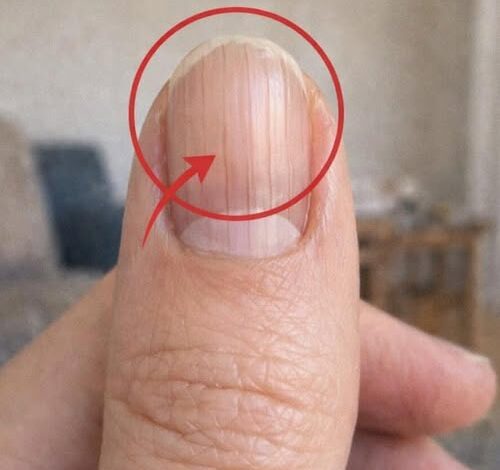
Observing changes in the human body has long been a part of preventive health awareness, and one area that has recently drawn public interest is the appearance of fingernails. While discussions online sometimes link nail characteristics to broader ideas such as aging or longevity, medical understanding places these observations within a more grounded and nuanced context.
At the center of this topic is the work often associated with aging researcher David Sinclair, whose studies and public discussions about aging have contributed to wider interest in biological markers of health. However, it is important to note that fingernails are not considered a direct measure of lifespan or life expectancy. Instead, they can provide general insights into how the body is functioning at a given moment.
Fingernails grow from specialized cells in the nail matrix, and their growth rate is influenced by factors such as age, nutrition, circulation, and overall metabolic activity. As the body ages, cellular regeneration tends to slow gradually. This includes the rate at which nails grow. Research conducted several decades ago observed that fingernail growth typically begins to slow after early adulthood, often around the age of 30. While this observation is consistent with biological aging processes, it does not serve as a predictive tool for how long a person will live.
Rather than being a measure of lifespan, nail growth is better understood as one of many small indicators of biological activity. Biological age refers to how well the body is functioning internally compared to chronological age. In this context, changes in nail growth may reflect shifts in overall cellular activity, but they are only one piece of a much larger picture that includes cardiovascular health, metabolism, genetics, and lifestyle factors.
It is also important to distinguish between natural variations in nail growth and medical concerns. Many factors can influence how nails appear and grow, including hydration levels, nutritional intake, stress, and exposure to environmental elements. For example, frequent handwashing, use of cleaning products, or minor trauma can all affect nail texture and strength without indicating any underlying disease.
More clinically significant than growth rate are visible changes in the nails themselves. In medical practice, fingernails are sometimes examined as part of a general health assessment because they can reflect certain internal conditions. However, these signs are not diagnostic on their own and must always be interpreted in context.
Some nail changes that may prompt medical attention include the following:
Dark vertical streaks running along the nail may, in some cases, require further evaluation. While many such streaks are harmless, persistent or changing pigmentation can occasionally be associated with more serious conditions that need professional assessment.
Small dents or irregularities on the nail surface, known as pitting, are sometimes linked to skin conditions such as psoriasis. These changes occur due to disruptions in nail formation at the cellular level.
Yellowing of the nails can have multiple causes. In many cases, it is related to fungal infections or external staining. However, it may also be associated with underlying systemic conditions, depending on other accompanying symptoms.
Clubbing, a condition where the fingertips become enlarged and the nails curve downward, can sometimes be associated with long-term issues involving the lungs or cardiovascular system. While not common, it is a recognized clinical sign that warrants further investigation when observed.
Pale or unusually white nails may, in certain cases, be associated with conditions such as anemia or liver-related concerns. However, as with other nail changes, these signs must be interpreted alongside additional clinical information.
Bluish discoloration of the nails may indicate reduced oxygen levels in the blood. This can be a sign of respiratory or circulatory issues and is generally considered more clinically significant when persistent.
Despite these associations, it is essential to emphasize that many nail changes are not linked to serious health problems. Everyday factors such as aging, minor injuries, cosmetic habits, and environmental exposure can all influence nail appearance. Brittle, splitting, or peeling nails, for instance, are often caused by dryness or repeated mechanical stress rather than internal disease.
Health professionals generally advise against drawing conclusions based on a single observation. Instead, they recommend looking for patterns over time. A temporary change in nail color or texture is usually not a cause for concern. However, persistent, worsening, or unexplained changes may justify further evaluation.
When assessing nail health, it is also helpful to consider recent lifestyle factors. Changes in diet, stress levels, medication use, or exposure to new chemicals can all affect nail condition. For example, nutritional deficiencies, particularly in iron or certain vitamins, may contribute to visible changes in nail strength or appearance.
In cases where abnormalities persist, consulting a healthcare professional is recommended. A medical evaluation can help determine whether nail changes are isolated or part of a broader health issue. In many situations, simple explanations are identified, and serious conditions are ruled out.
The broader medical perspective is that fingernails can serve as one of many external indicators of internal health, but they should not be interpreted in isolation. The human body communicates through multiple systems, and accurate health assessment requires considering a combination of symptoms, history, and clinical findings.
From a scientific standpoint, nails primarily reflect short- to medium-term changes in the body’s physiological state. They do not function as predictive tools for long-term outcomes such as life expectancy. While biological aging research continues to explore markers of cellular health, fingernails remain a limited and indirect indicator.
It is also important to address how information about health indicators is often interpreted in public discussions. Simplified or exaggerated claims can sometimes circulate online, suggesting that a single physical feature may reveal complex outcomes such as longevity. In reality, medical science does not support such direct conclusions.
Instead, fingernails are best understood as part of routine observational health awareness. They can provide useful clues when combined with other symptoms, but they do not offer definitive answers on their own. Their value lies in encouraging attention to changes in the body rather than in making predictions.
Ultimately, maintaining awareness of physical changes—including those in the nails—can contribute to a broader understanding of personal health. However, this awareness should be balanced with accurate information and professional guidance when needed.
In conclusion, while fingernail growth and appearance can reflect aspects of biological activity and general health status, they are not reliable indicators of lifespan or life expectancy. Their significance lies in their ability to signal potential changes in the body that may warrant attention.
By observing patterns over time and considering overall health context, individuals can use such signs as part of a broader approach to well-being. Rather than serving as predictors of the future, fingernails are best viewed as small but useful reflections of the body’s current state.

