
The Untold Story Behind Princess Diana’s Emotional Farewell in 1981
In 1981, global attention turned toward a young woman who would soon become one of the most recognized figures in modern history: Princess Diana. Her engagement to Prince Charles, then heir to the British throne, was widely portrayed as a fairytale romance—capturing the imagination of millions around the world.
However, decades later, a deeper understanding of events from that time has revealed a far more complex and emotional reality behind the public image.
A Defining Year in Royal History
The year 1981 marked a turning point not only for Diana but also for the British monarchy. At just 19 years old, she transitioned from working as a nursery assistant to becoming the future Princess of Wales.
Following their engagement announcement, Diana and Charles quickly became the focus of intense global media coverage. Their wedding, held in July 1981, was broadcast to an estimated worldwide audience of hundreds of millions, reinforcing the narrative of a modern royal fairytale.
In the early stages, the couple appeared affectionate and optimistic. Public appearances suggested harmony, and the press widely embraced Diana as a symbol of grace and youthful charm.

The Airport Farewell That Captured the World
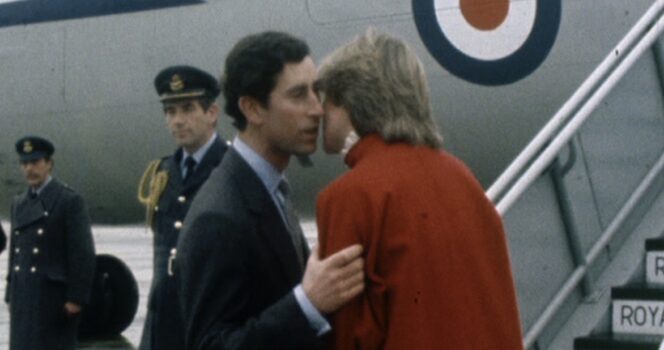
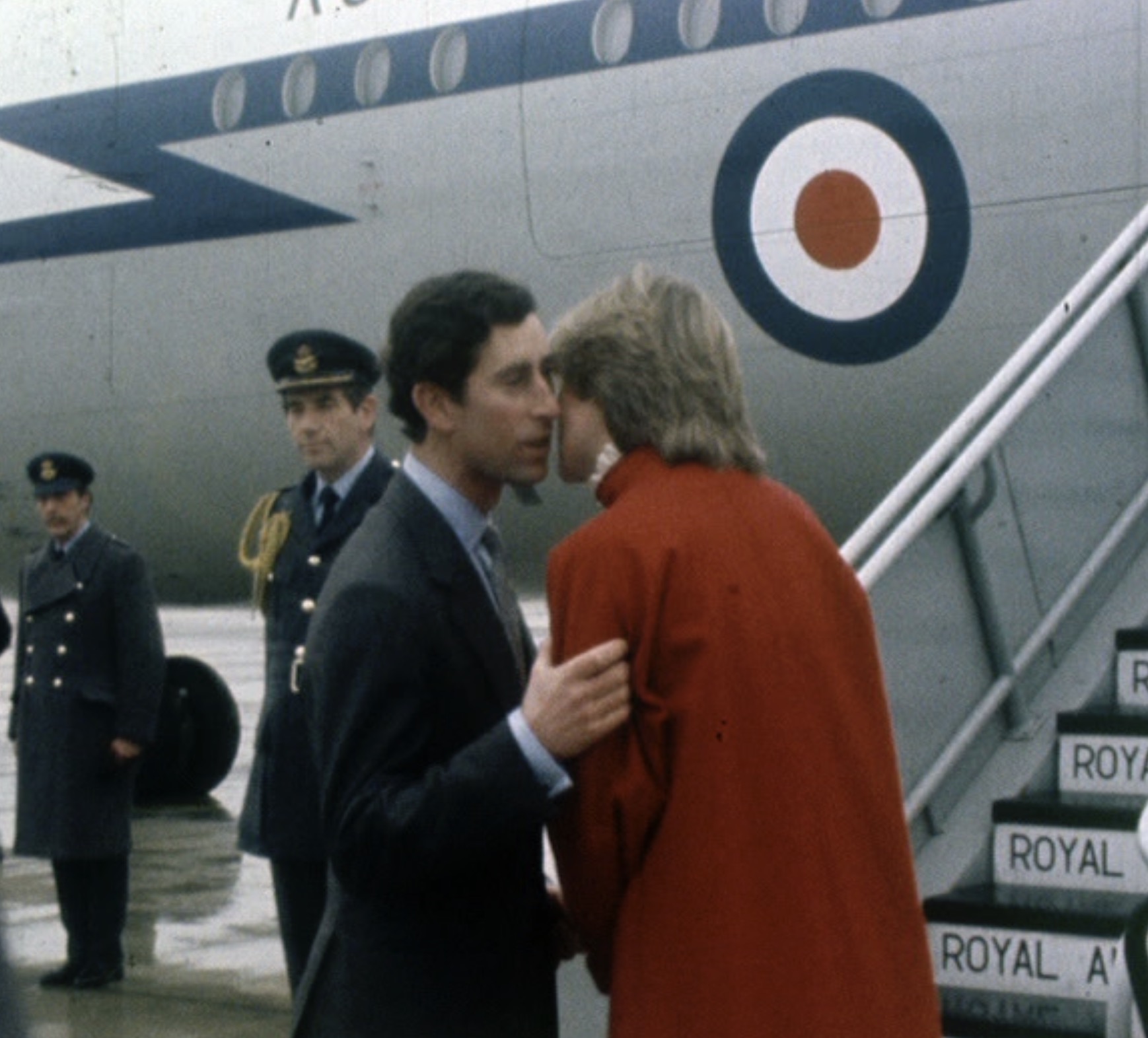
One of the most memorable early moments in their relationship occurred on March 29, 1981, at Heathrow Airport. On that day, Diana tearfully said goodbye to Prince Charles as he departed for a five-week royal tour.
The airport served as the backdrop for what appeared to be a deeply emotional farewell. Dressed in a red coat and standing in the rain, Diana was photographed visibly upset as she waved goodbye.
At the time, the moment was widely interpreted as a display of affection and sadness over temporary separation. Media outlets described it as a “tender farewell,” and observers noted the emotional connection between the couple.
The images quickly circulated worldwide, becoming one of the defining visuals of Diana’s early public life.
Different Reality Behind the Scenes
Years later, a more nuanced understanding of that moment emerged through Diana’s own words. In recordings later featured in the documentary Diana: In Her Own Words, she revealed that her tears were not caused by Charles’s departure.
Instead, they were linked to a deeply personal and distressing experience that occurred shortly before the airport scene.
According to Diana’s account, she had become aware of Charles’s continued emotional connection with Camilla Parker Bowles. This realization, coming at such an early stage in their engagement, had a profound emotional impact.
She described feeling heartbroken after a phone call between Charles and Camilla, which took place just before his departure. Despite choosing to remain composed in public, the emotional weight of the situation was significant.
The Emotional Impact of Early Challenges
Diana’s recollections suggest that the early stages of her relationship with Charles were marked by uncertainty and emotional strain, even as the public narrative remained overwhelmingly positive.
She also recalled discovering a bracelet that Charles intended to give to Camilla, further reinforcing her concerns and contributing to feelings of insecurity within the relationship.
These experiences highlight the contrast between public perception and private reality—a theme that would continue throughout Diana’s life.
Differing Interpretations of a Public Moment
While Diana described her emotions as rooted in heartbreak, some royal commentators have offered additional interpretations. Biographer Tina Brown suggested that the tears may have reflected not only sadness but also frustration and anger.
Regardless of interpretation, the moment at Heathrow has taken on new meaning over time. What was once viewed as a simple farewell is now understood as a more complex emotional experience during a pivotal period in Diana’s life.

The Wedding and What Followed
Despite these early challenges, the royal wedding proceeded as planned in July 1981. The ceremony was celebrated globally and remains one of the most iconic events in modern royal history.
However, as later years revealed, the relationship between Charles and Diana faced ongoing difficulties. Their marriage eventually ended in divorce in 1996, following years of public and private challenges.
Diana’s candid reflections, including her well-known statement that “there were three of us in this marriage,” underscored the complexity of the situation and contributed to broader discussions about life within the royal family.
A Legacy That Continues to Resonate
The story of Princess Diana continues to resonate decades after her passing in 1997. Her openness about personal struggles, combined with her humanitarian work, has left a lasting impact on public life and charitable efforts worldwide.
Moments like the Heathrow farewell serve as reminders that public figures often experience challenges that are not immediately visible, highlighting the importance of understanding events within their full context.

Changing Perspectives Over Time
As new information has emerged through documentaries, biographies, and recorded interviews, public understanding of Diana’s life has evolved significantly.
What once appeared to be a straightforward narrative of romance and royal duty is now recognized as a more layered and human story—one involving emotional complexity, resilience, and personal growth.
The airport farewell, once seen as a simple goodbye, has become a symbol of this deeper narrative.
Conclusion
The emotional image of Princess Diana at Heathrow Airport in 1981 remains one of the most recognizable moments of her early public life. Yet, as history has shown, the meaning behind that moment was far more complex than initially understood.
Through her own words and later reflections, a clearer picture has emerged—one that highlights the challenges she faced even at the height of public admiration.
https://x.com/historyinmemes/status/1858910609544245262
Today, Diana is remembered not only for her role within the royal family but also for her authenticity and emotional honesty. Her story continues to offer insight into the realities behind public life.

