
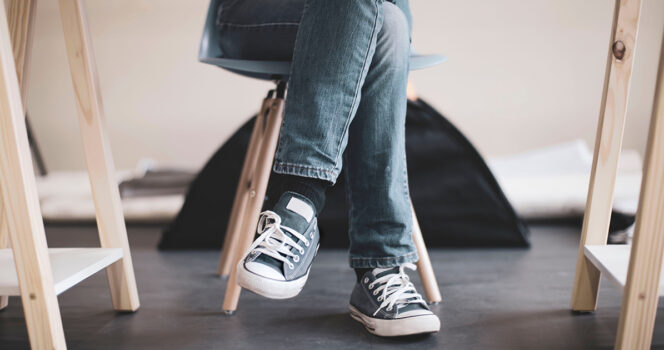
Understanding Why Women Cross Their Legs: A Blend of Comfort, Culture, and Communication
At first glance, crossing one’s legs may appear to be a simple, unconscious habit. However, for many women, this posture carries layers of meaning shaped by psychology, cultural expectations, and personal comfort. What seems like a routine sitting position can, in fact, reflect subtle aspects of confidence, awareness, and social interaction.
Across different settings—whether in professional environments, casual gatherings, or quiet moments alone—this gesture continues to play a role in how individuals express themselves without speaking.
A Gesture Shaped by History
The way people sit has long been influenced by social norms. In earlier centuries, posture was not only a matter of comfort but also a reflection of etiquette and social status. During the 19th century, women were often expected to sit in ways considered modest and refined. Sitting with legs crossed at the knees was sometimes discouraged, while positioning the legs together or angled to the side was viewed as more appropriate.
As time progressed, these expectations evolved. By the mid-20th century, public figures and style icons helped redefine what was considered elegant and confident body language. Sitting with crossed legs became more widely accepted and even associated with poise and self-assurance.
Today, although social rules around posture are far less strict, many of these historical influences still shape how people sit, often without conscious thought.
Comfort and Natural Habit
One of the most straightforward reasons for crossing the legs is physical comfort. Sitting in one position for extended periods can cause strain, and adjusting posture helps relieve pressure on muscles and joints.
Crossing the legs can:
- Redistribute body weight
- Reduce tension in the lower back
- Provide a stable and relaxed position
For many people, it simply feels natural. Over time, it becomes a habitual posture that requires no deliberate decision.
Nonverbal Communication
Body language plays a significant role in how people communicate with one another. Even small movements can send signals about mood, attitude, or level of engagement.
Crossing the legs is one such signal. The direction and style of the posture can subtly reflect how a person feels in a given moment:
- Legs crossed toward someone may suggest interest, attentiveness, or comfort.
- Legs crossed away can indicate distance, discomfort, or a desire for personal space.
These signals are often unconscious. People rarely think about how they position their legs in social situations, yet others may interpret these cues as part of overall body language.
A Sense of Personal Space
In crowded or unfamiliar environments, individuals often seek ways to create a sense of personal boundary. Crossing the legs can serve as a subtle way to define one’s space without drawing attention.
This posture can provide:
- A feeling of control in shared spaces
- A small physical barrier between oneself and others
- A sense of calm in situations that might otherwise feel overwhelming
In this way, the gesture is not only physical but also psychological.
Influence of Clothing and Social Norms
Clothing has always influenced posture. In many cases, women may cross their legs as a practical response to what they are wearing.
For example:
- Dresses and skirts may lead to leg-crossing as a way to maintain comfort and modesty
- Formal settings may encourage more structured posture
- Certain outfits naturally guide how a person chooses to sit
Even though modern fashion allows for greater flexibility, these habits remain influenced by long-standing social expectations.
Emotional and Psychological Factors
Beyond comfort and social cues, crossing the legs can also be linked to emotional states. Psychologists often observe that certain body positions provide reassurance or stability.
Crossing the legs may act as a self-soothing behavior, helping individuals feel more secure, especially in situations such as:
- Waiting in unfamiliar environments
- Attending formal events
- Engaging in important conversations
This does not necessarily indicate anxiety, but rather a natural way the body responds to maintain balance and ease.
In Professional Environments
In workplaces and formal settings, posture can influence how a person is perceived. Sitting with legs crossed—whether at the knee or ankle—is commonly associated with composure and confidence.
However, context matters. Small variations in posture can change how the gesture is interpreted:
- A relaxed cross may signal calm confidence
- Constant movement or shifting may suggest restlessness
- A more structured posture may reflect attentiveness and professionalism
In leadership roles, individuals may adjust their posture depending on the situation, balancing comfort with awareness of how body language is perceived.
In Casual Settings
Among friends or in relaxed environments, posture tends to be less structured. Crossing the legs in these situations is usually about comfort rather than communication.
People may:
- Shift positions frequently
- Sit in more relaxed or informal ways
- Pay less attention to posture altogether
In these moments, the gesture loses much of its formal meaning and becomes simply a natural way of sitting.
Social Interaction and Connection
In social situations, especially one-on-one conversations, body language often reflects levels of engagement. Crossing the legs can play a subtle role in this dynamic.
For example:
- Facing someone with a relaxed posture may indicate openness
- Angling the body away can suggest a desire for distance
These cues are rarely intentional but can influence how interactions are perceived.
A Habit That Continues Across Generations
Despite changes in culture, fashion, and social expectations, crossing the legs remains a common posture across different generations and environments.
Its persistence highlights how certain habits become deeply embedded in daily behavior. While the reasons may vary—from comfort to communication—the gesture continues to serve multiple purposes at once.
Looking Beyond First Impressions
It is important to recognize that no single gesture has a fixed meaning. Crossing the legs does not always signal confidence, discomfort, or any specific emotion on its own.
Context matters. The same posture can reflect:
- Habit or comfort
- Social awareness
- Personal preference
Understanding body language requires observing the full picture, including facial expressions, tone of voice, and overall behavior.

A Subtle but Meaningful Gesture
What appears to be a simple sitting position is, in reality, a blend of physical comfort, cultural influence, and nonverbal communication. Crossing the legs can express a range of subtle signals while also serving practical needs.
In everyday life, people rarely think about these details. Yet, they continue to shape how individuals present themselves and interact with others.
Conclusion
Crossing the legs is more than just a routine posture. It reflects a combination of habit, environment, and human behavior shaped over time. While it may not always carry a clear or deliberate message, it remains a small but meaningful part of how people navigate social and personal spaces.
By understanding the factors behind this simple gesture, it becomes easier to see how even the smallest actions can carry layers of meaning—often without a single word being spoken.

