

Service Dog’s Unexpected Reaction Stops Rooftop Arrest and Changes the Outcome
A tense police operation at the edge of a high-rise building took an unexpected turn when a trained service dog refused to follow a direct command and instead behaved in a way that surprised everyone present.
The incident unfolded late in the evening, beginning inside an upscale hotel where officers responded to a report connected to a recent jewelry store robbery. According to authorities, several valuable items reported stolen earlier that day were discovered inside a hotel room.
When police entered the room, they found a man standing near scattered jewelry, including rings, watches, and chains. Officers moved quickly to detain him, believing they had located the suspect responsible for the theft.
The man attempted to explain, insisting that he was not involved, but the situation escalated rapidly. As one officer approached with handcuffs, the man suddenly pushed past and fled the room.
He ran through the hallway and into a stairwell, heading upward instead of attempting to exit the building. Officers immediately followed, maintaining close pursuit as he moved from one floor to the next.
By the time he reached the rooftop, the man had run out of options.
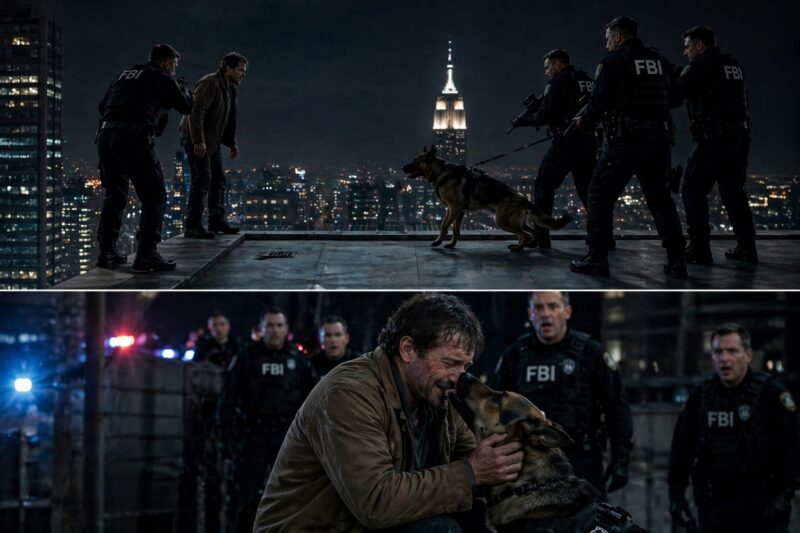
Standing at the edge of the building, he was confronted with a dangerous drop below and police officers closing in behind him. The situation quickly became critical, with officers taking positions around him while keeping a safe distance to avoid provoking a sudden fall.
Police issued verbal commands, instructing him to remain still and surrender. However, the man appeared distressed and did not comply. The tension increased as officers worked to bring the situation under control without risking further danger.
At that point, a handler signaled to deploy a trained service dog.
The dog, named Rex, was released with a command to subdue the suspect. In such situations, service dogs are trained to quickly immobilize individuals to prevent escape or harm.
Rex ran toward the man, and for a moment, it seemed the situation would end as expected.
But just before making contact, the dog slowed down.
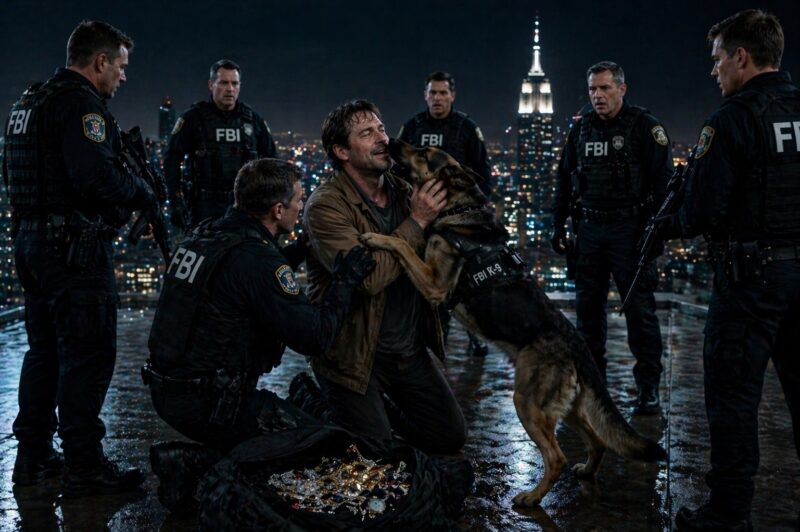
Instead of jumping to restrain him, Rex approached carefully. He stood on his hind legs and placed his front paws against the man’s chest. Then, rather than acting aggressively, the dog began to whimper softly.
Witnesses reported that Rex showed no signs of hostility. Instead, he licked the man’s face and stayed close, as if recognizing him.
The unexpected behavior caused immediate confusion among the officers. Some lowered their weapons slightly, unsure how to interpret the situation.
The man, who had moments earlier appeared panicked, suddenly became still. According to those present, he looked at the dog and spoke quietly, as if recognizing him as well.
Officers began reassessing the situation.
One senior officer stepped forward and took a closer look at the suspect. After a brief pause, his expression changed, suggesting recognition or realization.
Further checks were conducted on-site. Communication with dispatch and internal records began almost immediately as officers attempted to verify the man’s identity and background.
As more information became available, the situation shifted significantly.
Preliminary findings suggested that the man may not have been involved in the robbery. Investigators began considering the possibility that the stolen items found in the hotel room had been placed there intentionally.
According to early reports, the man had previously been associated with law enforcement. This detail raised additional questions about the circumstances leading to his presence at the scene and the evidence found around him.
The dog’s reaction played a critical role in slowing down the situation, allowing officers time to reassess before using force.
Authorities later confirmed that the man was taken into custody for questioning but was not treated as an immediate threat following the rooftop encounter. The investigation continued, focusing on verifying the origin of the stolen items and determining whether the case involved false evidence or deliberate framing.
The service dog, Rex, returned to his handler without incident and was not harmed during the operation.
Officials noted that trained service dogs are highly responsive to both commands and environmental cues, but in rare cases, their behavior may reflect recognition or familiarity that can influence how a situation unfolds.
In this case, the dog’s unexpected response contributed to preventing a potentially dangerous escalation at the edge of the building.
The investigation remains ongoing, with authorities working to clarify all aspects of the incident, including how the suspect came into possession of the jewelry and whether other individuals may be involved.
While the rooftop confrontation initially appeared to be a routine arrest, the outcome highlighted how quickly situations can change — and how unexpected factors can alter the course of events.

