
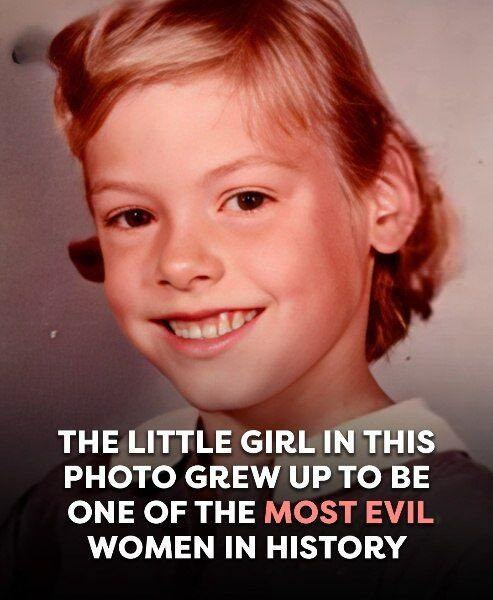
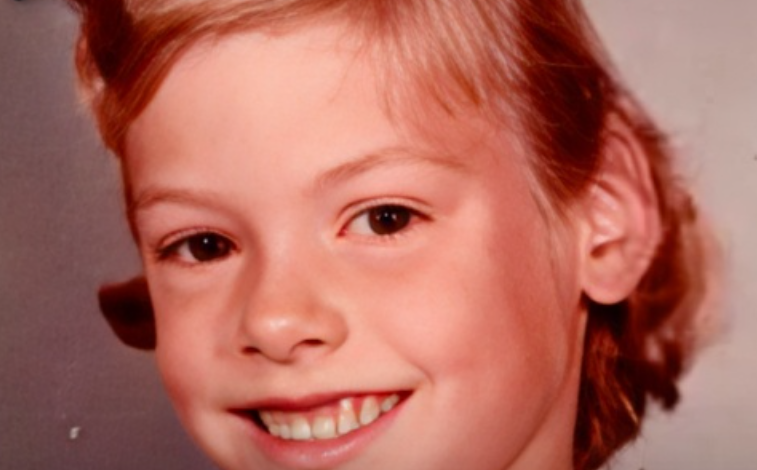
In a faded childhood photograph, a young girl appears unremarkable at first glance. Her expression is soft, her posture small, and her presence carries the quiet innocence typically associated with early life. There is nothing in that image to suggest the direction her life would eventually take. Yet that child would grow into one of the most widely known female serial killers in American history, her story unfolding through a combination of trauma, instability, and violence that would later shock the nation.
Aileen Wuornos was born in 1956 in Rochester. From the very beginning, her circumstances were deeply troubled. Her father, who had a documented history of violent criminal behavior, was convicted of serious offenses and later died by suicide while serving a prison sentence. Her mother left shortly after, abandoning Wuornos and her brother. The children were subsequently raised by their grandparents, but this arrangement did not provide the stability one might hope for.
Accounts from later in Wuornos’s life describe a childhood marked by fear and neglect. She alleged that her home environment was abusive, describing both physical and sexual mistreatment during her formative years. These claims, while difficult to fully verify in every detail, have been widely cited in psychological evaluations and media coverage. What is clear is that her early life lacked consistent support, safety, and structure—factors that are widely recognized as critical for healthy development.
By the time she reached adolescence, her situation had become even more complicated. At the age of fourteen, she became pregnant following a reported sexual assault. She gave birth to a son, who was placed for adoption. This decision, made under extremely difficult circumstances, reflected the limited options available to her at the time. For most teenagers, these years are defined by gradual growth and exploration; for Wuornos, they were shaped by survival.
The instability in her life continued to escalate. After the death of her grandmother, she left school and began living on her own. Without reliable support, she turned to sex work as a means of survival. Throughout the 1970s, she had repeated encounters with law enforcement, resulting in arrests for offenses such as disorderly conduct, theft, and assault. These incidents reflected a pattern of instability rather than isolated mistakes.
Personal losses compounded her struggles. Her brother died in 1976, and her grandfather later took his own life. These events further eroded any remaining sense of stability. Over time, Wuornos drifted between locations, eventually making her way to Florida. There, she continued to face financial hardship and ongoing legal troubles, including an arrest for armed robbery in 1982. Reports from this period also indicate that she struggled with mental health issues and had made multiple suicide attempts.
It was in Florida that her life took a decisive and tragic turn. Working along highways, she encountered a series of men who would later become victims. The first known case involved Richard Mallory, a middle-aged man she met in 1989. Wuornos shot him and later claimed that the act was in self-defense, alleging that he had assaulted her. Information about Mallory’s past, including allegations of prior misconduct, emerged later, but did not significantly alter the legal outcome of her case.
Over the course of approximately one year, Wuornos killed multiple men in similar circumstances. The victims came from varied backgrounds, including individuals working in construction, transportation, and other professions. In each instance, she maintained that she had acted in response to perceived threats or attempted assaults. However, investigators found patterns that suggested a broader and more systematic series of crimes.
Law enforcement agencies began connecting the cases through forensic evidence, including ballistics and items recovered from victims. As the investigation progressed, Wuornos was arrested and questioned. Her statements during this period were inconsistent, sometimes describing self-defense and at other times appearing confused or contradictory. Ultimately, these factors contributed to the prosecution’s case against her.
She was formally charged with multiple counts of first-degree murder. During the trial, the prosecution presented evidence portraying her actions as deliberate and premeditated. The defense, meanwhile, emphasized her history of trauma, mental health challenges, and the possibility that she had acted out of fear. Despite these arguments, the court found her guilty. She received several death sentences, reflecting the severity and number of the crimes.
The case quickly became a focal point of national attention. Media coverage examined every aspect of her life, from her childhood experiences to her behavior during the trial. She was given a widely circulated nickname that contributed to her notoriety, and her story was discussed across television, newspapers, and later in films and documentaries. Public opinion was divided. Some viewed her primarily as a perpetrator of violent crimes, while others considered the role that her background may have played in shaping her actions.
Psychologists and analysts who studied the case pointed to a combination of factors, including prolonged exposure to abuse, lack of support systems, and untreated mental health conditions. These elements do not excuse criminal behavior, but they provide context for understanding how such outcomes can develop over time. The case became part of broader discussions about trauma, criminal responsibility, and the effectiveness of social and mental health interventions.
In the years leading up to her execution, Wuornos’s behavior became increasingly erratic. She made statements that ranged from expressions of remorse to claims that she had acted entirely in self-defense. Observers noted signs of paranoia and emotional instability. These developments added another layer of complexity to an already difficult case.
On October 9, 2002, at the age of forty-six, Aileen Wuornos was executed by lethal injection. Her death marked the conclusion of a case that had captured public attention for more than a decade. Even after her execution, discussions about her life and actions have continued, reflecting the enduring impact of the case on public discourse.
Looking back, her story raises challenging questions. It highlights the long-term effects of childhood trauma and the consequences of environments lacking safety and support. At the same time, it underscores the reality that individuals are ultimately responsible for their actions, regardless of their past experiences.
The photograph of the young girl remains a stark contrast to the life that followed. It serves as a reminder that early circumstances can shape a person’s path in profound ways. While it does not determine outcomes with certainty, it can influence the choices and challenges that lie ahead.
In the end, the life of Aileen Wuornos cannot be reduced to a single narrative. It is a story that includes both personal suffering and serious criminal acts, requiring careful and balanced consideration. Her case continues to be studied not only for its legal significance but also for what it reveals about the intersection of trauma, mental health, and the justice system.

