
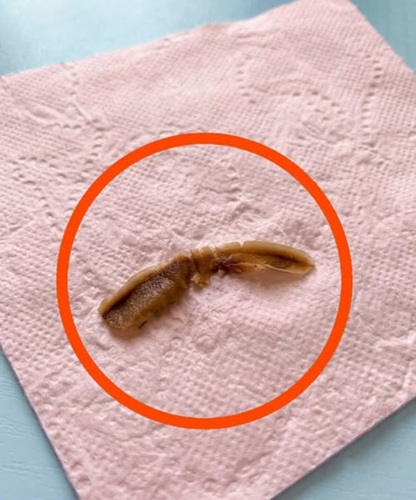
When people come across an unfamiliar object in their home—especially one that looks organic or has an unusual texture or shape—it’s completely normal for concern and curiosity to kick in right away.
In many situations, though, objects that seem alarming at first turn out to be ordinary materials whose appearance has changed due to lighting, moisture, temperature, or simple wear over time. What looks strange or even unsettling in one context can often be explained with a closer, more careful look.
Human perception plays a big role in this. The brain is naturally wired to recognize patterns, and when it encounters something unclear, it often tries to match it to familiar categories. That’s why ambiguous shapes are sometimes interpreted as insects, biological matter, or contamination—even when they’re not.
Because of this tendency, it’s helpful to approach the situation calmly and methodically. Instead of jumping to conclusions, focus on observing the object’s physical characteristics and the environment around it.
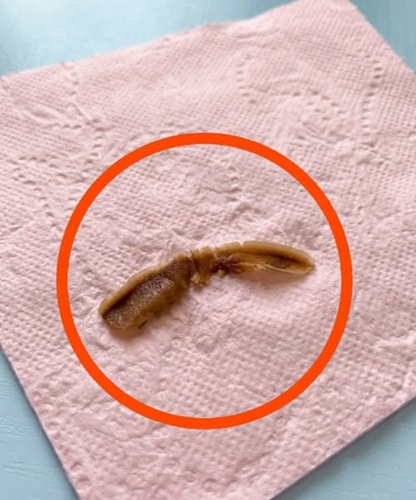
Objects that appear brown, segmented, or slightly glossy can resemble many everyday materials when viewed outside their original context. One of the most common explanations is that the object is simply a piece of food that has changed in appearance.
Cooked foods—such as meat, fish, or vegetables—can lose their original structure after being heated, cooled, or exposed to air. When broken into smaller pieces or partially dried out, they can take on shapes that seem unfamiliar or even unusual.
Proteins and fats in food can also create a shiny or slightly slick surface, especially after cooking. This can make the object appear more “organic” or unfamiliar than it really is.
Another possibility is that the object is part of an insect, such as a leg, wing, or small body segment. Insects have segmented exoskeletons, and when they dry out or break apart, the pieces can look abstract and difficult to identify.
That said, finding a single fragment doesn’t necessarily mean there’s a larger issue. If there are no additional signs—like multiple fragments, droppings, or visible insects—it’s often just an isolated occurrence.
Plant materials are another common source of confusion. Things like roots, seeds, dried leaves, or fibrous vegetable pieces can become distorted as they lose moisture. This process can create irregular, segmented shapes that may look unfamiliar or even slightly biological.
Non-organic household materials can also be misleading. Items such as packaging fragments, glue residue, or synthetic fibers can change in color and texture over time. Dust, heat, or moisture can further alter their appearance, making them resemble organic matter.
Because of all these possibilities, visual identification alone isn’t always enough. Context matters just as much as appearance. Looking at where the object was found and what’s nearby can provide useful clues.
For example, if the object is near a kitchen or food preparation area, it’s more likely to be food-related. If it’s near a window, door, or entry point, it could be environmental debris or something brought in from outside.
A calm and careful inspection is usually the best approach. Instead of reacting immediately, take a moment to observe the object closely and consider possible explanations.
It’s also a good idea to avoid direct contact with unknown objects, especially if you’re unsure of their origin. If you need to remove it, use a tissue, paper towel, or gloves to handle it safely.
Afterward, cleaning the area with a standard household disinfectant can help maintain hygiene and remove any residue. This is a simple precaution that ensures the space remains clean regardless of what the object turns out to be.
If similar objects start appearing repeatedly in the same area, it may be worth looking into potential sources. These could include improperly stored food, excess moisture, or minor pest activity.
However, if it’s just a one-time occurrence, it’s usually harmless and not a sign of a larger problem.
Situations like this also highlight how the brain responds to uncertainty. When faced with something unfamiliar, it often fills in the gaps with assumptions based on visual similarity rather than confirmed information.
This reaction is part of a natural caution mechanism. It helps humans stay alert to potential risks, even if it sometimes leads to overestimating a harmless situation.
In reality, most unidentified objects found at home have simple and harmless explanations once they’re examined more carefully and placed in the right context.
Recognizing this can help reduce unnecessary worry and encourage a more balanced, rational response.
In the end, what seems strange or concerning at first glance is often just an ordinary material that has changed due to natural processes like drying, heating, or breaking apart.
By staying calm, observant, and methodical, it becomes much easier to tell the difference between something genuinely unusual and something that only appears that way at first.

