
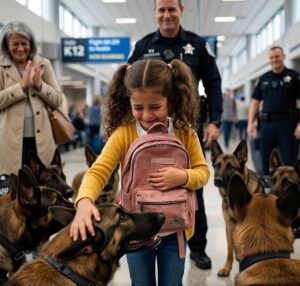
A busy morning unfolded at Denver International Airport, one of the largest and most active travel hubs in the United States, where passengers continuously moved between terminals, gates, and security checkpoints throughout the day.
Travelers from different backgrounds filled the spacious terminal halls. Some rushed toward boarding gates, others waited for arriving flights, and many simply navigated the constant flow of airport activity. Announcements echoed across the building as departures were called, delays were updated, and staff coordinated the steady rhythm typical of a major international airport.
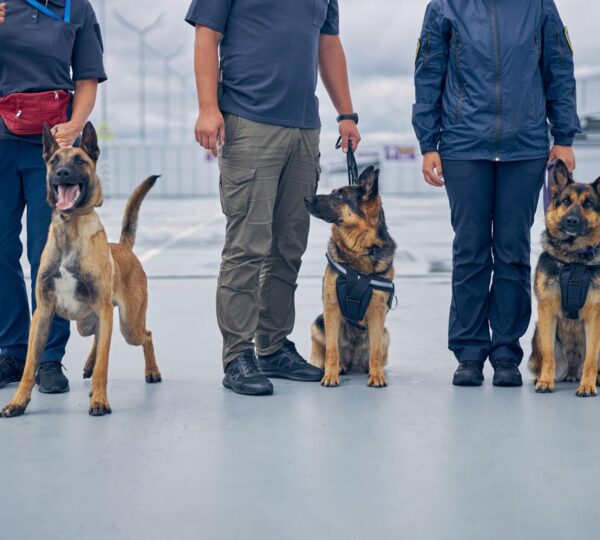
On this particular morning, a group of trained police K9 units and their handlers moved through the terminal in an organized formation following a scheduled training and demonstration session.
These highly trained working dogs were part of a professional law enforcement program designed to support airport safety, security screening, and detection operations in controlled environments. Each handler maintained close control of their assigned dog, ensuring consistent pace, discipline, and focus as they walked through the public space.
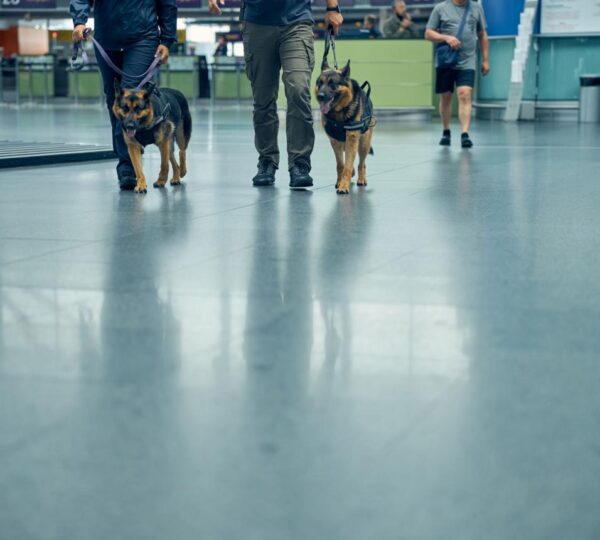
The dogs remained calm and attentive, trained to respond to commands and environmental cues while staying composed in crowded and potentially distracting surroundings.
Passengers noticed the presence of the K9 unit. Some paused briefly to observe the team, while others continued on their way without interruption. A few travelers took photos from a distance, noting the professionalism of the handlers and the disciplined behavior of the dogs.
As the group approached a seating and charging area within the terminal, the situation took an unexpected but controlled turn.
Several of the dogs simultaneously shifted their attention toward a specific location near a row of seats, where a young girl stood with a small suitcase and a backpack.
The change in behavior was subtle but noticeable. The dogs began focusing on one area instead of continuing forward in formation.
Handlers immediately observed the shift and issued calm, standard commands to maintain control while assessing the situation without escalating tension.
The dogs responded appropriately but continued to show interest in the same direction, suggesting a consistent sensory trigger rather than random distraction.
The young girl appeared to be traveling with a family member. She stood quietly near her belongings, watching the activity around her.
Nearby airport staff maintained a calm and professional presence, ensuring that surrounding passengers were not alarmed while the situation was evaluated.
Following standard protocol, handlers carefully observed the dogs’ body language, focus, and reactions to the environment.
It soon became clear that the dogs were not reacting to the child herself, but to an object she was carrying.
Their attention was directed toward the backpack placed near her feet.
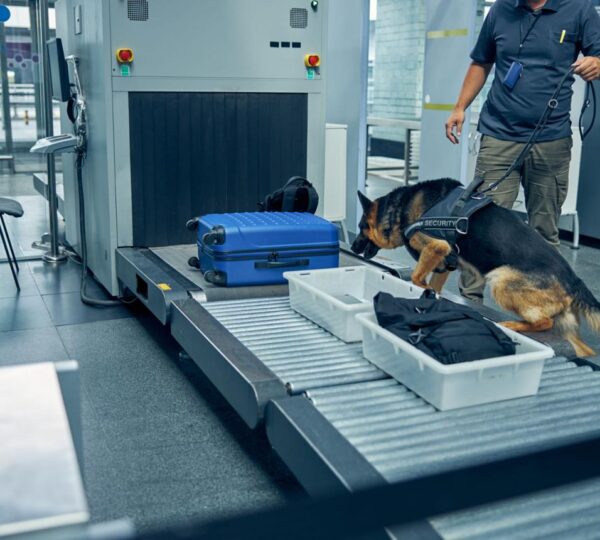
Working dogs in law enforcement roles are trained to detect specific scents depending on their specialization, including explosives, narcotics, or other defined odor profiles.
At the same time, these dogs can also recognize scent patterns associated with familiar environments, training settings, or individuals they have encountered before.
In this case, the dogs remained calm but focused, indicating recognition rather than alarm.
A supervising officer approached the child and her accompanying adult in a respectful and composed manner to gather more information.
During a brief conversation, it became clear that the backpack contained personal items belonging to the child’s father, who had previously worked in a professional role involving K9 training and handling.
People who regularly work with detection dogs often leave behind strong scent traces on their belongings due to repeated exposure in training environments.
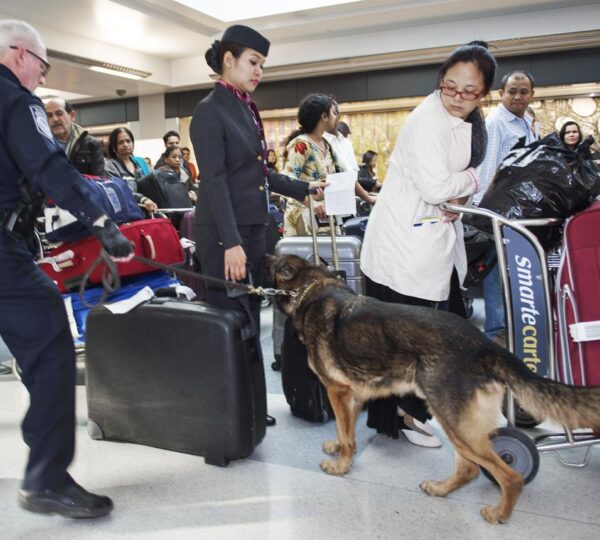
Over time, trained dogs can associate these scent patterns with familiar handlers or operational settings.
This ability is tied to the advanced olfactory system of dogs, which allows them to detect and remember scents far beyond human capability.
In this situation, multiple dogs recognized a familiar scent profile, which explained their shared focus on the backpack.
Because of their training, their response remained controlled, calm, and non-aggressive.
Handlers continued managing the situation carefully, ensuring the child and nearby passengers felt safe and comfortable.
Airport security personnel also helped maintain space around the area, allowing the dogs to be redirected smoothly without disrupting airport operations.
Once the situation was fully understood, everything returned to normal.
The dogs were guided back into formation and resumed their coordinated movement through the terminal.
The young girl and her guardian were reassured and continued their journey without delay.
What initially appeared to be an unusual moment was ultimately explained by the natural abilities of trained working dogs and their strong scent recognition.
Incidents like this highlight how detection dogs interpret their environment, especially in busy public spaces.
They also demonstrate the lasting impact of training and the powerful scent memory these animals develop over time.
For those who witnessed the moment, it served as a reminder of the important role K9 units play in maintaining safety.
It also showed how quickly trained professionals can assess and resolve unexpected situations while keeping the environment calm and orderly.
In the end, the event was not a security concern, but a clear example of how highly trained detection dogs respond to familiar scent associations.
As activity at Denver International Airport continued as usual, the brief interaction stood as a quiet demonstration of the intelligence, discipline, and sensitivity of working K9 units in public service.

