
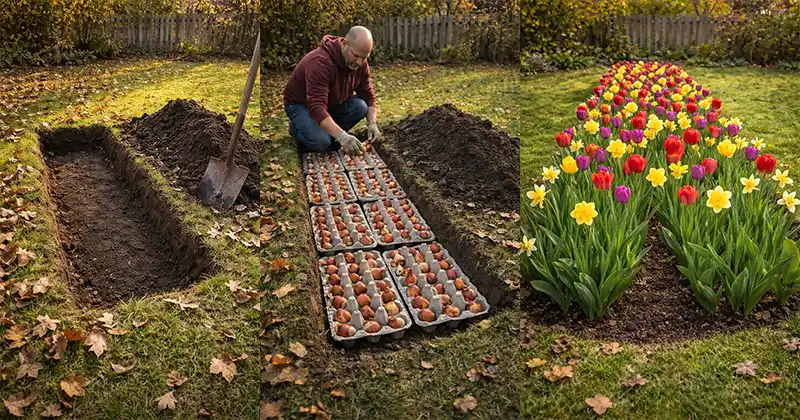
Planting flower bulbs in neat, evenly spaced rows can often feel more complicated than expected. Maintaining consistent distance between bulbs, ensuring proper depth, and keeping everything aligned requires time, patience, and careful measurement. For gardeners looking for a simple and efficient alternative, the egg carton trench method offers a practical solution that combines organization, sustainability, and ease of use.
This technique relies on two basic elements: a shallow trench dug into the soil and standard cardboard egg cartons used as a natural spacing guide. By combining these two components, gardeners can create uniform planting layouts without the need for measuring tools or complicated planning. The result is a cleaner, more organized garden bed with minimal effort.
The process itself is straightforward and accessible even to beginners. First, a trench is dug to the appropriate depth based on the type of bulbs being planted. Depth is important because it directly affects how well bulbs develop roots and emerge during the growing season. As a general guideline, bulbs should be planted at a depth approximately two to three times their height. For example, larger bulbs such as tulips or daffodils require deeper trenches, while smaller bulbs like crocuses need less depth.
Once the trench is prepared, empty cardboard egg cartons are placed along the bottom. These cartons act as a natural grid, with each cup holding a single bulb. This eliminates guesswork and ensures that each bulb is evenly spaced from the next. After positioning the cartons, bulbs are placed inside each cup with the pointed end facing upward. Correct orientation is essential for proper growth, although bulbs can sometimes adjust themselves if placed slightly off position.
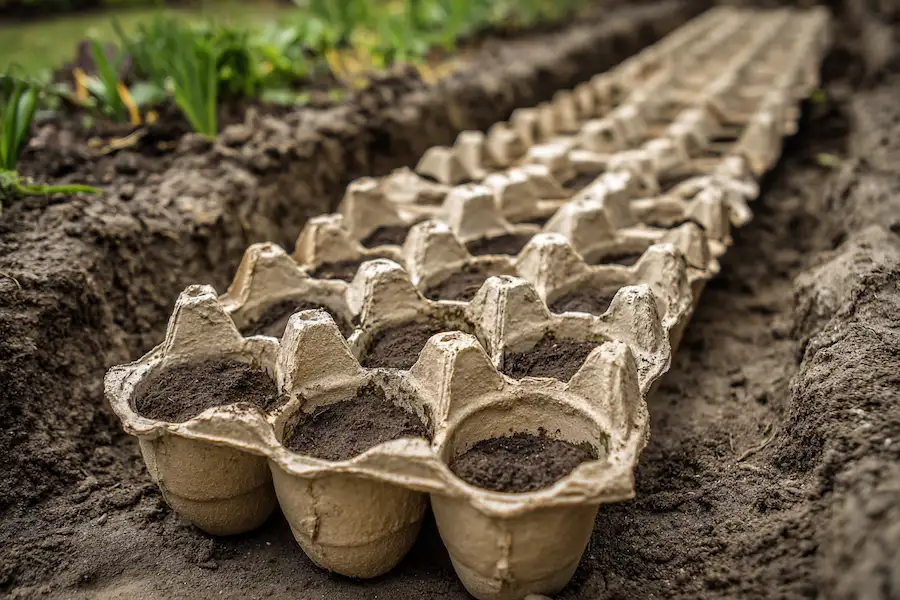
After all bulbs are arranged, the trench is covered with soil, ensuring that the cartons and bulbs are fully buried. A thorough watering follows, helping to settle the soil, remove air pockets, and initiate root development. Over time, the cardboard cartons naturally decompose in the soil, contributing small amounts of organic material without interfering with plant growth.
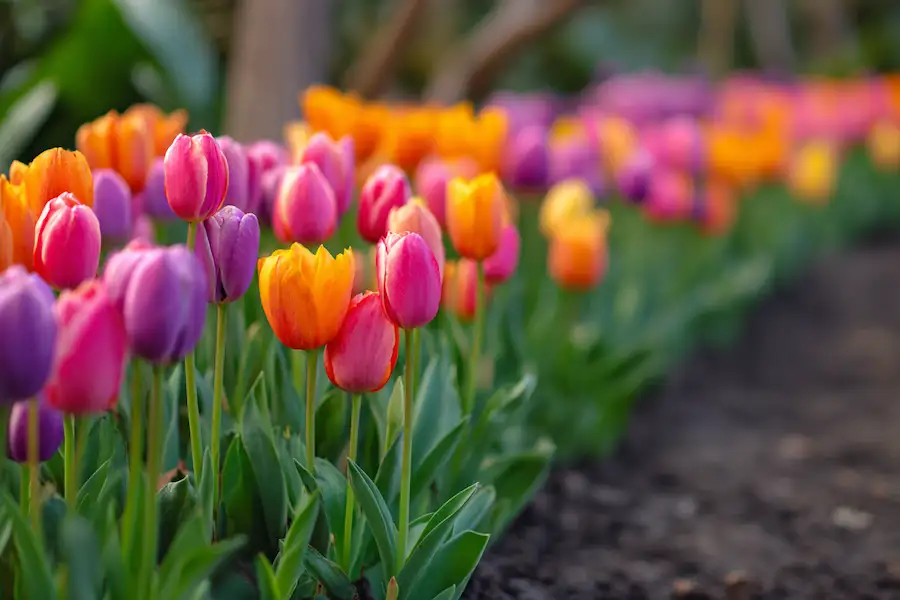
One of the most significant advantages of this method is consistency. Each bulb is placed at the same depth and distance, resulting in even growth and a more visually balanced display when flowers bloom. This is particularly beneficial for gardeners planting large quantities of bulbs, where manual spacing can become time-consuming and inconsistent.
Another benefit is efficiency. Instead of measuring spacing individually for each bulb, gardeners can rely on the structure of the egg carton to do the work automatically. This reduces planting time significantly, making it ideal for larger garden beds or seasonal planting projects.
The method is also environmentally friendly. By reusing cardboard egg cartons that would otherwise be discarded, gardeners reduce waste while improving their planting process. Since the cartons are biodegradable, they break down naturally without harming the soil or surrounding plants.
In addition to practicality, the egg carton trench method helps protect bulbs during planting. The compartments keep bulbs stable and upright, preventing them from shifting when soil is added. This stability supports better root development and reduces the risk of uneven growth.
Many types of bulbs respond well to this method, particularly those that are medium or small in size. Spring-blooming varieties such as tulips, daffodils, crocuses, hyacinths, and grape hyacinths are especially suitable. These bulbs benefit from consistent spacing and depth, which promotes synchronized blooming and a cohesive visual effect.
Summer-blooming bulbs can also be planted using this technique. Gladiolus, freesia, ranunculus, and dwarf lilies are among the varieties that adapt well to the egg carton system. However, very large bulbs, such as giant alliums or oversized decorative lilies, may require deeper planting and wider spacing, making individual placement a better option for those types.
Choosing the right egg cartons is important for success. Only plain cardboard or recycled paper cartons should be used. Materials such as plastic or styrofoam do not decompose and can interfere with root growth and soil health. Wax-coated cartons should also be avoided, as they break down more slowly and may limit water absorption.
For optimal results, gardeners should begin with healthy bulbs. Bulbs should feel firm and show no signs of mold, softness, or damage. Weak or compromised bulbs often lead to poor growth and reduced flowering.
Timing is another key factor. Spring-flowering bulbs should be planted in the autumn so they can experience the cold period required for proper blooming. Summer-flowering bulbs are best planted in the spring after the risk of frost has passed. Planting at the correct time ensures that bulbs follow their natural growth cycle.
Soil quality plays a major role in bulb development. Well-draining soil is essential, as bulbs are highly sensitive to excess moisture. Incorporating compost, leaf mold, or well-rotted manure can improve soil structure and provide nutrients that support healthy growth. Poor drainage can lead to rot, which is one of the most common causes of bulb failure.
After planting, watering should be done thoroughly but not excessively. Initial watering helps establish the bulbs, but overwatering—especially during colder months—can create conditions that encourage rot. Monitoring moisture levels and adjusting watering accordingly is important for long-term success.
Adding a layer of mulch on top of the planted area can provide additional benefits. Materials such as straw, dry leaves, or wood chips help regulate soil temperature, retain moisture, and protect bulbs from environmental fluctuations. Mulch also reduces soil erosion and can improve overall garden health.
Fertilization should be approached carefully. A small amount of bulb-specific fertilizer or compost can be added at planting time or in early spring when growth begins. Excessive nitrogen should be avoided, as it promotes leaf growth at the expense of flowers.
One commonly overlooked step is allowing foliage to remain after blooming. While it may be tempting to remove leaves once flowers fade, the green foliage continues to produce energy that is stored in the bulb for the following season. Leaves should only be removed once they have turned yellow and naturally died back.
Despite its simplicity, there are a few common mistakes to avoid when using this method. Planting bulbs too shallow can expose them to temperature changes and reduce stability. Using non-biodegradable cartons can hinder growth. Overwatering during dormant periods can cause rot. Additionally, planting damaged or unhealthy bulbs will limit results regardless of technique.
The egg carton trench method offers a practical balance between efficiency and effectiveness. It simplifies the planting process while improving consistency and organization. For gardeners seeking a straightforward way to plant large numbers of bulbs, this approach provides reliable results without requiring specialized tools or advanced experience.
Ultimately, successful gardening depends on a combination of good materials, proper timing, and attentive care. By using healthy bulbs, preparing suitable soil, and following consistent planting practices, gardeners can create vibrant, evenly spaced flower displays that return year after year.

