Tiny Discovery Under a Couch Sends a Household Into Hours of Uncertainty
A Routine Chore Becomes an Unexpected Source of Concern
What began as an ordinary day of cleaning quickly developed into a situation that caused significant worry inside an otherwise peaceful home.
While tidying the living room and moving around furniture, a small dark speck was noticed beneath the couch. At first, it appeared insignificant, similar to the bits of dust and debris that often collect in hard-to-reach places.
Its unusual appearance, however, immediately drew attention.
The object did not resemble a typical crumb or piece of lint. It stood out enough to spark curiosity and concern within moments of being discovered.
A simple cleaning task suddenly turned into an investigation centered on a single question: what exactly had been found beneath the furniture?
Uncertainty Creates Immediate Anxiety
The object was carefully picked up and examined. Instead of providing reassurance, the closer look only increased uncertainty.
Without a clear explanation for what it was, the mind began searching for possibilities.
That uncertainty quickly gave way to concern. The unfamiliar speck seemed capable of representing something much larger than its tiny size suggested.
Within minutes, attention shifted away from cleaning and toward imagining potential problems that could be hidden elsewhere in the home.
The living room, which had felt comfortable only moments earlier, suddenly seemed less certain and less predictable.
Questions began multiplying faster than answers could be found.
Why was the object there? Had it been there for a long time? Could it indicate a larger issue that had gone unnoticed?
As often happens when information is limited, assumptions began filling the gaps.
The Fear of a Larger Problem Takes Hold
Among the many possibilities that came to mind, one particular concern quickly rose above the others.
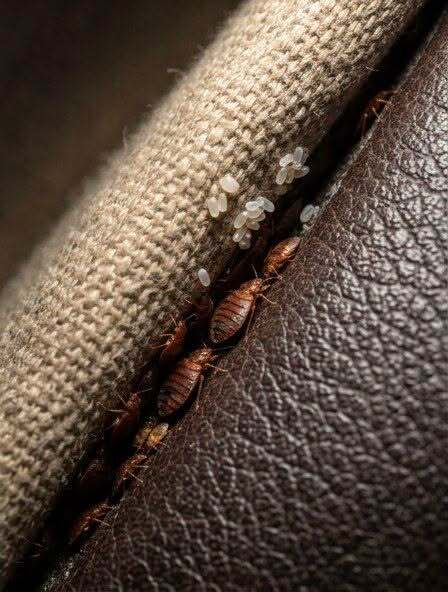
The tiny dark speck seemed vaguely similar to images frequently associated with bed bugs.
That comparison alone was enough to trigger alarm.
Stories about infestations are difficult to forget. Many people have encountered photographs, articles, and warnings describing how disruptive such situations can become.
Those memories surfaced immediately.
The discovery beneath the couch began to seem connected to every unsettling account that had ever been seen or heard.
What if the object was evidence of a hidden infestation?
What if the problem had already spread beyond the couch?
What if furniture, carpets, and other rooms had already been affected?
Each question intensified the concern.
The lack of certainty allowed fear to grow rapidly.
Small Details Suddenly Seem Significant
Once the possibility of an infestation entered the picture, ordinary memories started to take on new meaning.
Minor experiences from recent days and weeks returned to mind.
An occasional itch.
A small mark noticed on the skin.
A fleeting sensation that had seemed unimportant at the time.
Under normal circumstances, none of those events would have attracted much attention.
They could have resulted from countless harmless causes.
Viewed through the lens of anxiety, however, each detail suddenly appeared connected.
Events that had once seemed unrelated began forming a pattern in the imagination.
The more the situation was considered, the more convincing the feared explanation became.
Fear has a way of assembling scattered details into a narrative that feels complete even before any facts have been confirmed.
The Comfort of Home Begins to Feel Different
The concern soon extended far beyond the original discovery.
Thoughts shifted toward the potential consequences of what an infestation might involve.
Images of extensive cleaning, disrupted routines, and ongoing stress entered the picture.
The couch itself no longer seemed like a place to relax.
Instead, it became the focus of growing suspicion.
Even sitting comfortably in the living room felt difficult while uncertainty remained unresolved.
The situation demonstrated how quickly a familiar environment can feel different when a possible problem is introduced.
Nothing in the room had actually changed except the discovery of a tiny object.
Yet the emotional atmosphere had shifted dramatically.
Choosing Investigation Over Assumption
After the initial wave of worry, a more practical response began to emerge.
Rather than relying solely on fear and speculation, it became clear that the situation required a careful examination.
The first step was to study the object itself more closely.
Attention focused on its shape, texture, size, and appearance.
Comparisons were made with descriptions and images connected to common household concerns.
This process introduced an important realization.
The mysterious speck did not perfectly match the characteristics that had initially caused alarm.
Some similarities existed, but important differences also became apparent.
While this observation provided a measure of reassurance, it was not enough to eliminate doubt entirely.
A more thorough investigation remained necessary.
A Detailed Search Begins
The inspection soon expanded beyond the single object.
Attention turned toward the couch itself.
Every section of the furniture became part of a careful search.
Cushions were lifted and examined.
Seams were inspected closely.
Hidden spaces beneath and behind the cushions received special attention.
The goal was simple: determine whether any evidence existed to support the feared explanation.
The search was methodical and deliberate.
No obvious area was ignored.
Every corner was checked with patience and care.
Rather than relying on assumptions, the investigation focused on observable facts.
Each area was examined for signs that might indicate a broader issue.
Nothing was taken for granted.
The Evidence Fails to Support the Fear
As the inspection continued, an unexpected pattern emerged.
No additional signs appeared.
The couch looked normal.
The cushions revealed nothing concerning.
The seams showed no indication of a larger problem.
The surrounding areas offered no support for the alarming conclusions that had initially been imagined.
The more thoroughly the furniture was examined, the clearer the situation became.
The original object remained isolated.
No related discoveries followed.
No hidden infestation revealed itself.
No collection of evidence emerged to confirm the growing fears.
Instead, the search produced an absence of confirmation.
The facts simply did not support the worst-case scenario.
Understanding How Fear Expanded the Situation
With each passing moment, it became increasingly apparent that the greatest source of distress had not been the object itself.
It had been the uncertainty surrounding it.
A tiny speck had triggered a chain reaction of assumptions.
Those assumptions quickly evolved into conclusions that felt convincing despite the lack of supporting evidence.
The experience highlighted how easily the mind can move from possibility to certainty when faced with something unfamiliar.
The original discovery had been real.
The imagined crisis, however, had been built largely from fear.
Without realizing it, attention had shifted from observable facts to hypothetical outcomes.
The result was hours of worry generated by a situation that ultimately proved far less serious than expected.
The Influence of Past Stories and Warnings
The experience also revealed how powerful memories can be when confronting uncertainty.
Stories about infestations, household problems, and unexpected discoveries often remain vivid long after they are first encountered.
Images and warnings can become deeply embedded in memory.
When something unusual appears, those memories may surface immediately.
In this case, alarming possibilities arrived long before any evidence did.
The mind naturally searched for familiar explanations and found comparisons connected to previous stories and warnings.
Those comparisons influenced perception from the very beginning.
As a result, the situation felt much larger and more threatening than the available facts justified.
The object itself had not changed.
Only the interpretation of it had changed.
A Surprisingly Simple Conclusion
By the time the investigation was complete, the outcome proved remarkably straightforward.
The tiny speck that had inspired so much concern appeared to be exactly what it seemed to be: a solitary object with no evidence linking it to a larger household problem.
The feared infestation never materialized.
No hidden issue was uncovered.
The extensive search produced reassurance rather than confirmation of concern.
The living room remained unchanged.
The furniture remained unaffected.
The home remained exactly as it had been before the discovery.
The difference was that uncertainty had now been replaced with evidence.
Relief Replaces Worry
Once the inspection ended, the tension that had dominated the afternoon gradually disappeared.
The couch returned to being a simple piece of furniture rather than a source of anxiety.
The living room once again felt comfortable and familiar.
The sense of relief was significant because it followed a period of genuine concern.
What remained afterward was not a story about infestation or household disaster.
Instead, it became a reminder of how quickly the imagination can race ahead of reality.
A tiny object discovered beneath a couch had briefly transformed an ordinary day into an unsettling experience.
Yet the final lesson had little to do with the object itself.
The experience demonstrated the importance of patience, observation, and evidence when confronting uncertainty.
Fear can create convincing scenarios, especially when information is incomplete.
Careful investigation, however, often reveals a far different picture.
In the end, the most important discovery was not hidden beneath the furniture at all.
It was the realization that the imagined problem had become far larger than the reality.
With that understanding came reassurance, perspective, and the comforting knowledge that there had never been a crisis in the first place.
